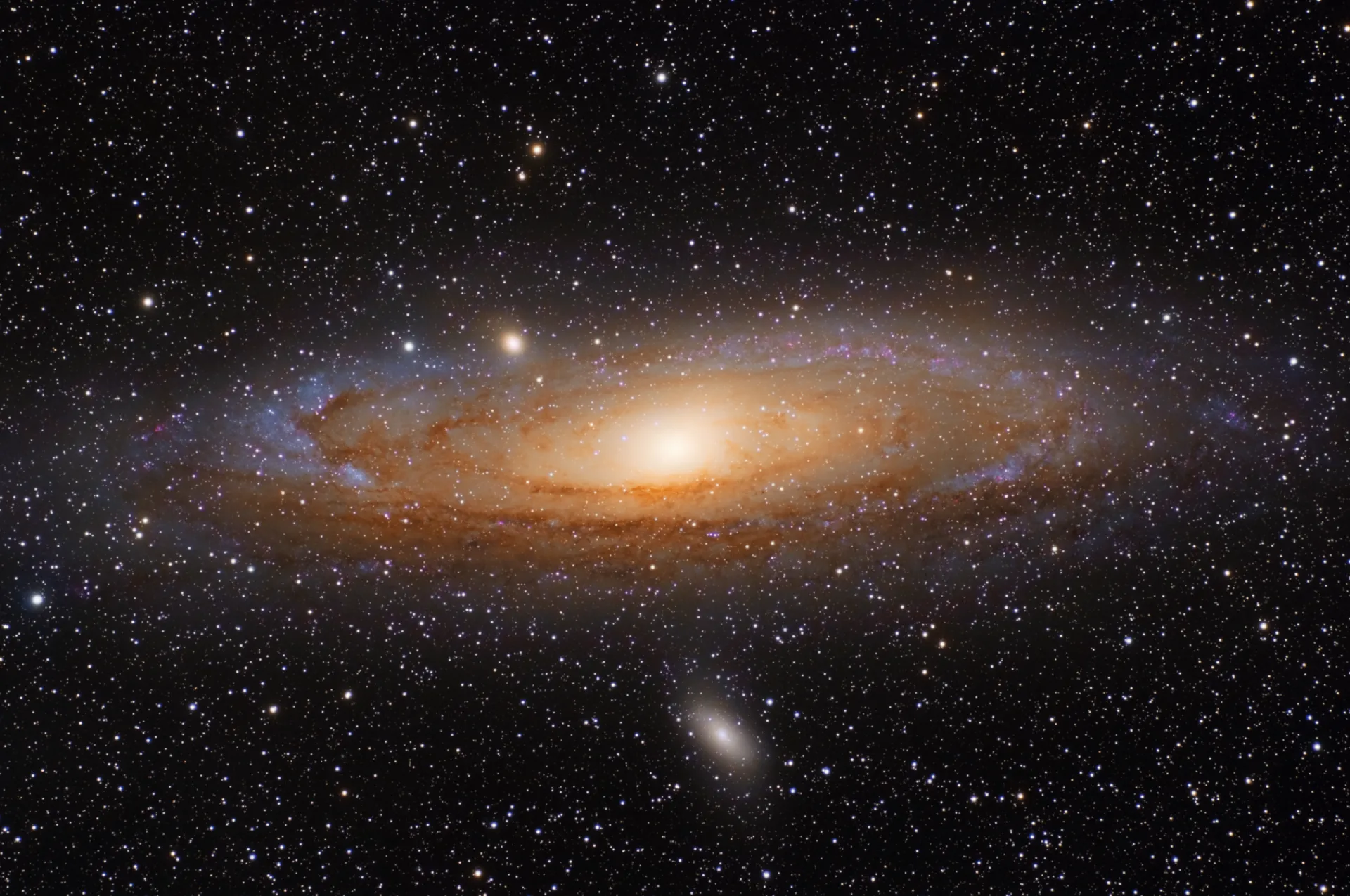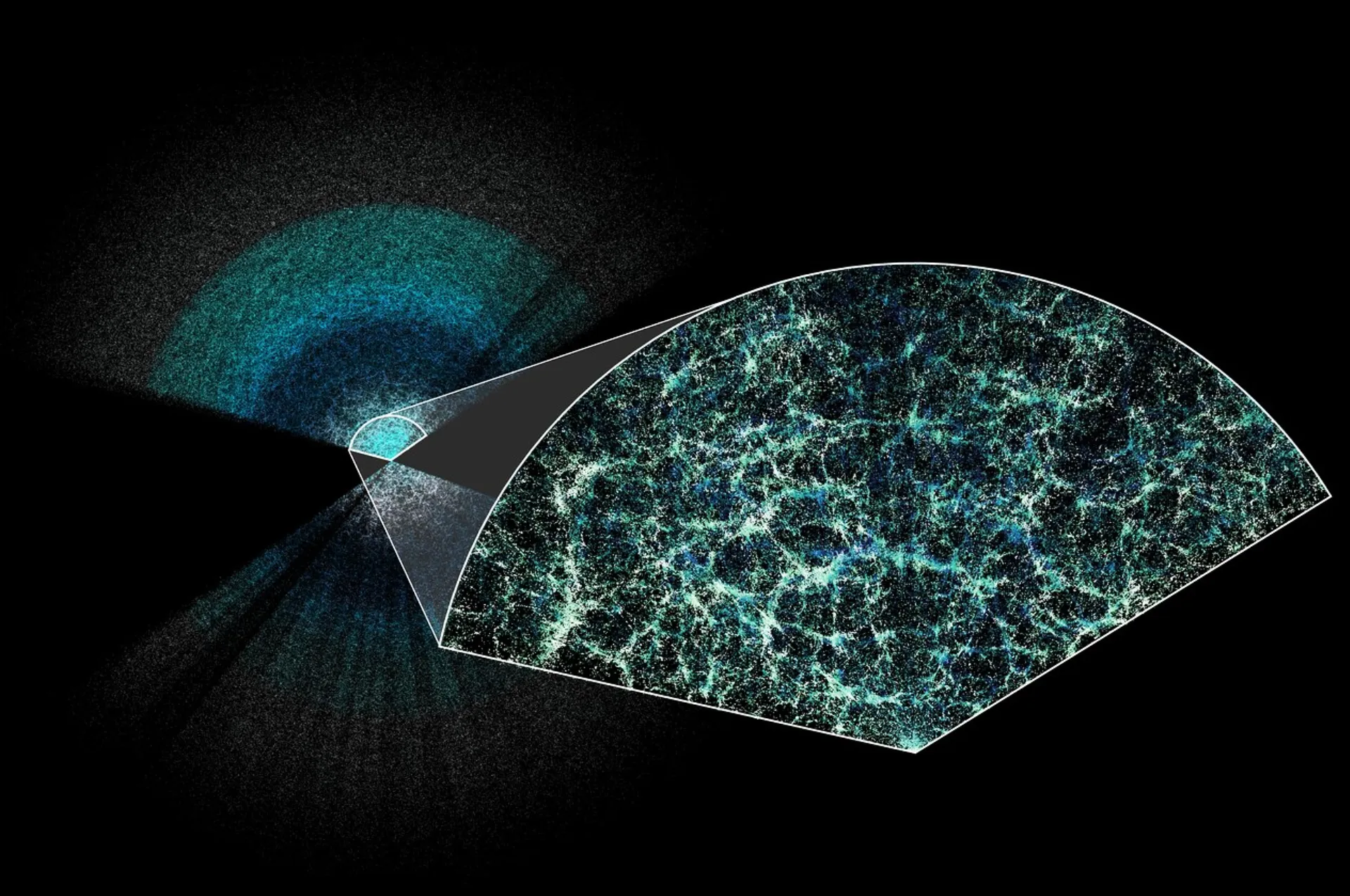
Credit: Claire Lamman/DESI collaboration; custom colormap package by cmastro
What is dark energy, and why does the expansion of the universe appear to be accelerating?
Dark energy is the name scientists give to the unknown phenomenon associated with the universe’s accelerating expansion. It cannot be observed directly, but measurements of distant galaxies, exploding stars and the large-scale structure of the cosmos reveal its effects.
Current cosmological models indicate that dark energy accounts for roughly 68% of the universe, making it the dominant component of the cosmos — even though scientists still do not know what it actually is.
What Is Dark Energy?
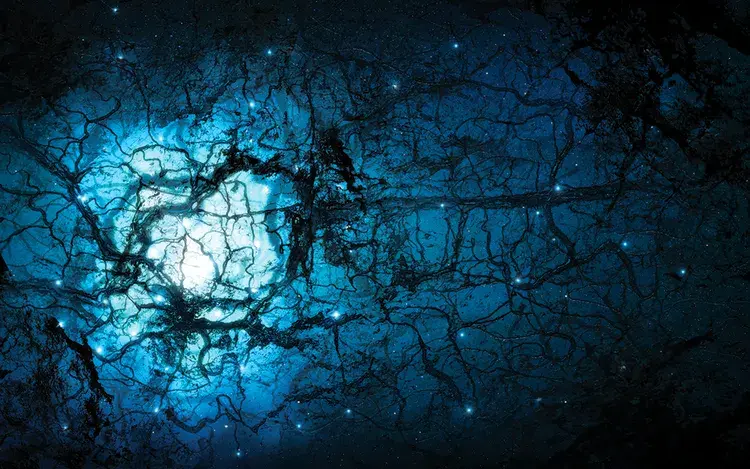
Credit: Tobias Roetsch
Dark energy is the term scientists use for whatever is causing the expansion of the universe to accelerate.
Unlike ordinary matter, which makes up stars, planets and people, dark energy cannot simply be photographed through a telescope. Instead, astronomers investigate it by studying how the universe has expanded over billions of years.
One leading explanation is that dark energy may be a property of space itself. Even apparently empty space could contain energy that influences cosmic expansion. This possibility is represented mathematically by the cosmological constant, a term associated with Albert Einstein’s equations of general relativity.
But scientists have not confirmed that the cosmological constant is the final explanation. Other possibilities include changing forms of energy sometimes described through models such as quintessence, or even the possibility that our understanding of gravity may need modification on enormous cosmic scales. NASA’s Roman mission is designed to test several of these possibilities.
Dark energy is also very different from dark matter. Dark matter contributes additional gravity that helps shape galaxies and larger cosmic structures, while dark energy is associated with accelerated cosmic expansion. LUOV explains the difference further in What Is Dark Matter and How Do We Know It Exists?
Why Is the Universe Expanding Faster?
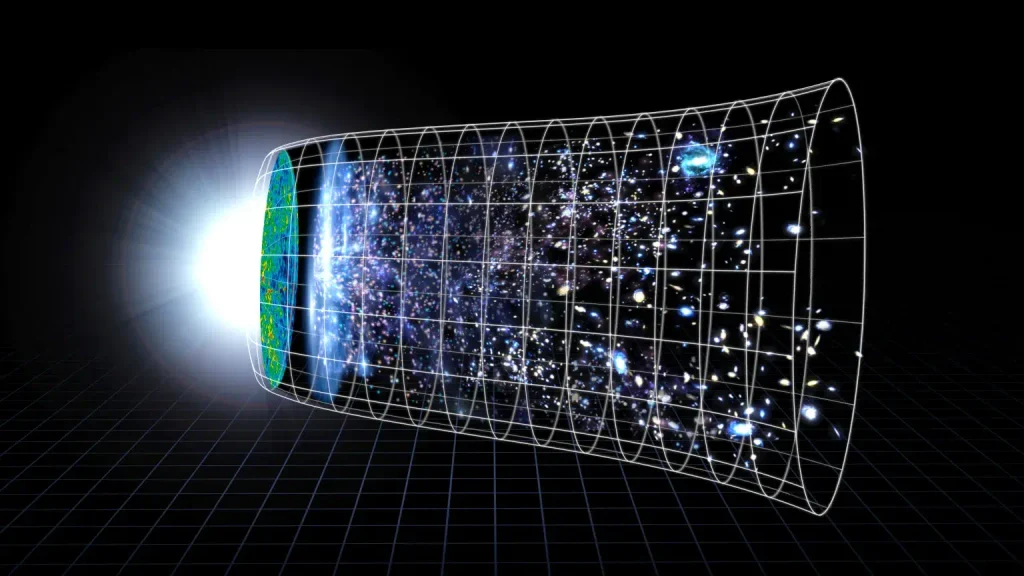
Credit: NASA
The universe has been expanding since the Big Bang, which occurred about 13.8 billion years ago.
For billions of years, gravity acted to slow that expansion. Astronomers therefore once expected the universe to continue expanding at an increasingly slower rate.
Then observations produced a surprise.
During the late 1990s, two teams studying distant Type Ia supernovae found that these stellar explosions appeared fainter and farther away than expected. The observations showed that cosmic expansion was not simply continuing — it was accelerating.
The discovery eventually earned Saul Perlmutter, Brian P. Schmidt and Adam G. Riess the 2011 Nobel Prize in Physics for discovering the accelerating expansion of the universe through observations of distant supernovae.
Type Ia supernovae are valuable because astronomers can use their brightness to measure enormous cosmic distances. LUOV explains this wider system of measurements in How Astronomers Measure Distance to Stars and Galaxies
One simple analogy is dots drawn on the surface of an inflating balloon. As the balloon expands, the dots become farther apart because the surface itself stretches. In a similar way, galaxies separated by enormous distances become farther apart as space expands.
Dark energy is the name given to the unknown component associated with the acceleration of that expansion.
Does Everything in the Universe Expand?
No.
The expansion of the universe becomes important primarily across enormous cosmological distances. Smaller systems can remain bound because other forces are much stronger locally.
Gravity keeps stars together inside galaxies and holds many galaxy systems together. Gravity also keeps planets in orbit, while electromagnetic forces hold atoms, molecules and everyday objects together.
So Earth is not expanding, the Solar System is not being stretched apart, and individual galaxies do not simply grow because the universe is expanding.
Cosmic expansion mainly changes the distances between sufficiently separated structures across the universe.
It is also one reason the observable universe is more complicated than simply multiplying the age of the universe by the speed of light.
How Do Scientists Study Dark Energy?
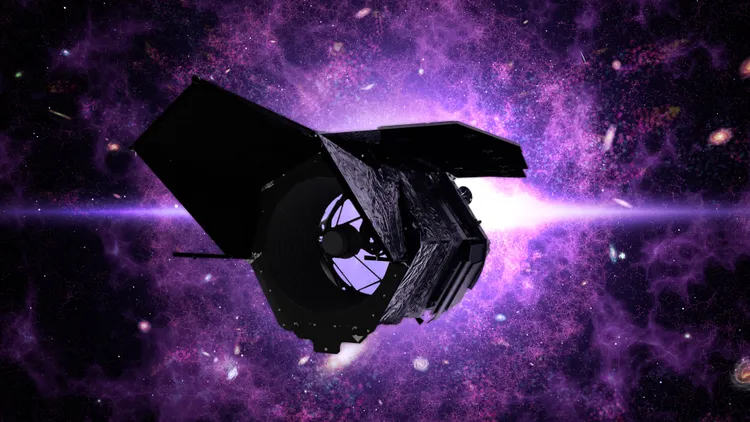
Credit: GSFC/SVS
Scientists cannot collect dark energy in a laboratory, so they investigate it by studying the universe on its largest scales. They measure the distances to distant supernovae, map galaxies across space, and examine how gravity bends light from faraway objects.
These observations help researchers understand how quickly the universe expanded at different points in its history. By comparing the results with predictions from different theories, scientists can test possible explanations for dark energy.
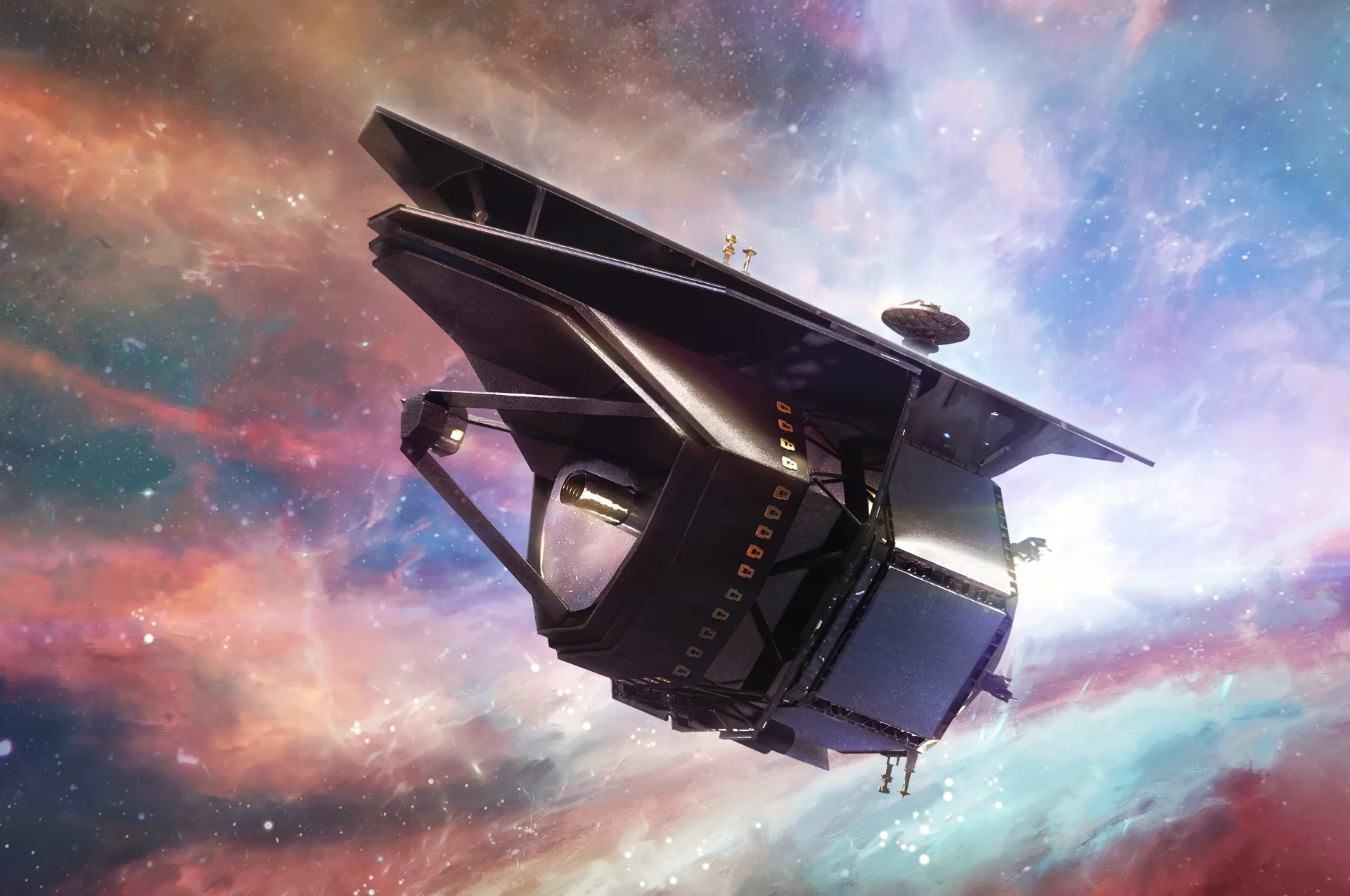
NASA’s Nancy Grace Roman Space Telescope is designed to support this research. It will survey large areas of the sky, study distant supernovae, and map the distribution of galaxies. These observations will help scientists investigate whether dark energy remains constant or changes over time.
If dark energy changes, researchers may need to rethink parts of our current understanding of the universe. Future observations will help narrow down the possibilities.
One of the Universe’s Greatest Mysteries
Dark energy remains one of astronomy’s greatest unanswered questions. Scientists know that the universe’s expansion is accelerating, but they still do not fully understand why. By studying distant galaxies and the history of cosmic expansion, astronomers hope to uncover the nature of dark energy and gain a clearer picture of our universe’s future.
Look Up. Observe Vastness.
LUOV