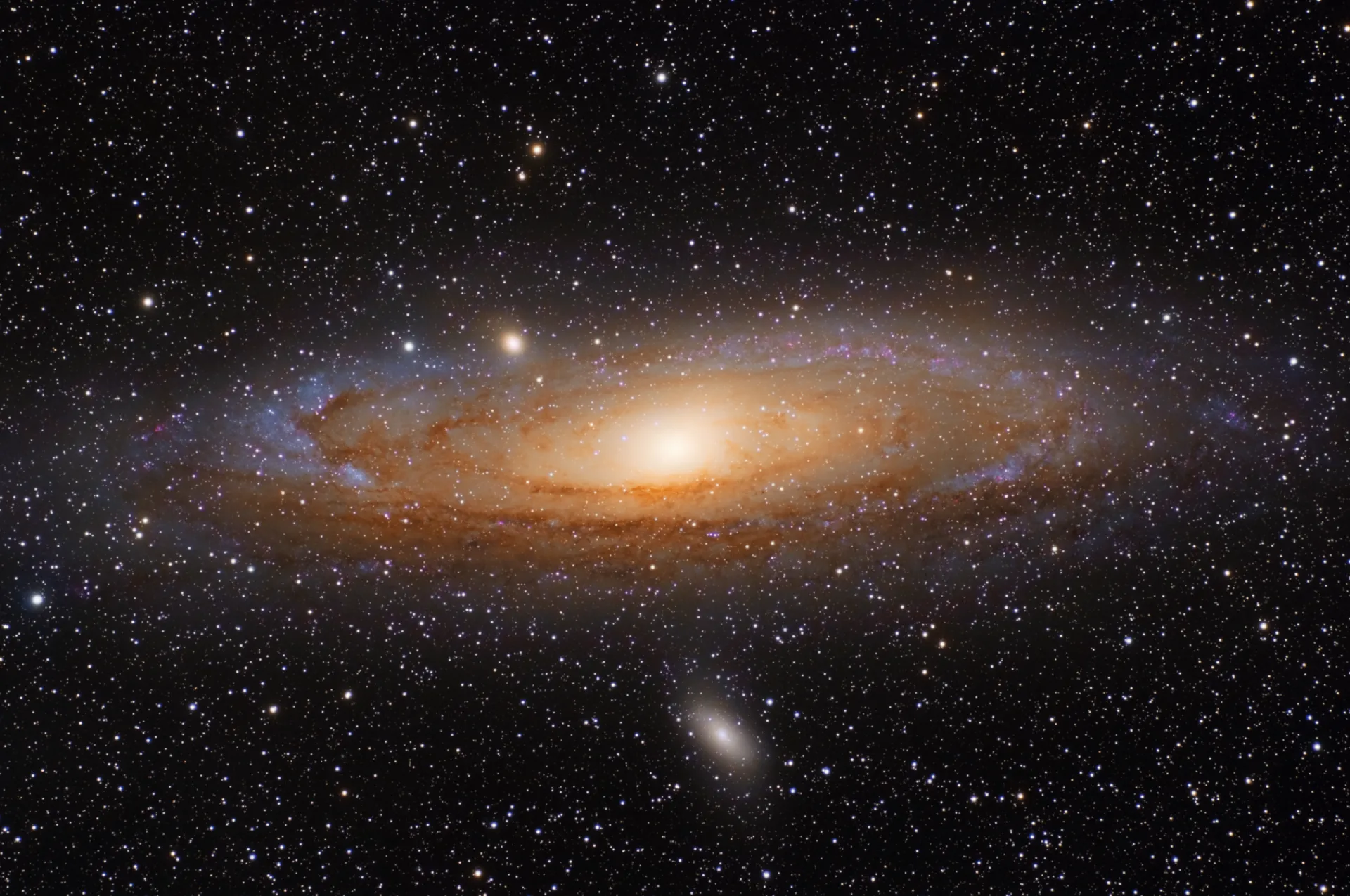
Credit : Brody Wesner
How do galaxies form? Galaxies began developing in the early universe, when gravity pulled gas and dark matter into growing structures that eventually became the homes of stars, planets, and vast clouds of cosmic dust. Over billions of years, these structures grew, collided, and changed shape, creating the diverse galaxies we observe today.
How Do Galaxies Form in the Early Universe?
This supercomputer simulation shows the formation of galaxies similar to the Milky Way over 13.7 billion years.
Shortly after the Big Bang, around 13.8 billion years ago, the universe was extremely hot and dense. As it expanded and cooled, matter began forming structures under the influence of gravity. Tiny differences in the distribution of matter created regions where material could gradually gather.
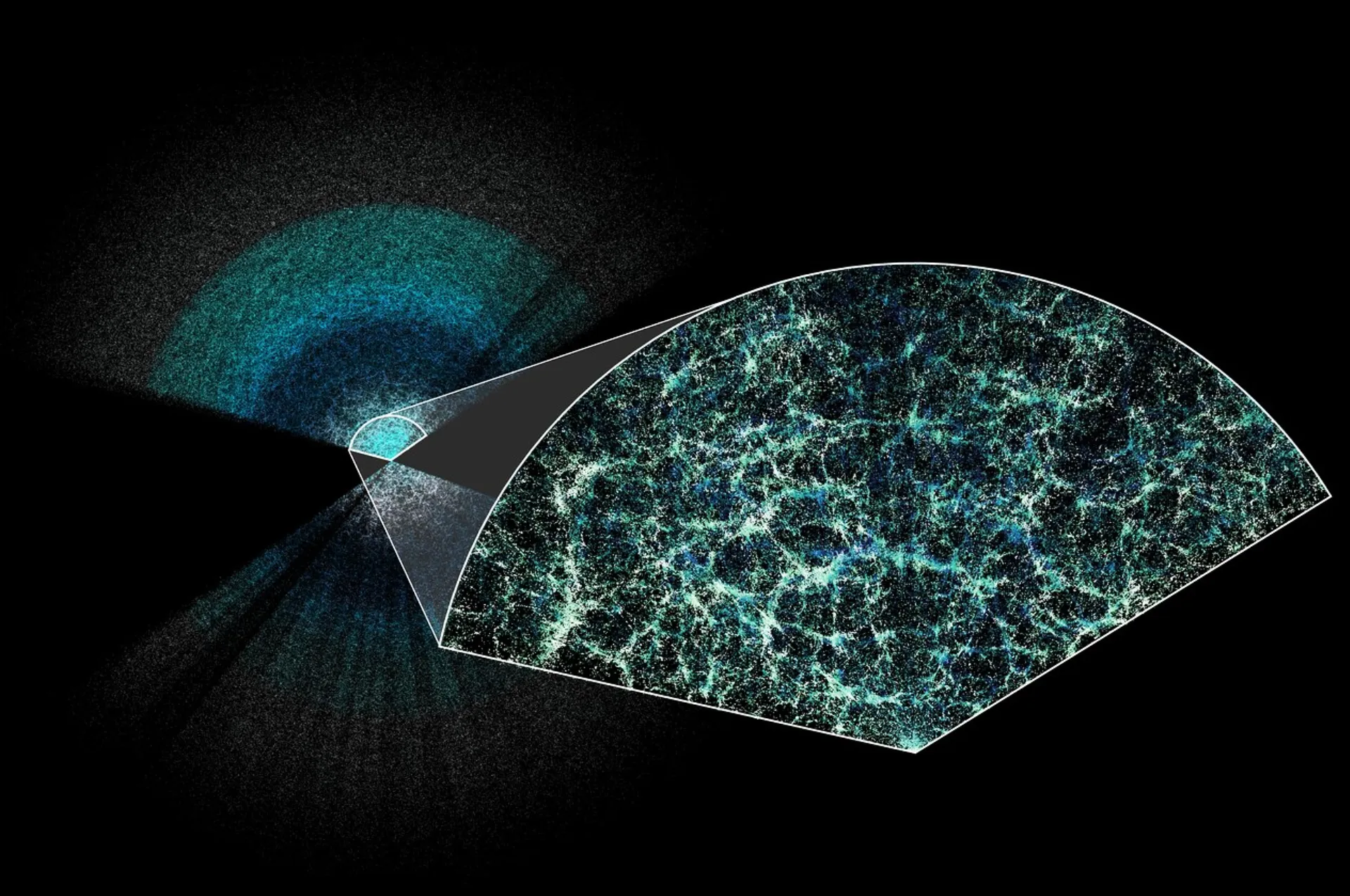
Dark matter played a major role in this process. Although it does not emit or reflect light, its gravitational pull helped create invisible structures known as dark matter halos. Ordinary matter, mainly hydrogen and helium gas, collected within these halos, providing the raw material needed for the first stars and galaxies.
How Do Galaxies Form Stars and Grow?
Once gas gathered inside dark matter halos, gravity compressed it into increasingly dense regions. When parts of these clouds became dense and hot enough, nuclear fusion began, creating the first stars. Groups of stars, gas, and dark matter gradually developed into early galaxies.
The first galaxies were likely smaller and less organized than many galaxies we see today. Over time, they grew by collecting more gas from their surroundings and merging with smaller galaxies. These mergers could trigger bursts of star formation or reshape a galaxy completely. Some galaxies developed spiral arms, while others became elliptical systems with more rounded shapes.
How Do Galaxies Form Different Shapes?
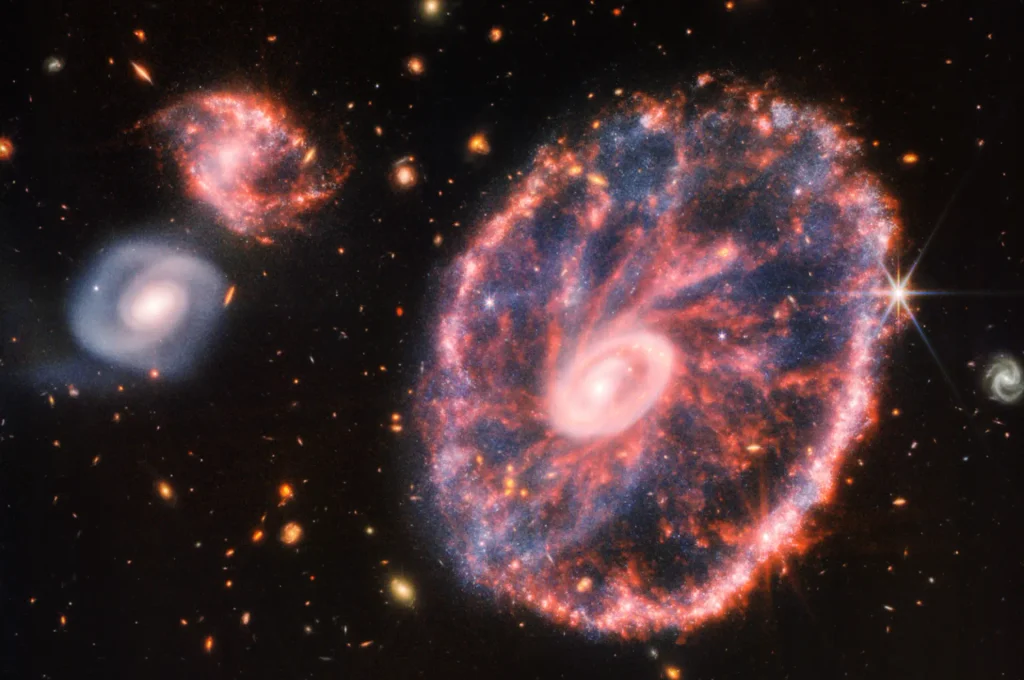
Credit : NASA
Not all galaxies follow the same path. A galaxy’s shape depends on factors such as its rotation, gas supply, star formation, and history of collisions. Spiral galaxies, including the Milky Way, have rotating disks with curved arms where gas and young stars are often concentrated. Elliptical galaxies are rounder or oval-shaped and usually contain less cold gas for making new stars. Irregular galaxies lack a clear, organised shape.
Collisions and close encounters can strongly influence galaxy evolution. When galaxies interact, their gravity can pull out long streams of stars and gas, compress clouds, and trigger new waves of star formation. Over time, smaller galaxies can become part of larger ones. This gradual growth helps explain how early, clumpy structures developed into the wide variety of galaxies we observe today. Learn more about the role of dark matter in the universe and why gravity is so important to cosmic structure.
Look Up. Observe Vastness.
LUOV