How To Find Orion in the night sky is easier than finding most constellations because of its distinctive pattern of three bright stars.
These stars form Orion’s Belt, a short, almost straight row that makes the constellation easy to recognize. Orion is visible from both the Northern and Southern Hemispheres, making it one of the best constellations for beginners to learn.
How to Find Orion Using Orion’s Belt
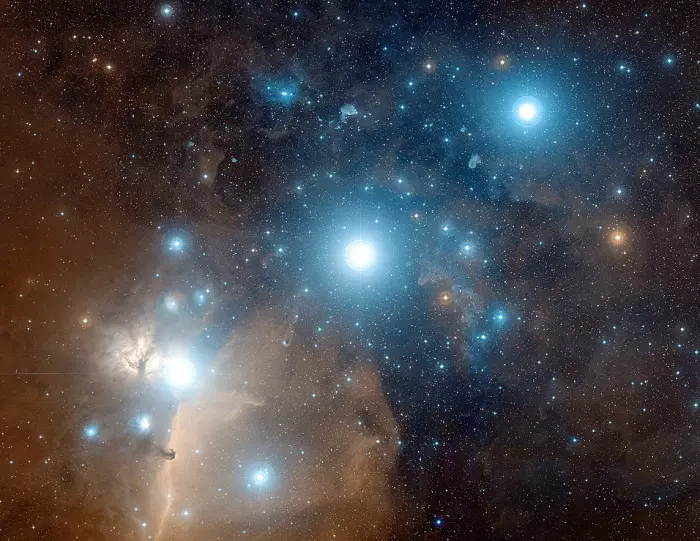
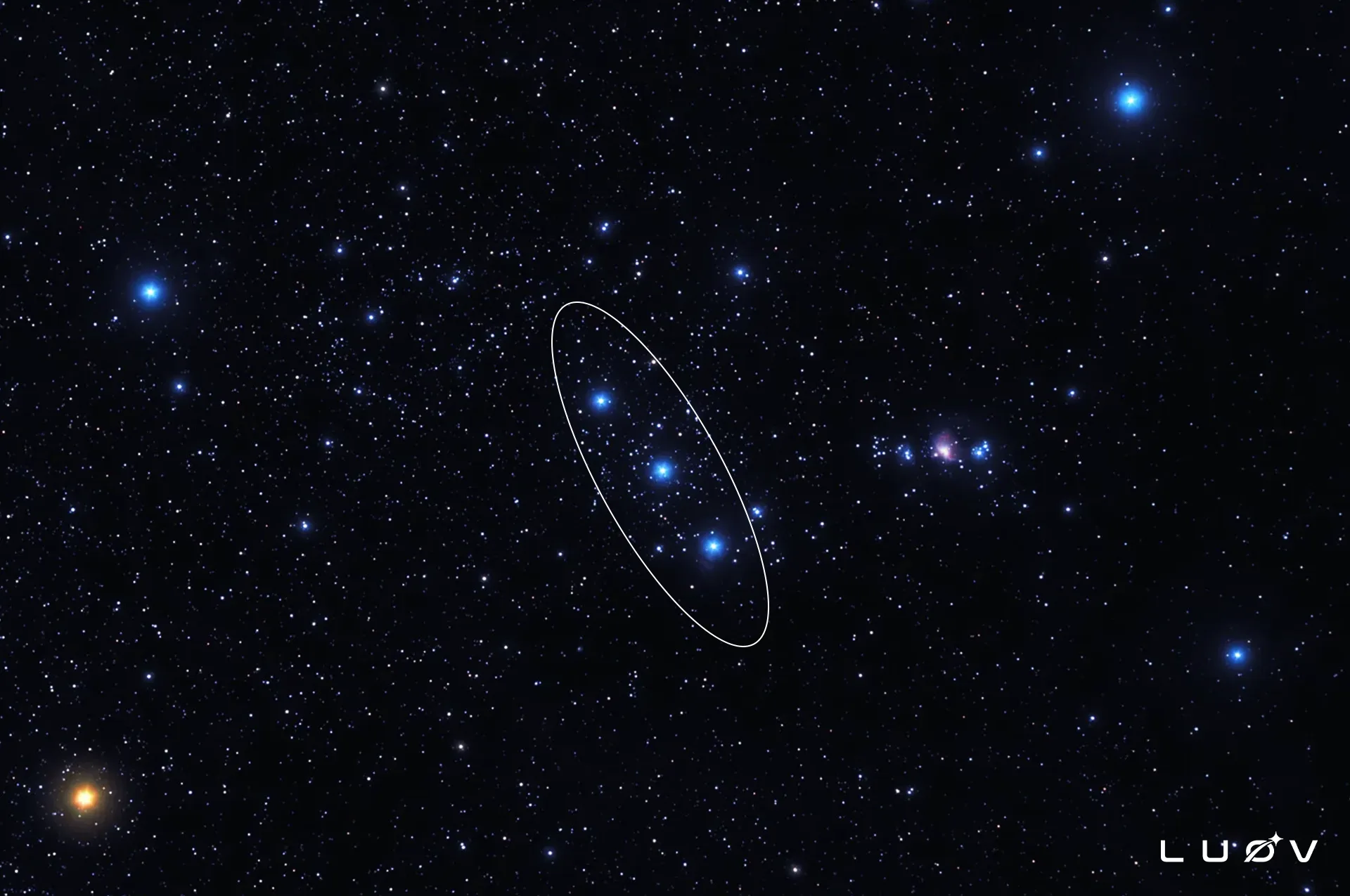
The simplest way to find Orion is to look for three bright stars close together in a straight line. These are Alnitak, Alnilam, and Mintaka, the three stars that form Orion’s Belt. Once you spot them, look around the Belt for two particularly bright stars. Betelgeuse has a reddish orange appearance and marks one of Orion’s shoulders, while Rigel appears blue white and marks one of his feet.
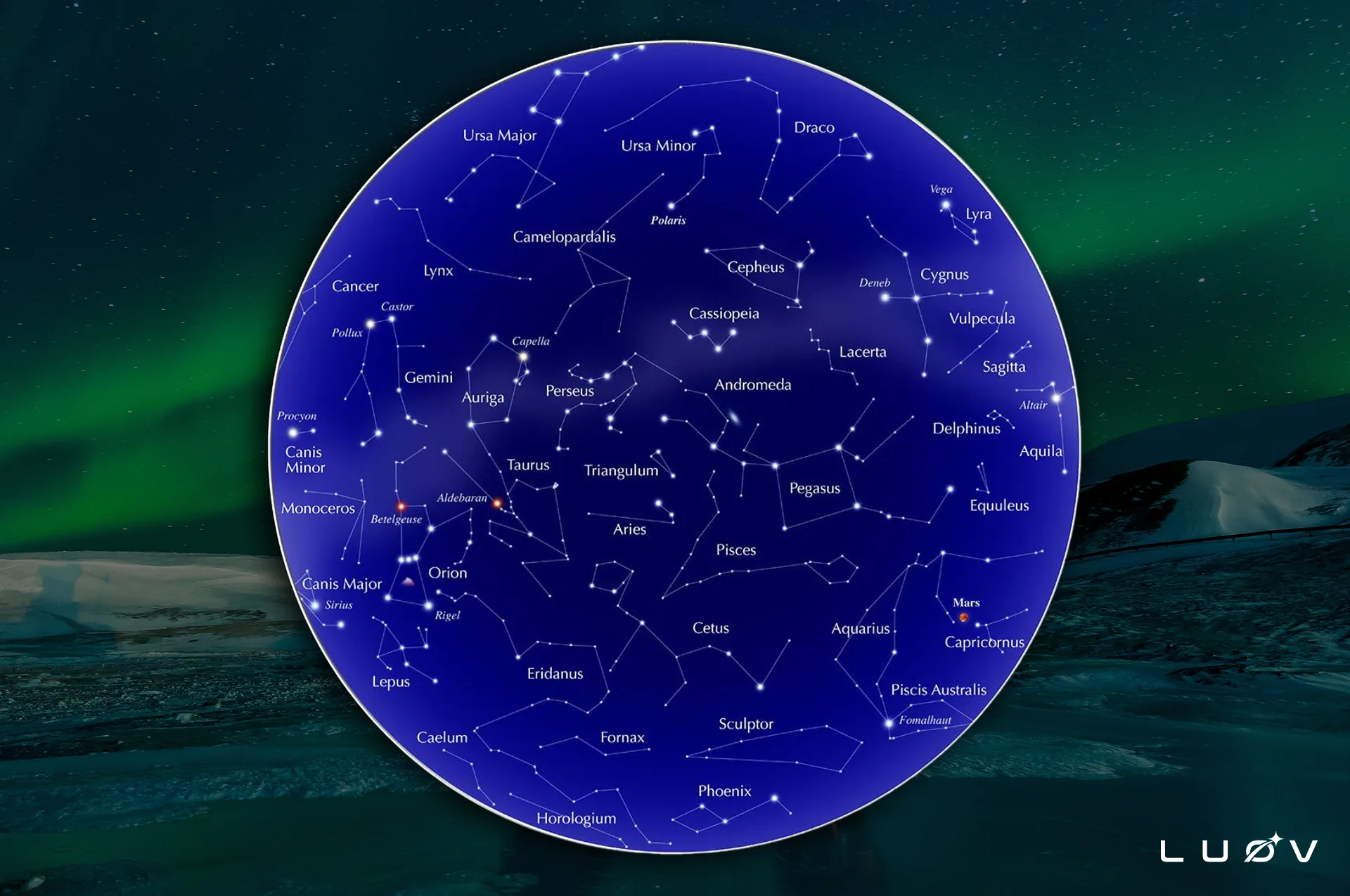
Orion’s shape can look slightly different depending on where you are on Earth. In the Northern Hemisphere, Orion is commonly associated with winter evenings and appears prominently toward the southern part of the sky. In the Southern Hemisphere, Orion is a summer constellation and appears toward the northern part of the sky. The constellation is visible from both hemispheres, so the same Belt is your best starting point wherever you live.
How to Find Orion in the Northern Hemisphere
For observers in the Northern Hemisphere, Orion becomes especially noticeable from late autumn through winter. During winter evenings, look toward the eastern or southeastern sky after sunset and search for the three stars of Orion’s Belt. As the night continues, Orion appears to move across the sky because Earth is rotating. Around December, it becomes especially prominent during the evening hours.
Once you have found the Belt, follow the larger pattern around it. Betelgeuse appears above the Belt, while Rigel is positioned farther below. Together with several other bright stars, they create the familiar hourglass shape associated with Orion the Hunter. You do not need a telescope to recognize the main constellation because many of its brightest stars are visible with the unaided eye under a reasonably dark sky. If you are new to observing constellations, our guide on how to stargaze without a telescope can help you get started.
How to Find Orion in the Southern Hemisphere
For observers in the Southern Hemisphere, Orion is most closely associated with summer evenings. The constellation appears in the northern part of the sky rather than the southern part. This can initially feel confusing if you learned Orion from a Northern Hemisphere star chart, but the three stars of Orion’s Belt remain the easiest way to identify it.
Orion can also appear oriented differently from the Southern Hemisphere because you are viewing the sky from a different angle. In other words, the constellation has not physically changed. Your position on Earth has changed your perspective. This is a great example of how our location on Earth affects the way we see the night sky. Orion is visible from both hemispheres, and NASA notes that it can be seen around the world.
Find the Orion Nebula After Orion’s Belt

Once you know how to find Orion, you can use the Belt to explore one of the most famous objects in the constellation. Look below the Belt for a small group of stars forming Orion’s Sword. Near the middle of the Sword is the Orion Nebula, also known as M42. It is a huge region of gas and dust where new stars are forming and lies about 1,300 light years from Earth. Under dark skies, it can appear as a faint fuzzy patch, while binoculars reveal more detail.
The stars of Orion also show why constellations can be misleading. Alnitak, Alnilam, and Mintaka look like neighboring stars from Earth, but they are actually separated by enormous distances. NASA estimates their distances at roughly 800, 1,300, and 900 light years respectively. What looks like a simple pattern from Earth is actually a three dimensional arrangement of stars spread across space.
How to Find Orion in the Night Sky
If you are outside on a clear night, do not try to memorize the entire constellation. Find the three stars of Orion’s Belt first. From there, identify the reddish Betelgeuse, the blue-white Rigel, and the Sword hanging from the Belt. Whether you are watching winter skies in the Northern Hemisphere or summer skies in the Southern Hemisphere, Orion gives you one of the easiest starting points for exploring the night sky.
Once you have found Orion, continue exploring with our guide on how to find Cassiopeia in the night sky.
Look Up. Observe Vastness.
LUOV