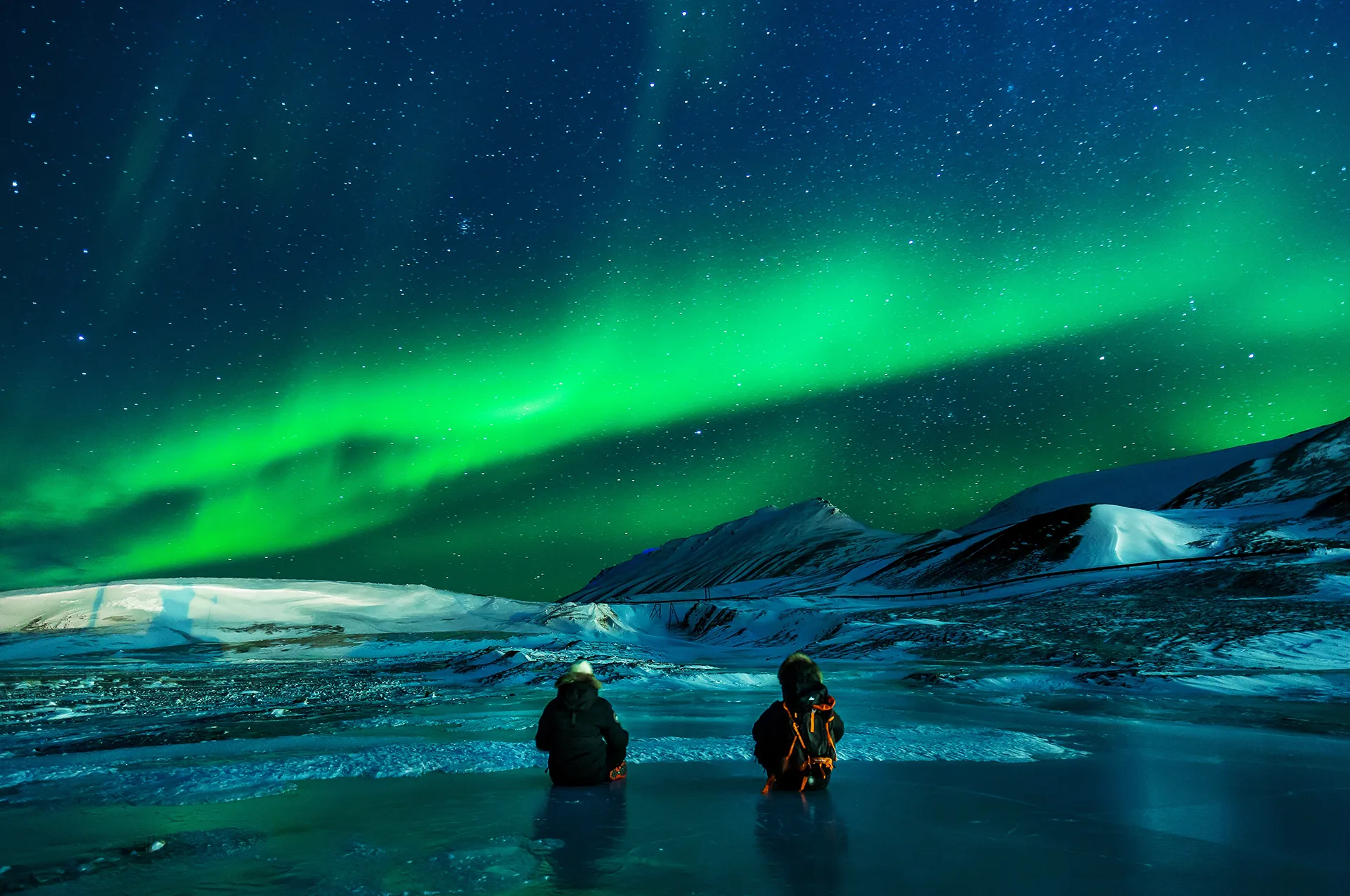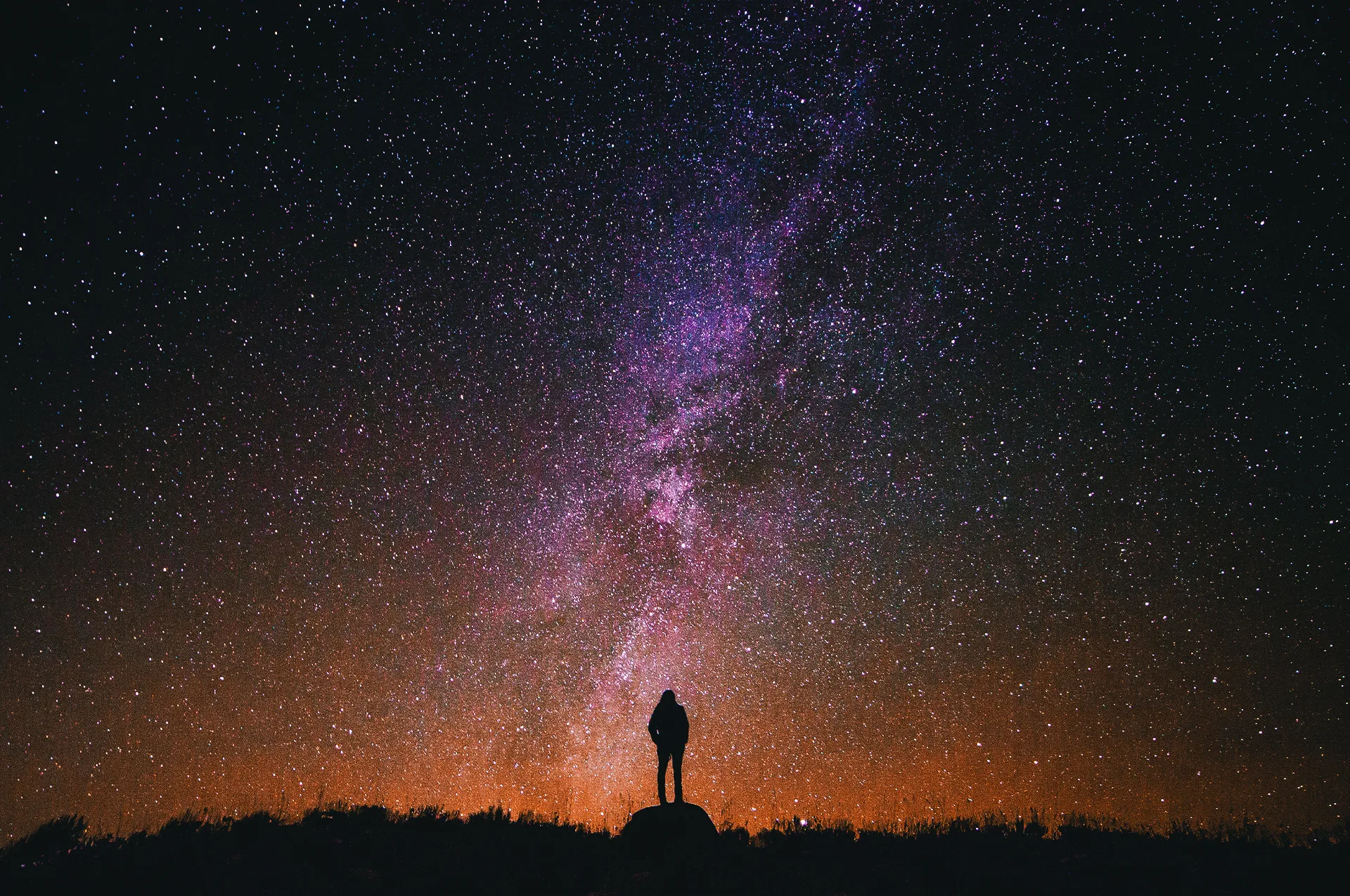
If you want to learn how to stargaze without a telescope, you may be surprised by how much of the night sky you can already see with your own eyes. You do not need expensive equipment to begin exploring space. Bright planets, constellations, the Moon, meteors and, under sufficiently dark skies, the glowing band of the Milky Way can all be visible without a telescope.
How to Stargaze Without a Telescope Under Dark Skies
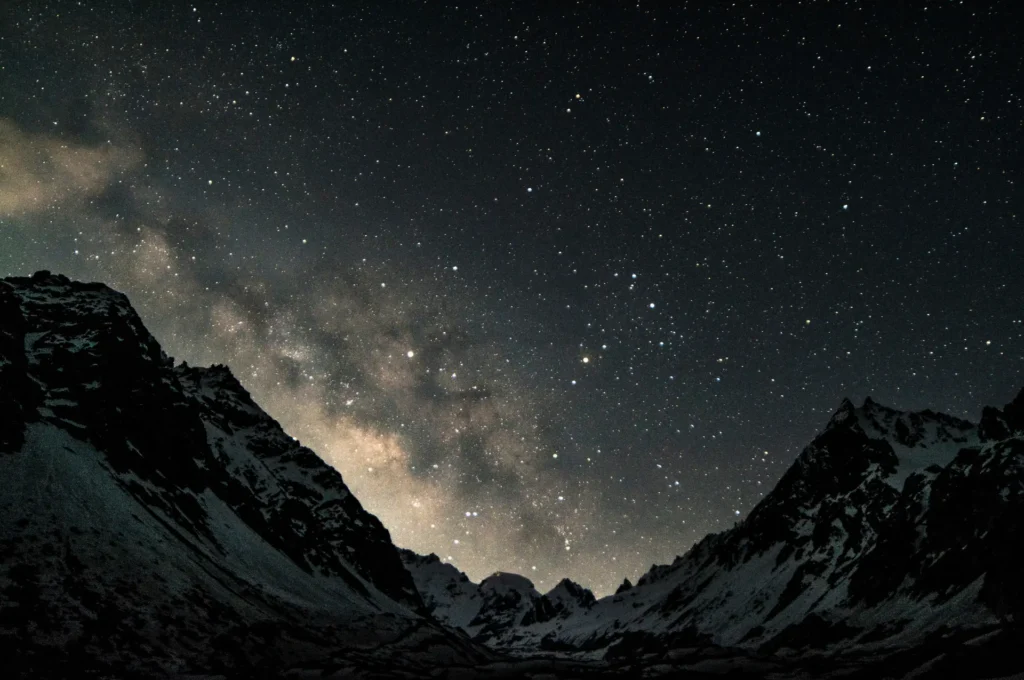
The Milky Way stretches across a clear night sky above dark mountain peaks, illustrating ideal conditions for naked-eye stargazing. Credit: Sanjay Indiresh / Pexels.
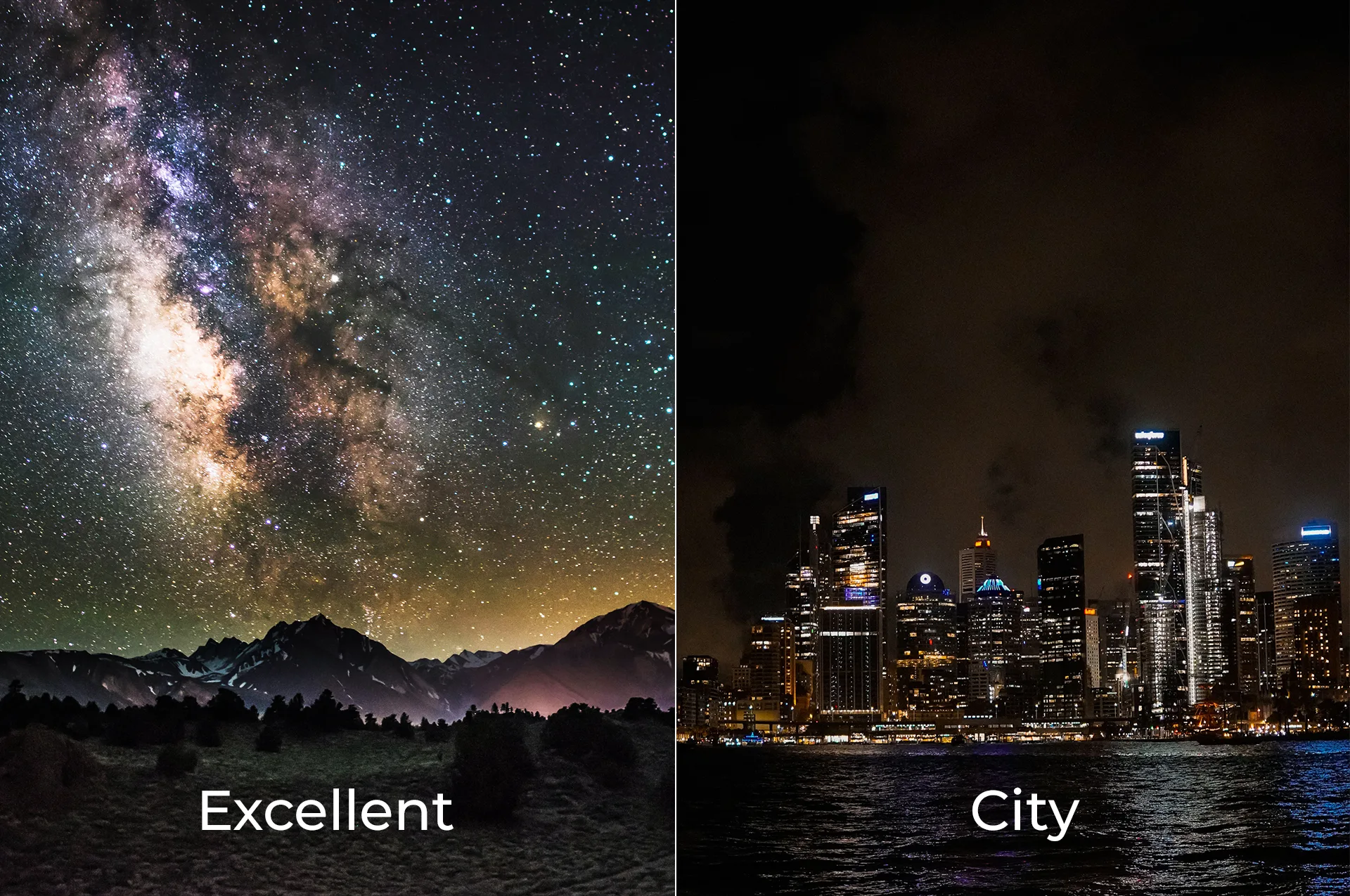
The most important step is finding a good observing location. City lights create light pollution, making faint stars and other objects much harder to see. Even moving to a nearby park or a darker area outside a city can noticeably improve your view.
For the best experience, look for an open location away from bright lights, tall buildings and other obstacles. NASA recommends considering not only artificial light but also weather, visibility and the landscape around your observing location when choosing somewhere to stargaze.
The Moon also matters. A bright Moon can wash out faint stars and make the Milky Way more difficult to see. Darker periods around the new Moon are generally better for observing faint objects, while a bright Moon can create skyglow similar to artificial light pollution.
For a deeper guide to choosing the right night, read our Guide to the best time to stargaze.
Before heading outside, check the weather and Moon phase. If possible, arrive before complete darkness so you can safely become familiar with the area and avoid rocks, uneven ground or steep edges.
Let Your Eyes Adjust Before Stargazing
When you first step outside, the sky may appear surprisingly empty. Give your eyes time to adjust to the darkness. This process is called dark adaptation, and your sensitivity to faint light gradually improves as you spend more time away from bright light.
NASA recommends allowing roughly 20 to 30 minutes for your eyes to adjust when observing faint objects such as meteors. Bright lights and phone screens can interfere with this process.
Try to avoid headlights, bright displays and white flashlights while observing. If you need a light, keep it as dim as possible.
Another useful technique is averted vision. Instead of looking directly at a very faint object, look slightly beside it. This places its light on a more rod-rich part of your retina, which can make faint stars and other dim objects easier to detect.
What Can You See Without a Telescope?
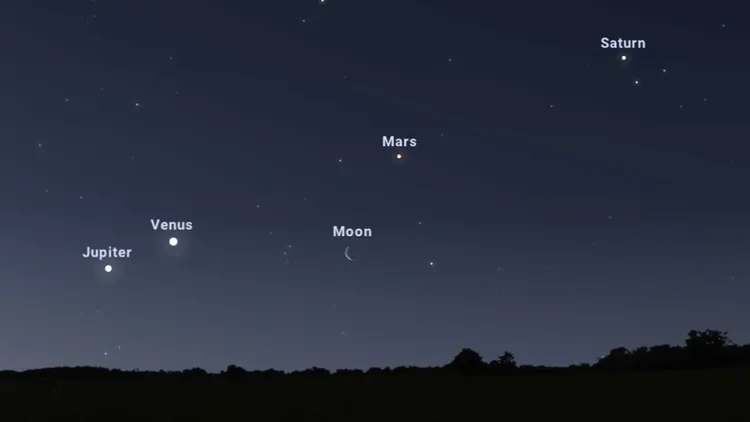
A Stellarium sky view showing Venus, Mars, Jupiter, Saturn and the Moon visible across the night sky. Credit: Stellarium
Start with objects that are easy to recognize. The Moon is the most obvious target, while bright planets such as Mercury, Venus, Mars, Jupiter and Saturn can all be visible to the naked eye when their position and observing conditions are favorable. NASA notes that several bright planets can sometimes even be visible together in the same part of the night sky.
Planets also tend to appear steadier than stars. Stars are so distant that they appear essentially as points of light, making atmospheric turbulence more noticeable. Planets have a tiny apparent disk, so some of that distortion averages out.
Constellations are another excellent starting point for stargazing for beginners. Rather than trying to memorize the entire sky, begin with a few recognizable patterns and gradually use them as landmarks to find other stars.
Meteor showers are particularly well suited to naked-eye observing because you want as wide a view of the sky as possible. They occur when Earth passes through trails of debris left primarily by comets, producing increased numbers of meteors in our atmosphere.
Under genuinely dark skies, the Milky Way can appear as a broad, hazy band stretching across the heavens. If you want to see how dramatic the difference can become away from cities, explore our guide to the 10 places on Earth with the clearest night skies.
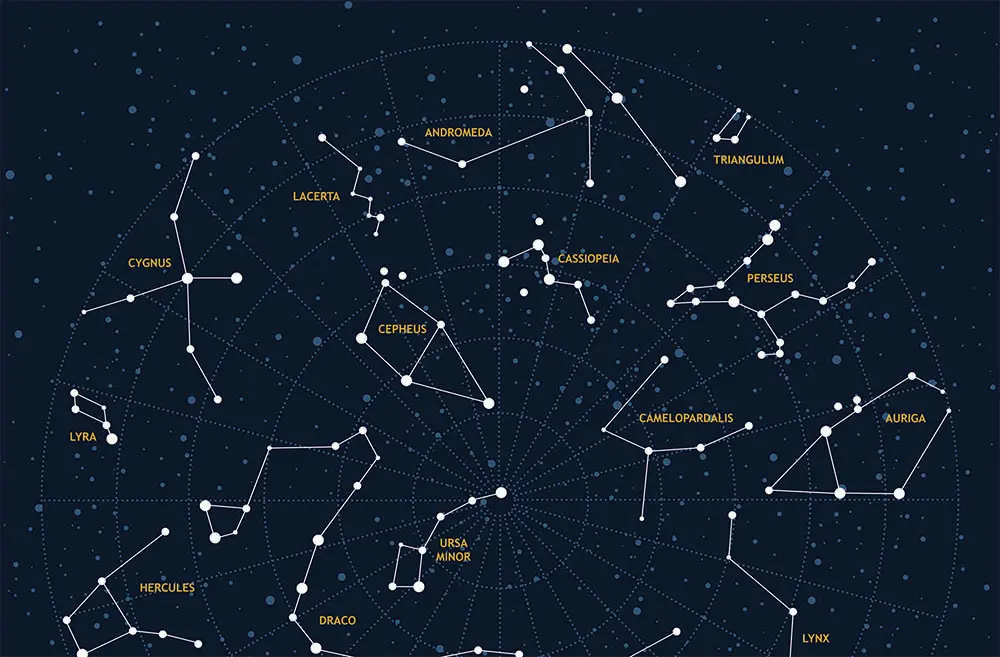
A night-sky star chart showing several northern constellations and their positions. Credit: Wesleychoice
Use Simple Tools to Learn the Night Sky
Although no equipment is required, a few simple tools can make your first experience easier. A sky map or astronomy app can help you identify planets, stars and constellations and understand where to look at different times of night.
Try looking at the sky yourself before relying too heavily on an app. Learning familiar patterns gradually makes the night sky easier to navigate and can make stargazing feel much more rewarding.
If you eventually want to see more, binoculars can be a useful step before buying a telescope. They are portable, simple to use and offer a wider field of view than many telescopes.
But you do not need any special equipment to begin. Skywatching is something anyone can take part in, whether it means identifying a constellation, following the changing Moon or simply spending a few minutes looking upward.
You can stargaze without a telescope from a garden, balcony, rooftop or countryside location. The more often you observe, the more familiar the sky becomes.
And sometimes the most valuable part of stargazing is simply remembering how much exists beyond our everyday surroundings — something we explore further in our article, Why Looking at Space Makes Everyday Problems Feel Smaller
Look Up. Observe Vastness.
LUOV