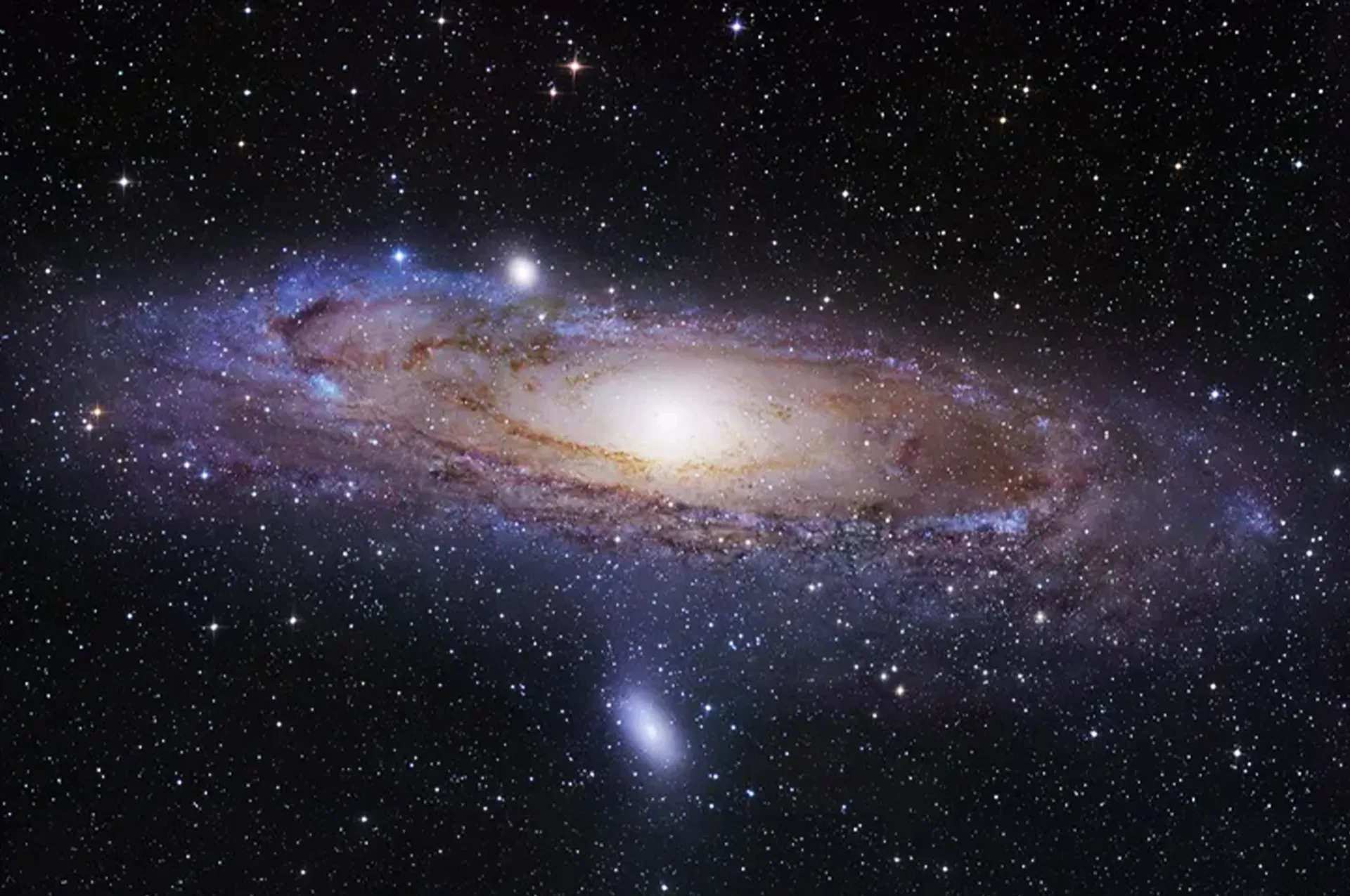
Credit: Robert Gendler
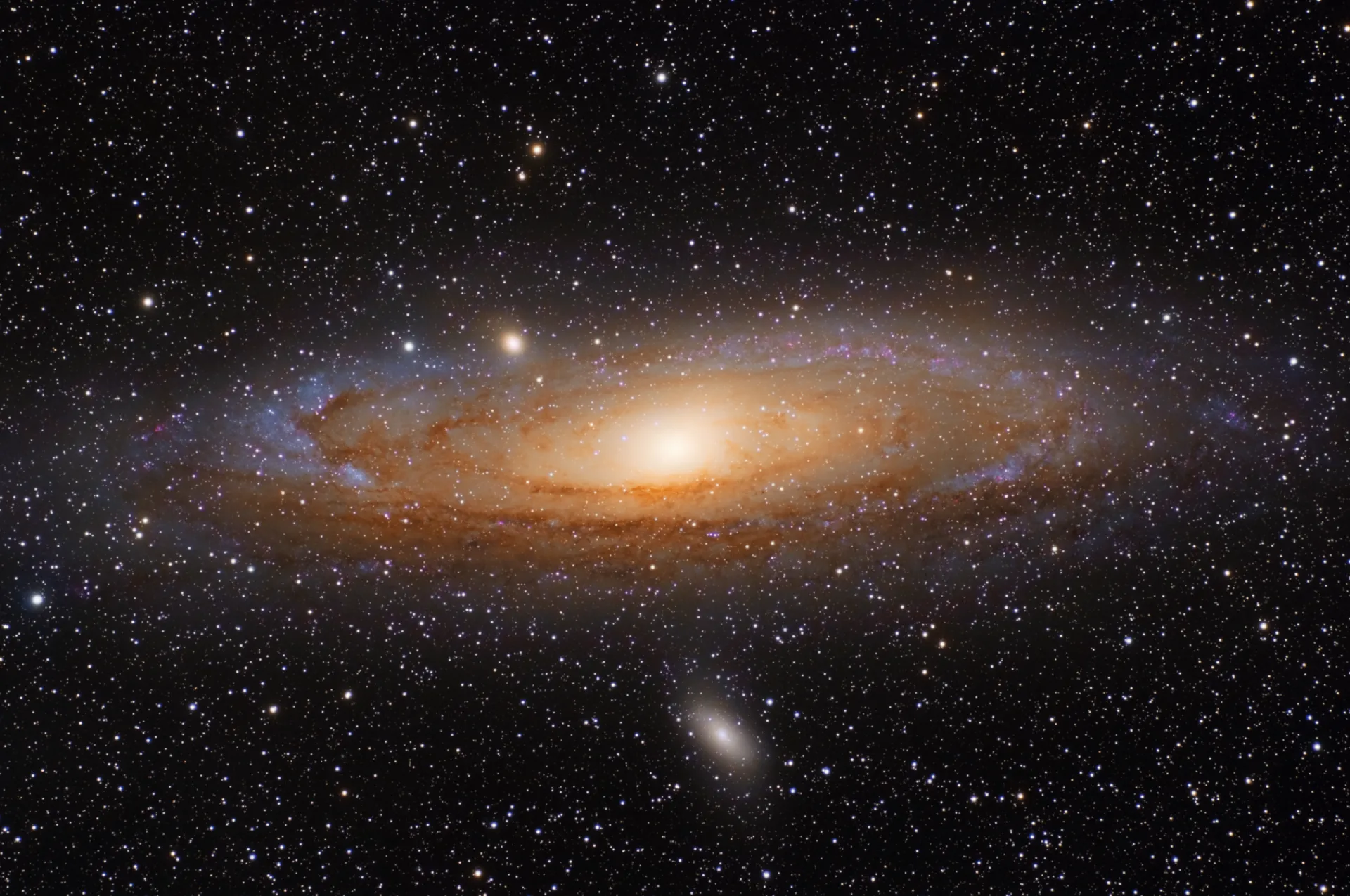
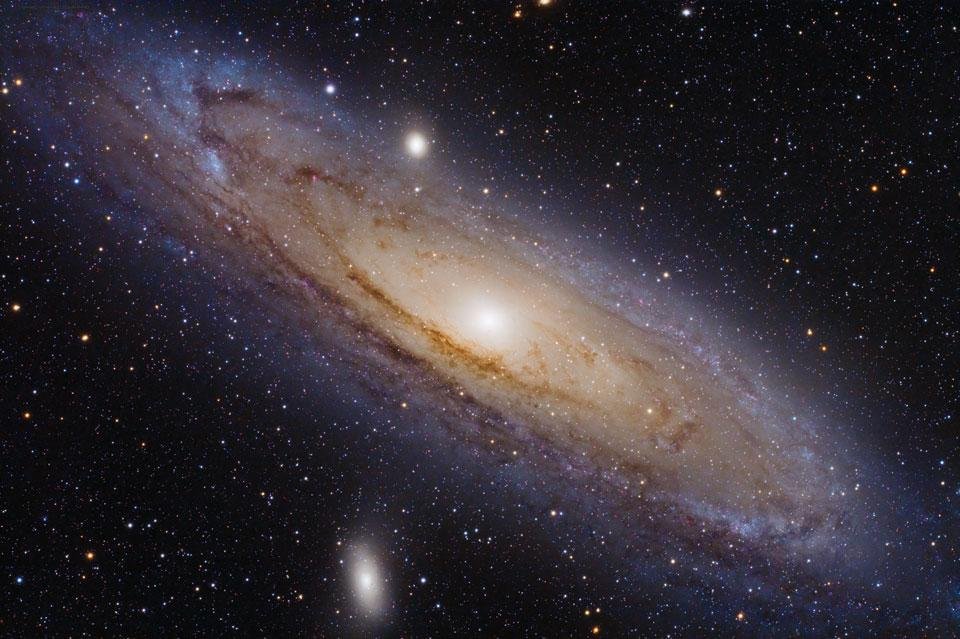
How to find the Andromeda Galaxy in the night sky is easier than you might think. Located about 2.5 million light-years from Earth, Andromeda is the nearest large spiral galaxy to the Milky Way and one of the most distant objects visible to the naked eye.
You don’t need expensive equipment or advanced astronomy skills to spot it. With a clear, dark sky, a little patience, and a simple star map, you can find Andromeda as a faint, fuzzy patch of light. Binoculars make it easier to see and reveal its elongated glow more clearly.
Find the Andromeda Galaxy Using the Great Square of Pegasus
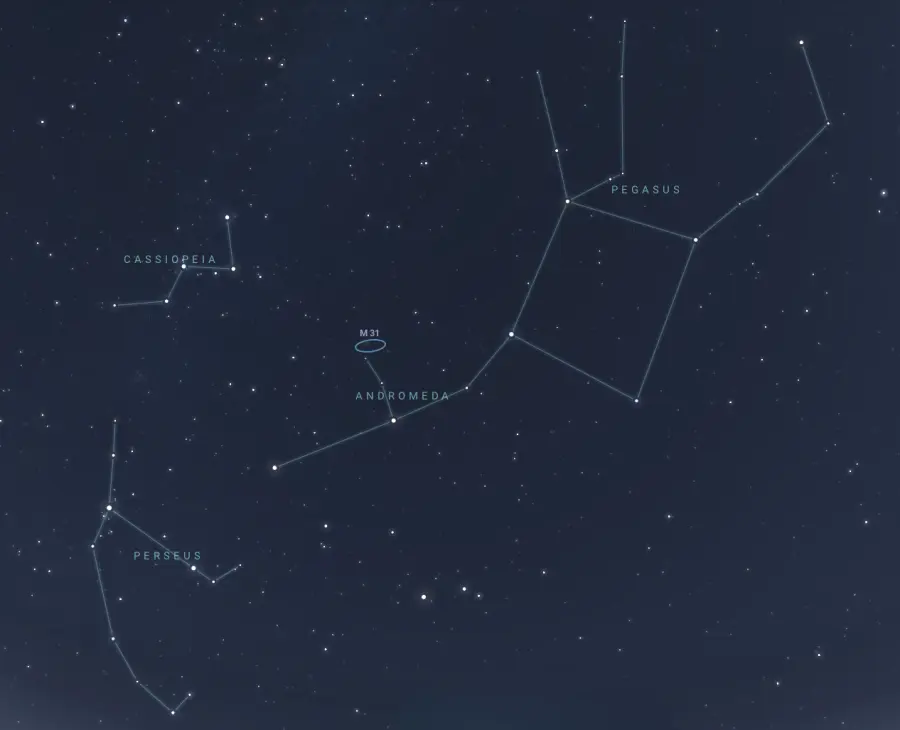
Credit: Stellarium Web
One of the easiest ways to find the Andromeda Galaxy is to start with the Great Square of Pegasus, a large, easy-to-recognize pattern of four bright stars. Look toward the eastern sky after sunset in early evening, then higher in the sky as the night progresses. The exact position depends on your location and the time of observation.
From the square’s northeastern corner, follow the chain of stars that forms the constellation Andromeda. Look for the bright star Mirach, then move toward the fainter stars farther along the chain. The Andromeda Galaxy lies near this route, slightly beyond the star Mu Andromedae. A stargazing app can help you confirm the direction before you begin.
How to Find the Andromeda Galaxy With Your Eyes or Binoculars
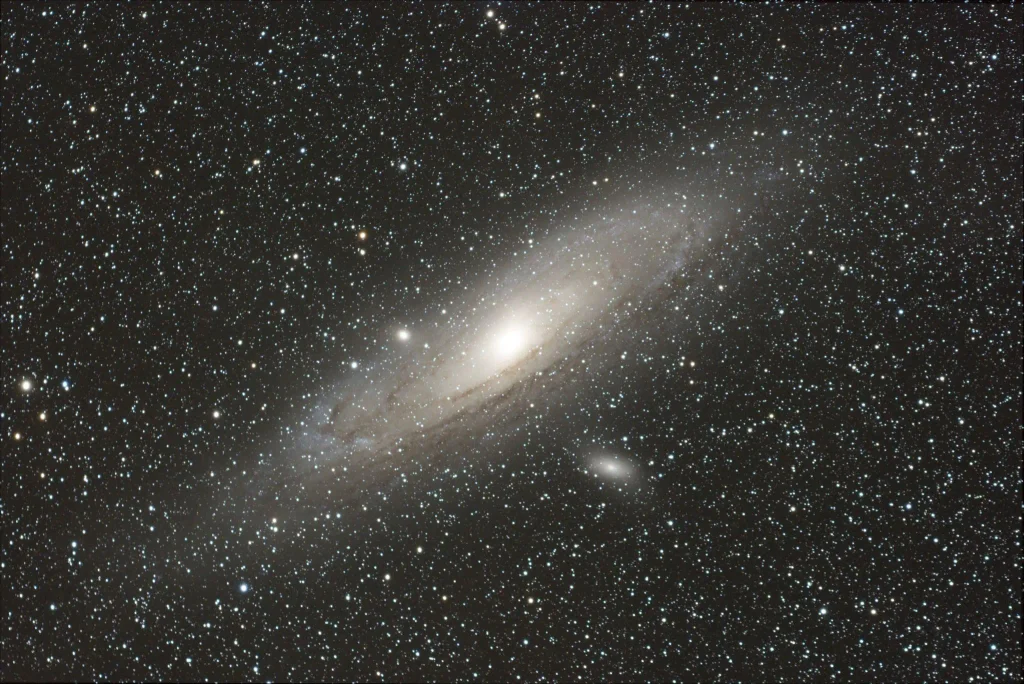
Once you reach the right area, look for a faint, elongated cloud of light rather than a sharply defined spiral. This is the galaxy’s bright central region and surrounding glow. From a dark location with little artificial lighting, people with good eyesight may see it without optical equipment. Under brighter suburban skies, it can be much harder to spot.
Binoculars are an excellent next step. Hold them steadily and scan slowly around the expected position. The galaxy should appear as a soft oval glow, often with a brighter center. A telescope can show more detail, but a wide field of view is helpful when you are first learning to locate it. Avoid expecting the colorful, detailed appearance seen in long-exposure photographs; your eyes see much less color in faint deep-sky objects.
Best Time and Conditions to See the Andromeda Galaxy
Credit : NASA
For the best chance of spotting Andromeda, choose a clear, moonless evening and observe after the sky becomes fully dark. The galaxy is easiest to see when it rises higher in the sky, making it easier to observe from locations with an unobstructed horizon.
Light pollution is one of the biggest obstacles. If possible, move away from streetlights, bright buildings, and city centers. You can also learn more about what the night sky looks like without light pollution and why darker skies improve visibility. Give your eyes around 20–30 minutes to adjust to the darkness, and avoid looking at your phone’s bright screen. If the galaxy is difficult to see directly, try looking slightly to one side of its expected position. This technique, called averted vision, can help you notice faint objects.
Why Seeing the Andromeda Galaxy Is So Remarkable
The Andromeda Galaxy, also known as Messier 31 or M31, is more than a beautiful deep-sky object. It is a massive spiral galaxy containing an enormous number of stars, and its light has traveled approximately 2.5 million years to reach Earth. When you look at Andromeda, you are seeing it as it was millions of years ago.
Finding it for the first time can make the enormous scale of the universe feel surprisingly real. You do not need a professional telescope or advanced astronomy knowledge to experience this. Start with the Great Square of Pegasus, follow the stars of Andromeda, and give your eyes time to pick out the faint glow. With patience and dark skies, you may discover that one of the most distant objects visible to the naked eye is waiting right above you.
For more ways to explore the night sky, discover how to stargaze without a telescope and what you can see with just your eyes.
Look Up. Observe Vastness.
LUOV