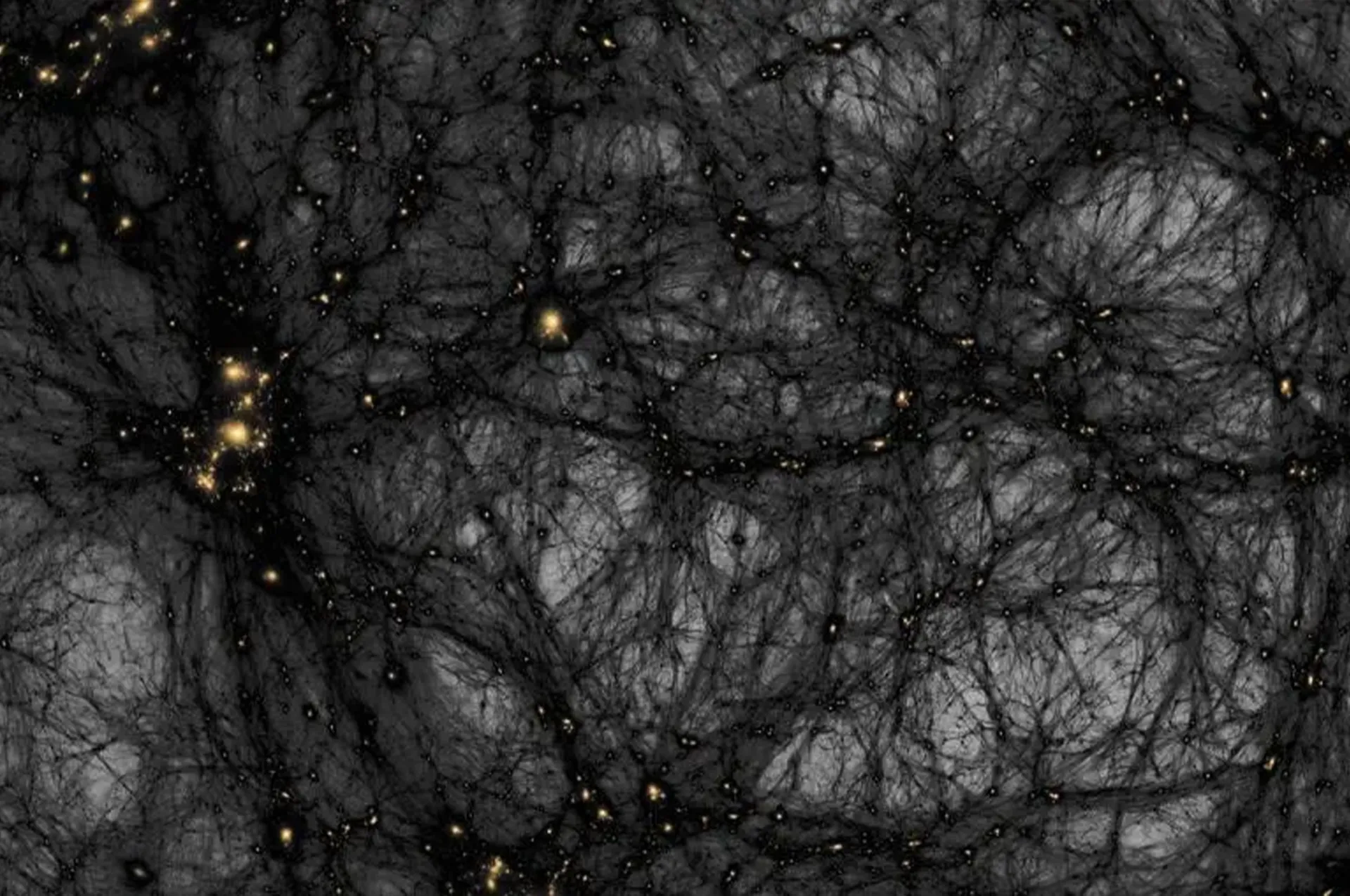
What is dark matter, and how can scientists know something exists if they cannot see it? Why do galaxies appear to contain far more mass than the stars and gas we can observe?
Dark matter is one of the biggest mysteries in modern astronomy. It does not appear to absorb, reflect, or emit light, so telescopes cannot see it directly. Yet scientists can observe its gravitational effects on galaxies, galaxy clusters, and even distant light. NASA estimates that dark matter makes up about 27% of the universe, compared with only about 5% ordinary matter.
To put that scale into context, our guide to how big the observable universe is explores just how enormous the region containing this hidden matter actually is.
What Is Dark Matter?
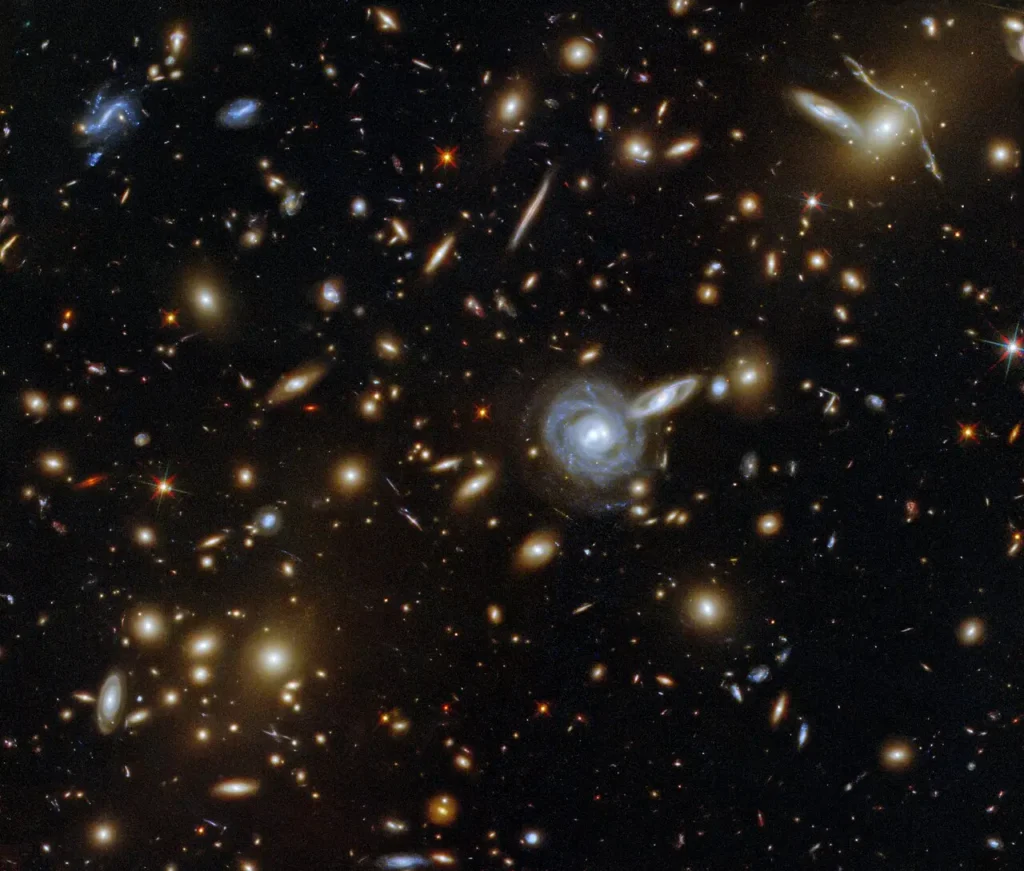
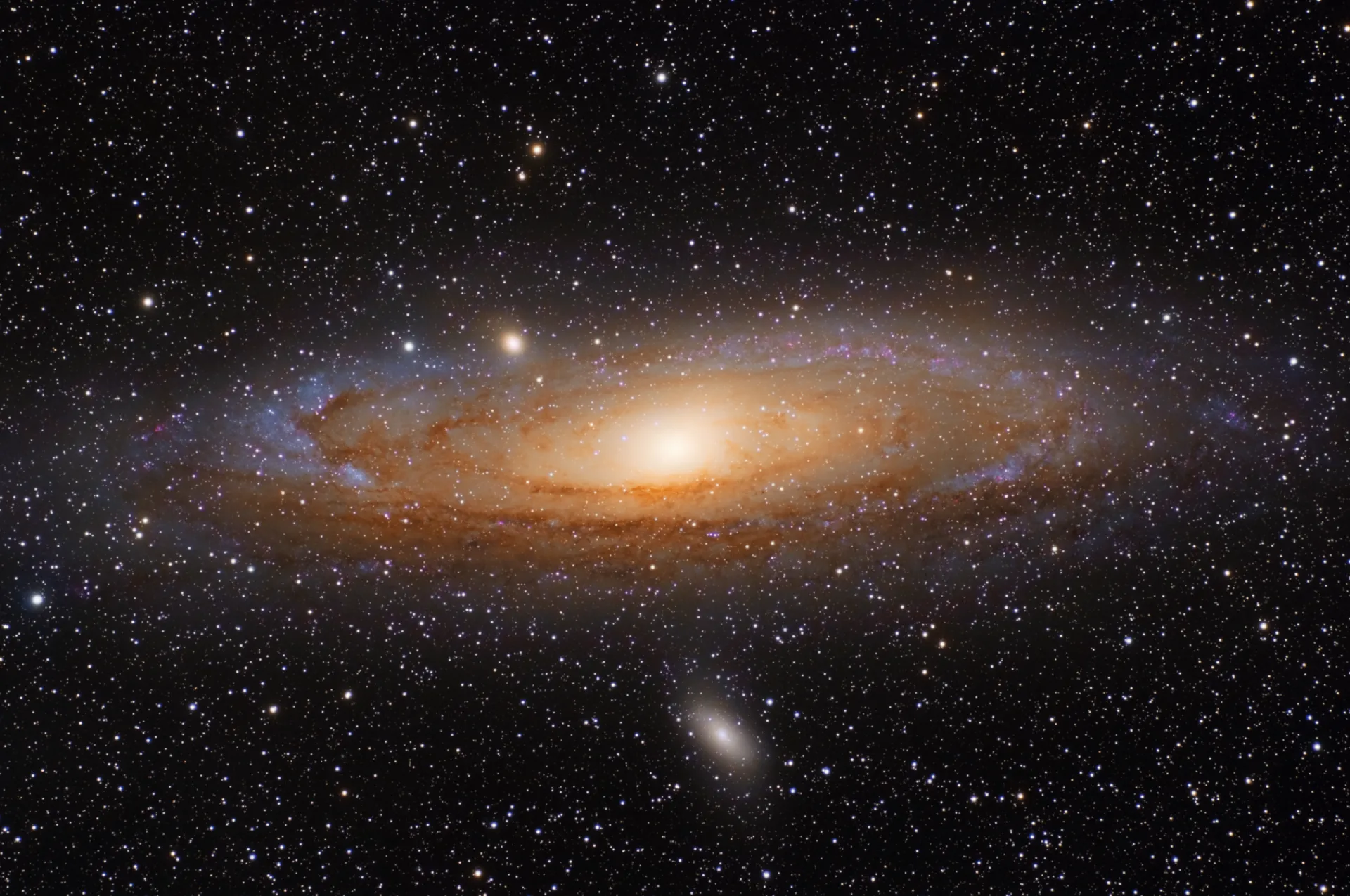
Distant galaxies where dark matter is detected through its gravitational effects. Credit: NASA / ESA
Dark matter is a form of matter that appears to have mass and gravity but does not interact with light in the way ordinary matter does. Scientists therefore cannot photograph dark matter itself. Instead, they study how its gravity affects visible matter and light around it.
The mystery began to take shape in the 1930s. Astronomer Fritz Zwicky studied the Coma Cluster, a huge group of galaxies, and found that its galaxies were moving much faster than expected from the visible matter alone. He suggested that unseen matter was providing additional gravity and helping keep the cluster together.
How Do We Know Dark Matter Exists?
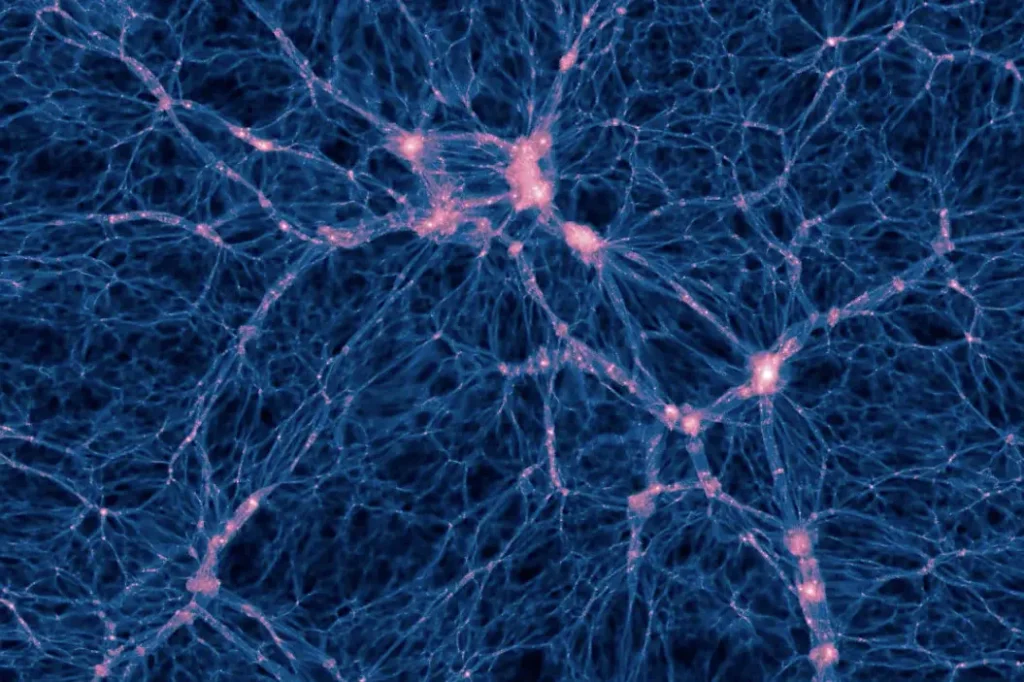
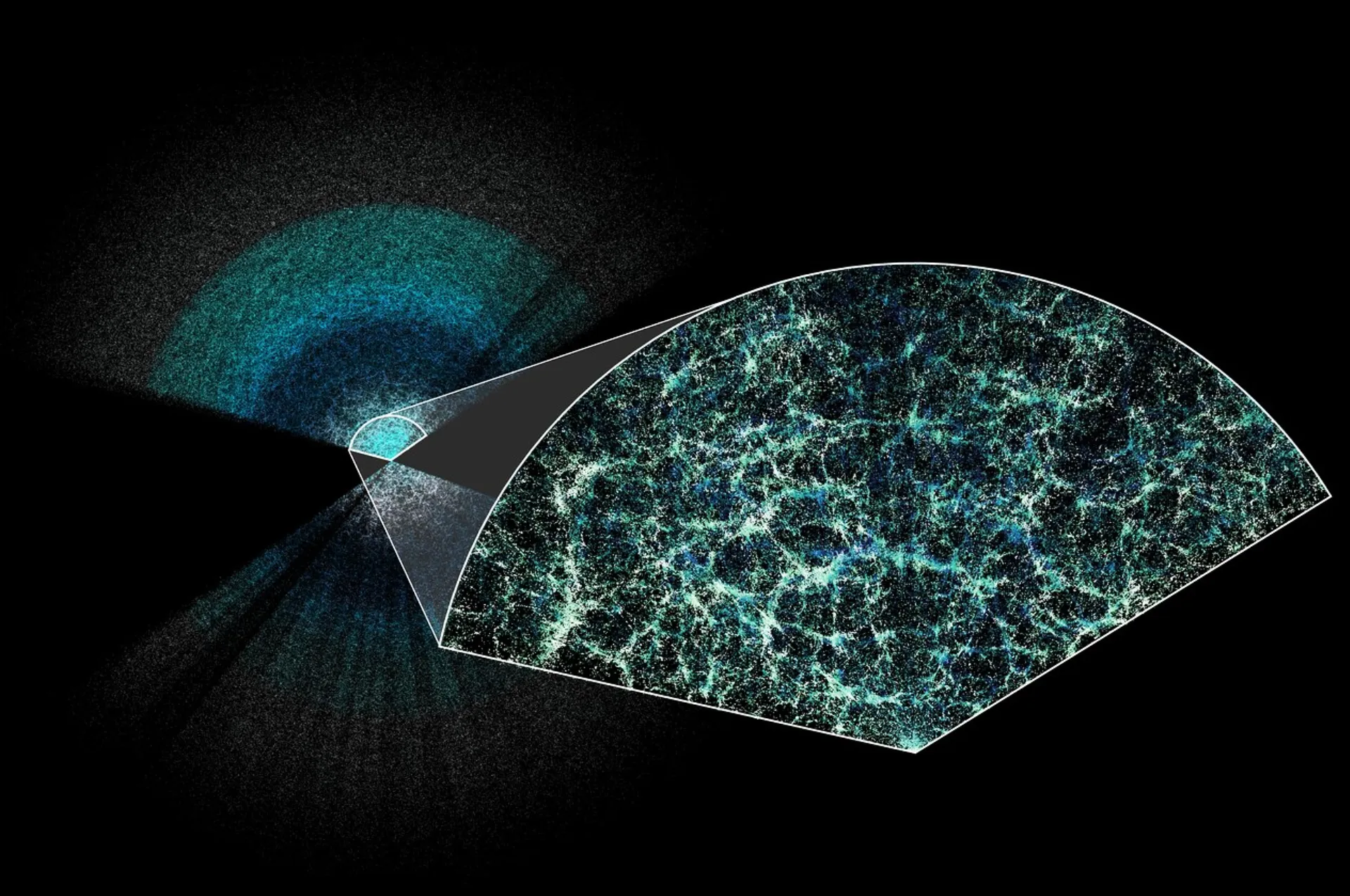
Visualization of dark matter forming a web-like structure across the universe. Creator: Picasa
One of the strongest clues comes from the way stars move inside galaxies. In the 1970s, astronomer Vera Rubin studied spiral galaxies and found that stars far from their centers were moving surprisingly fast. Based only on the visible stars and gas, those outer stars should not have been moving as quickly as they were.
The observations suggested that galaxies contain a large amount of unseen mass surrounding their visible regions. This invisible material provides additional gravity, helping explain why galaxies remain together. Rubin’s work became one of the most important pieces of evidence supporting the modern idea of dark matter.
Another powerful clue comes from gravitational lensing. Gravity can bend and distort light, so when light from a distant galaxy passes through a massive galaxy cluster, its path can be warped or magnified. By measuring these distortions, astronomers can estimate where mass is located, even when much of that mass cannot be seen directly.
This is similar to the way astronomers use light itself to study extremely distant objects, something we explore further in How Do Telescopes See Into the Past?
Dark Matter and the Bullet Cluster
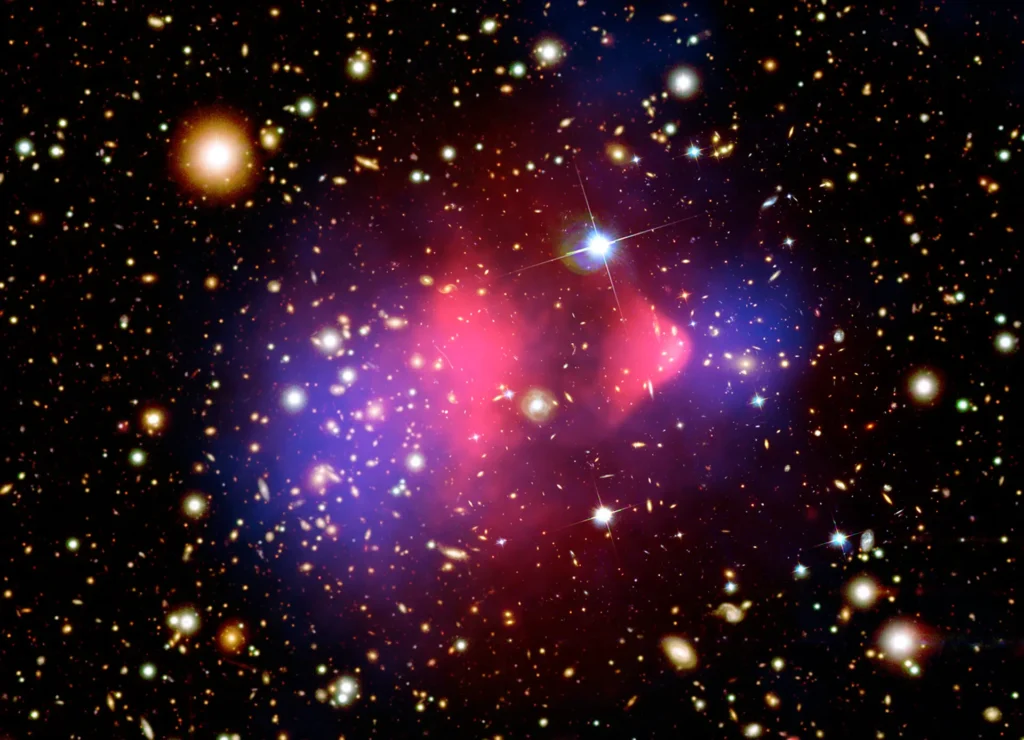
Composite image of the Bullet Cluster revealing the separation between visible hot gas and dark matter traced through gravitational lensing. Credit: ESA
The Bullet Cluster provides another important example. It formed when two enormous galaxy clusters collided. During the collision, the hot gas, which contains most of the ordinary matter, interacted and slowed down.
However, gravitational lensing measurements showed that much of the total mass was located separately from this hot gas. In composite observations, the normal matter is concentrated in one region while the inferred mass distribution appears elsewhere. NASA describes the Bullet Cluster as one of the clearest observational examples supporting dark matter.
This separation is significant because the gravitationally detected mass does not simply follow the visible matter. The observations therefore provide strong evidence for an additional invisible component.
What Is Dark Matter Made Of?
Scientists still do not know exactly what dark matter is made of.
Several possibilities have been proposed, including WIMPs, axions, and hypothetical primordial black holes. None has yet been confirmed as the substance responsible for dark matter, and researchers continue searching for direct evidence of possible dark matter particles.
At the same time, astronomers continue mapping dark matter through galaxy motion and gravitational lensing. Understanding its distribution is important because dark matter appears to play a major role in how galaxies formed and how the large-scale structure of the universe developed.
Dark matter should also not be confused with dark energy. Dark matter contributes gravity and helps structure galaxies and galaxy clusters, while dark energy is the name given to the phenomenon associated with the accelerating expansion of the universe.
Dark matter remains invisible to our telescopes, but its gravitational influence leaves clues throughout the cosmos. By studying those clues, astronomers are gradually building a clearer picture of one of the universe’s greatest mysteries.
Look Up. Observe Vastness.
LUOV