Credit: NASA / ESA
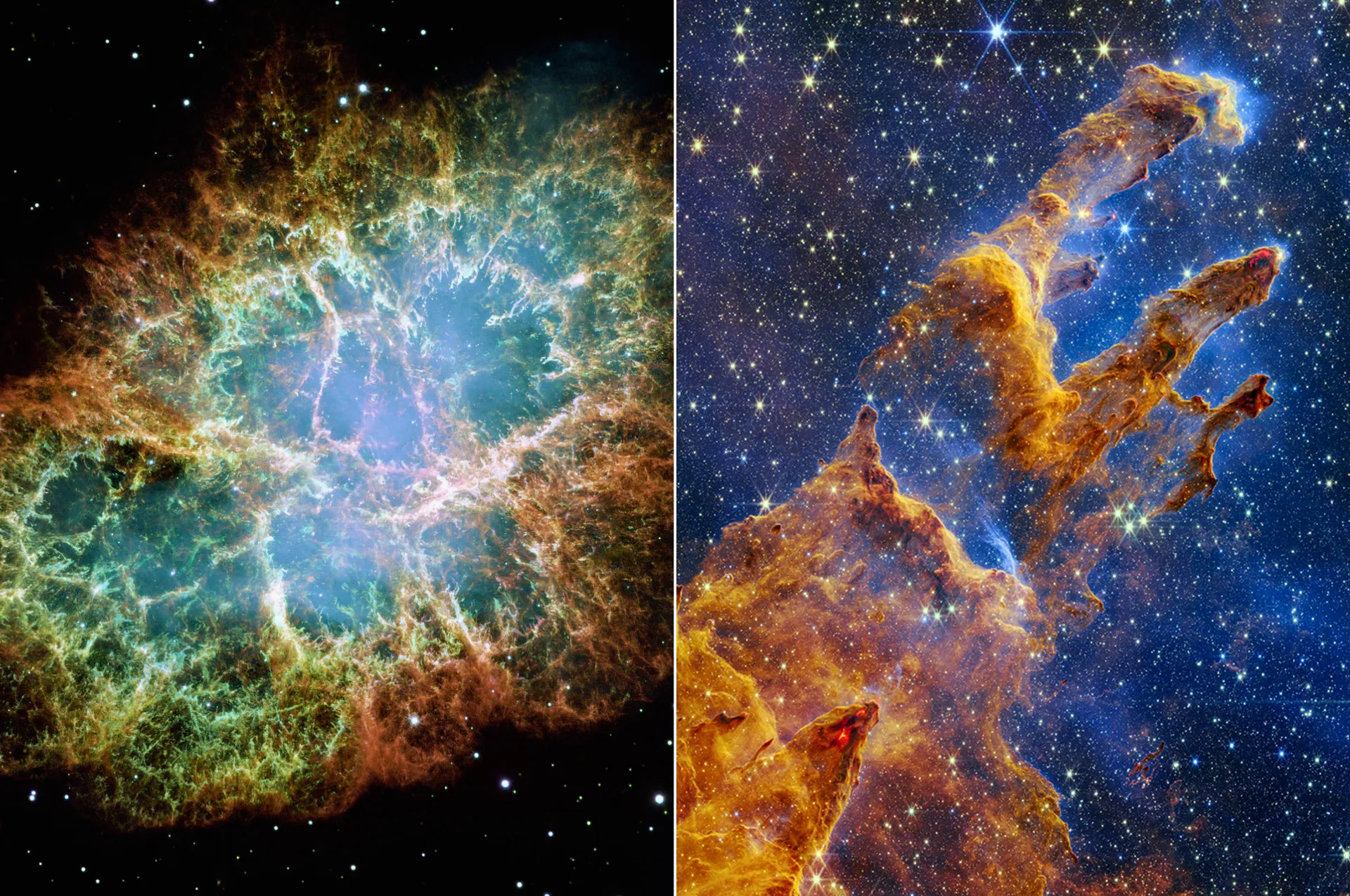
A nebula is a vast cloud of gas and dust in space where some of the universe’s most fascinating processes take place, including the birth of new stars. These clouds can stretch across enormous distances, creating beautiful shapes that astronomers observe using powerful space telescopes. While some nebulae are formed from the remains of dying stars, others act as stellar nurseries where new stars begin their lives.
What Is a Nebula?
Credit: ESO
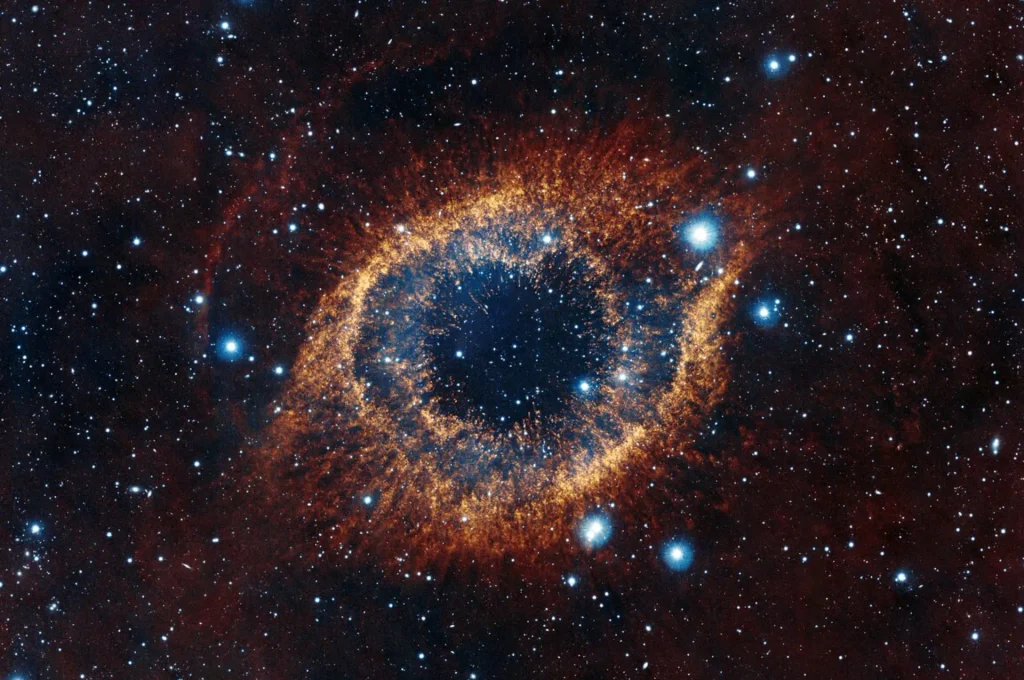
A nebula is a large cloud of gas and dust found in the space between stars, known as interstellar space. Most nebulae contain hydrogen and helium, along with tiny particles of cosmic dust. Although these clouds may look thick and colorful in telescope images, their material is usually spread very thinly across huge volumes of space.
Nebulae come in different shapes, sizes, and colors. Some glow because their gases are energized by nearby stars, while others reflect starlight or appear dark because their dust blocks light from objects behind them. Certain nebulae form when massive stars explode as supernovae, while others develop when aging stars release their outer layers into space.
How Does a Nebula Form New Stars?
Credit: NASA
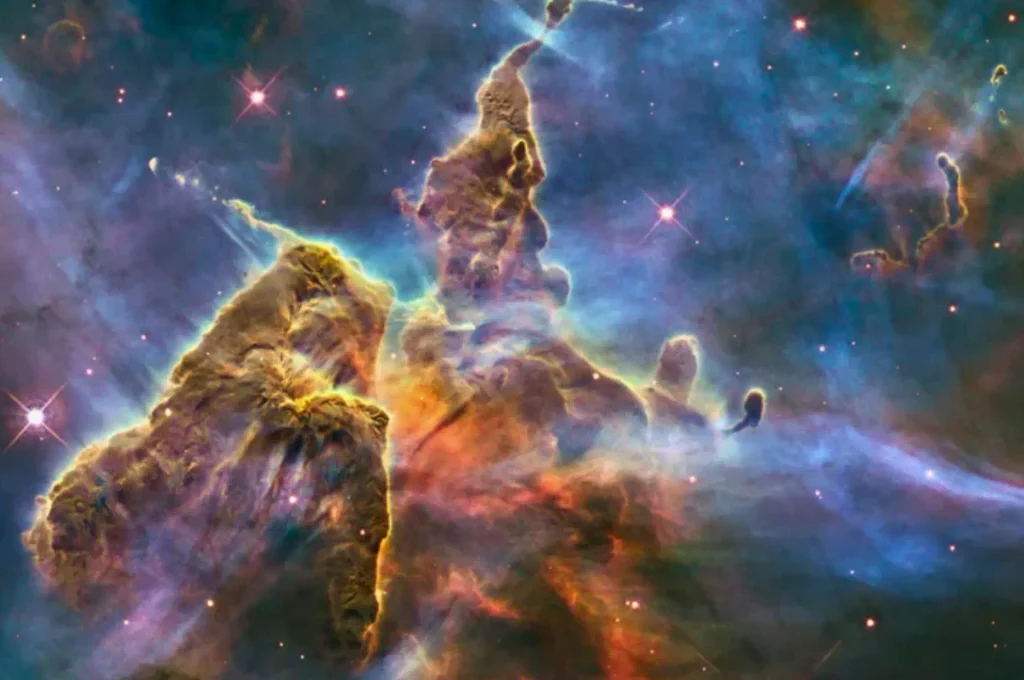
A star begins to form when gravity pulls gas and dust together inside a dense region of a nebula. As more material gathers, the growing cloud becomes denser, and its central region can collapse under its own gravity. This collapse causes the material at the center to heat up, forming a young object called a protostar.
The protostar continues gathering material from its surroundings as its core becomes hotter and denser. Eventually, when the core reaches the right temperature and pressure, nuclear fusion begins. During this process, hydrogen atoms combine to form helium, releasing enormous amounts of energy. The object becomes a true star, shining with its own energy. This process can take thousands to millions of years, depending on the star’s mass and its surrounding conditions.
Famous Nebulae Where Stars Are Born
Credit: NASA
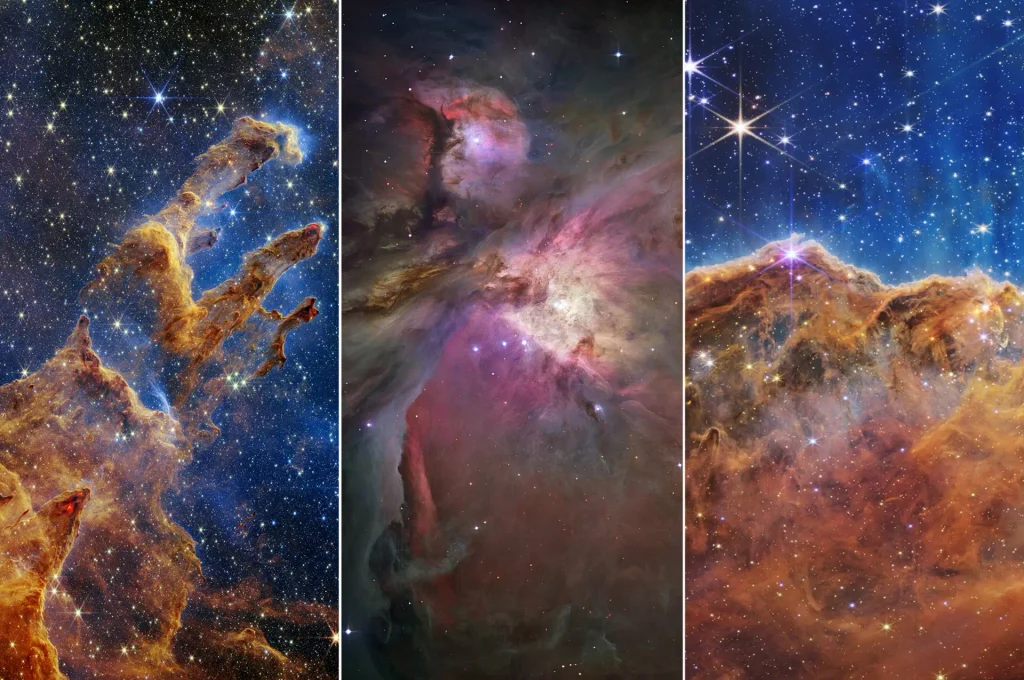
One of the most famous examples is the Eagle Nebula, home to the Pillars of Creation. These towering structures contain dense clouds of gas and dust where stars can form. Images captured by the Hubble Space Telescope reveal how radiation from nearby young stars shapes these pillars and gradually erodes their material. The region gives astronomers a close look at the changing conditions inside a stellar nursery.
The Orion Nebula is another important example. Located about 1,300 light-years from Earth, it is one of the nearest major star-forming regions and can be seen with the naked eye under suitable conditions. Inside it, young stars develop within clouds of gas and dust. By studying this region, astronomers can investigate how stars form and how their radiation affects the surrounding material.
The Carina Nebula is also a remarkable stellar nursery. It contains massive young stars that release intense radiation and powerful stellar winds. These forces carve cavities into nearby clouds and reshape their structures. Observations from Hubble and the James Webb Space Telescope help reveal details of these regions, including areas hidden from ordinary visible-light observations.
How Do Telescopes See Inside a Nebula?
Nebulae are often photographed in striking shades of red, blue, and gold, but these colors do not always match what the human eye would see. Astronomers use different filters and wavelengths of light to reveal specific gases, dust structures, and energetic processes. Some images combine several observations to make otherwise invisible details easier to study.
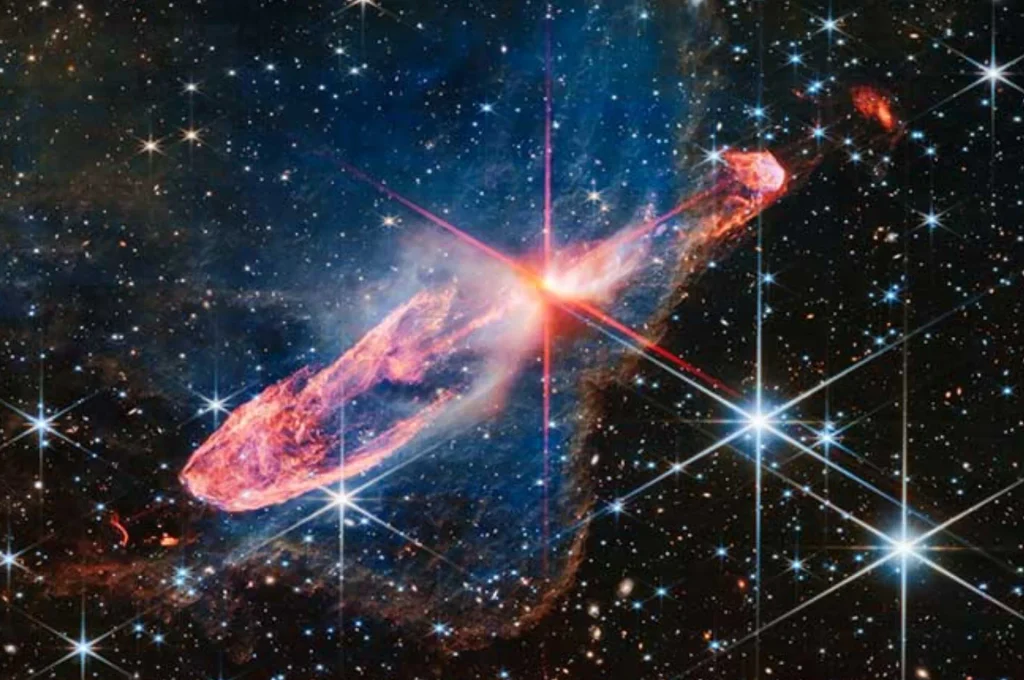
Infrared observations are especially useful because infrared light can pass through many dusty regions more effectively than visible light. This allows telescopes such as the James Webb Space Telescope to study areas where young stars are hidden inside thick clouds. Hubble also observes ultraviolet, visible, and near-infrared light, helping scientists examine young stars, glowing gas, and jets of material released by forming stars.
To see how these observatories compare, explore our guide to Roman vs. James Webb vs. Hubble.
Credit: NASA
Nebulae help astronomers understand how stars are born, change over time, and eventually die. They also show how material from older stars can become part of new generations of stars and planets. When stars release gas and heavier elements into space, that material can enrich the clouds from which future stars and planetary systems develop.
Our Sun formed from a cloud of gas and dust around 4.6 billion years ago. Although scientists cannot observe that exact event directly, studying star-forming nebulae today provides valuable clues about the conditions that shaped our solar system. In this way, nebulae connect the universe’s past with its future.
A nebula is far more than a beautiful cloud in space. It is part of a continuing cycle of cosmic change, where stars emerge from clouds of gas and dust, influence their surroundings, and return material to space. By studying these stellar nurseries, astronomers are gradually uncovering how the stars that fill our night sky began their journeys.
Look Up. Observe Vastness.
LUOV