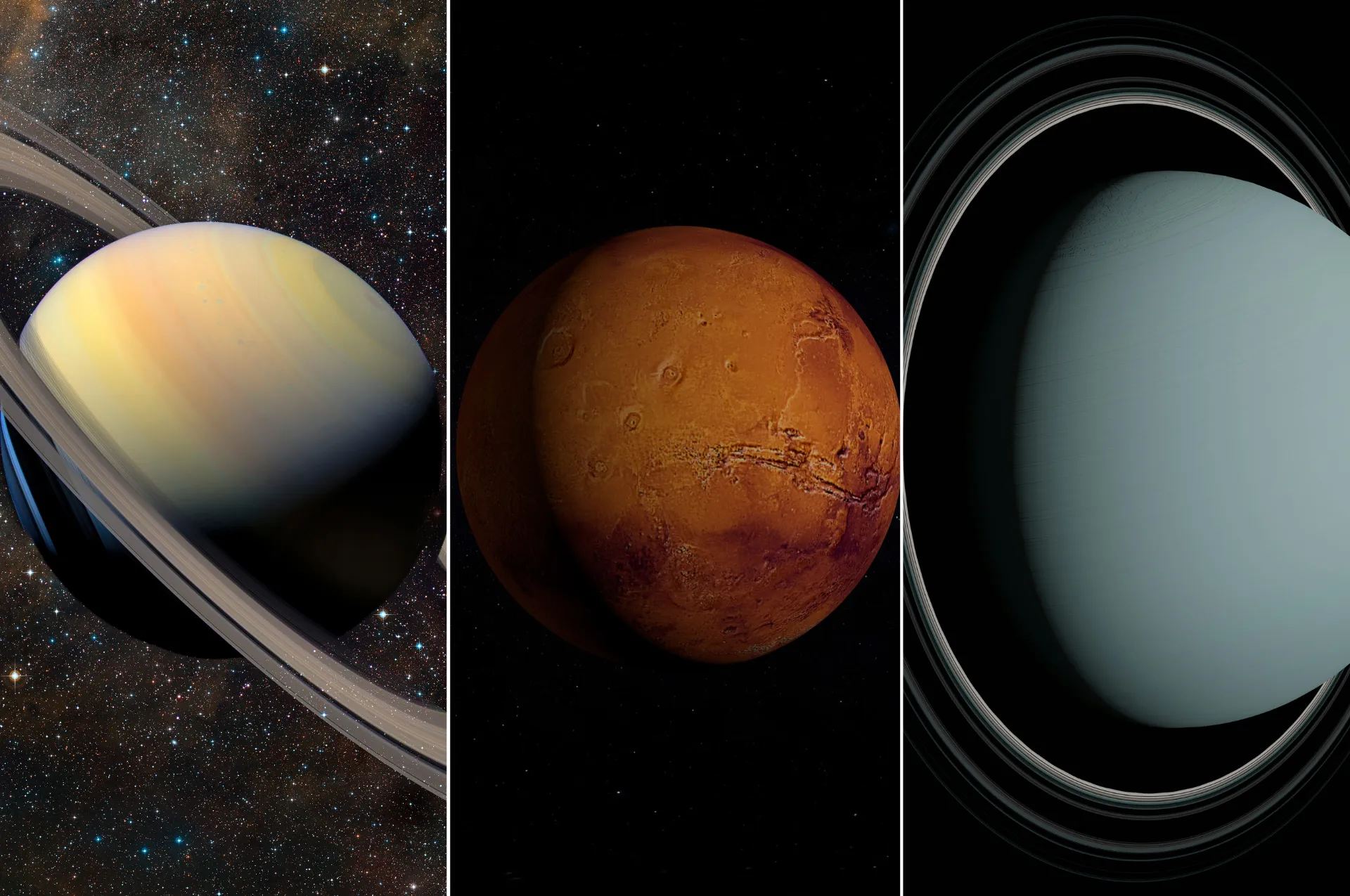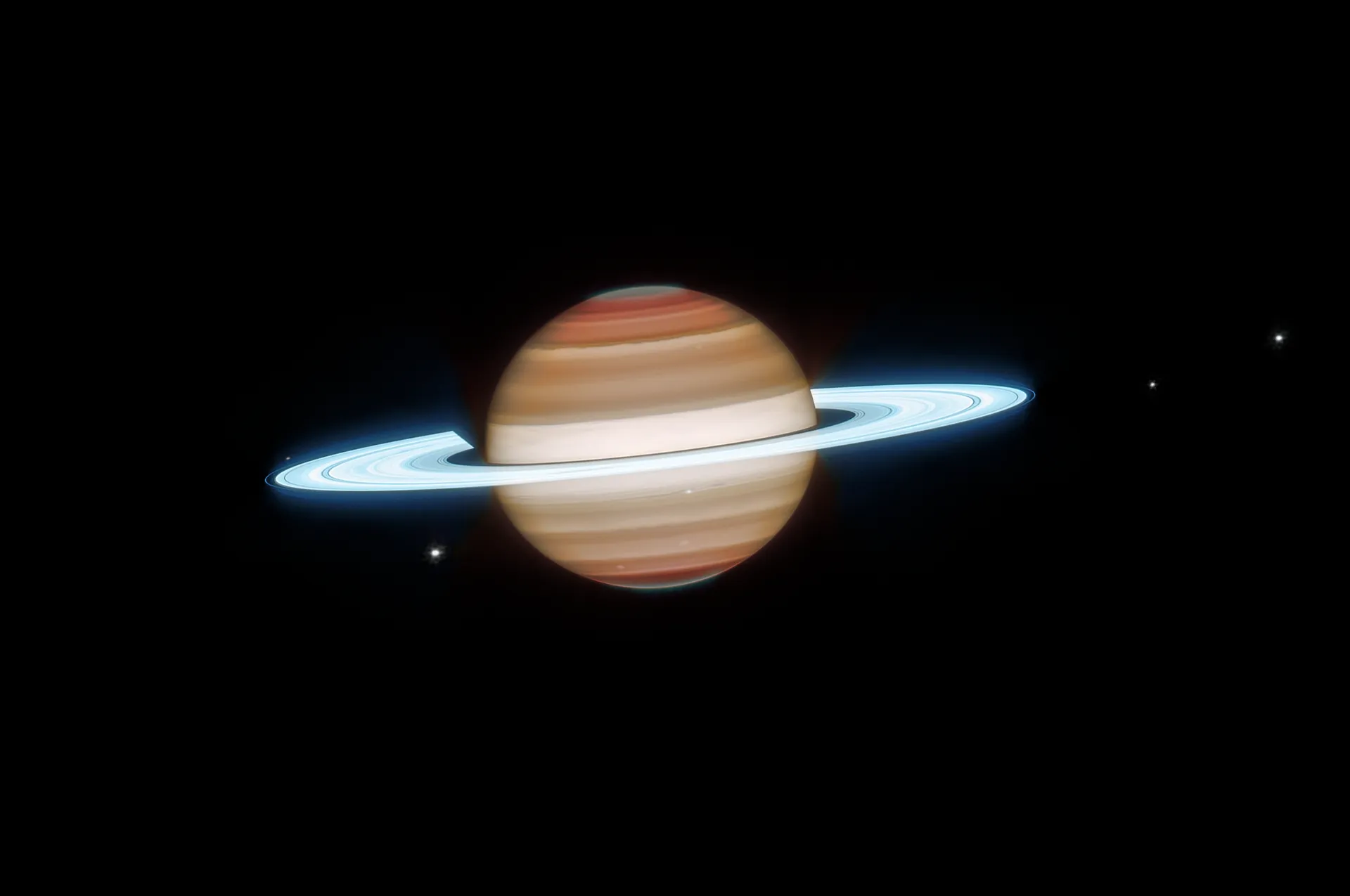
Saturn at Opposition 2026 will occur on October 4, 2026, when Earth moves almost directly between the Sun and Saturn. The exact moment occurs around 12:00 UTC, but you do not need to observe at that precise time. The nights around October 4 will offer excellent opportunities to see the ringed planet.
Opposition is an important event for observing outer planets. Because Earth is positioned between Saturn and the Sun, Saturn appears opposite the Sun in our sky. It rises around sunset, remains visible throughout the night, and sets around sunrise.
At this time, Saturn is also approximately at its closest point to Earth for the year, about 1.26 billion kilometers (784 million miles) away.
How Bright Will Saturn Be?
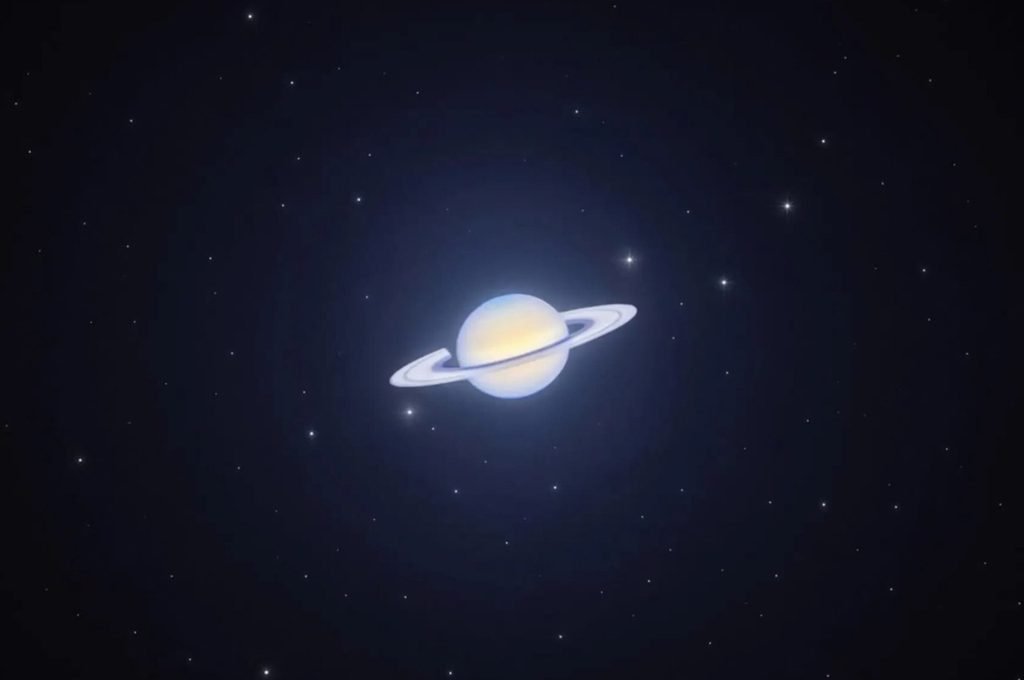
View of Saturn showing its bright disk and ring system against the night sky. Credit: aj.smadi / Instagram
During Opposition, Saturn will reach about magnitude 0.3, making it one of the brightest objects in the night sky. Saturn has a steady, pale golden appearance, which helps distinguish it from stars that usually appear to twinkle. It will be located in the region of Cetus the Whale, making a sky map or astronomy app useful for finding its exact position.
The event is especially interesting because Saturn’s rings are gradually opening again after Earth passed through the plane of the rings in March 2025. Around October 2026, the rings will be tilted by roughly 7.5 degrees from our viewpoint. They will therefore be visible through a telescope, although they cannot be seen with the unaided eye.
How to See Saturn at Opposition
You can see Saturn without any equipment. Look toward the eastern sky after sunset and search for a bright, steady, yellowish point of light.
Saturn will rise in the east around sunset, climb higher during the evening, reach its highest point around the middle of the night, and then move toward the western horizon before sunrise. The planet will remain well placed for observation for several weeks around opposition.
For the best view, choose a location away from bright city lights and wait until Saturn is well above the horizon. Our guide to how to stargaze without a telescope covers simple ways to improve naked-eye observing conditions.
Binoculars can give Saturn a more distinctly oval appearance, but a telescope is needed to clearly see its famous rings. Even a small telescope can reveal the ring system, while larger telescopes under steady skies may show additional details such as the Cassini Division and some of Saturn’s brighter moons.
Saturn in the October 2026 Night Sky
If you are planning your October stargazing schedule, Saturn at Opposition 2026 is one of the month’s major planetary events.
You can also explore our guide to October 2026 astronomy events to see what else will be happening in the night sky throughout the month.
You do not have to wait for October 4 itself either. Saturn will remain an excellent target around the opposition date, with the first half of October offering particularly good viewing opportunities.
Look Up. Observe Vastness.
LUOV