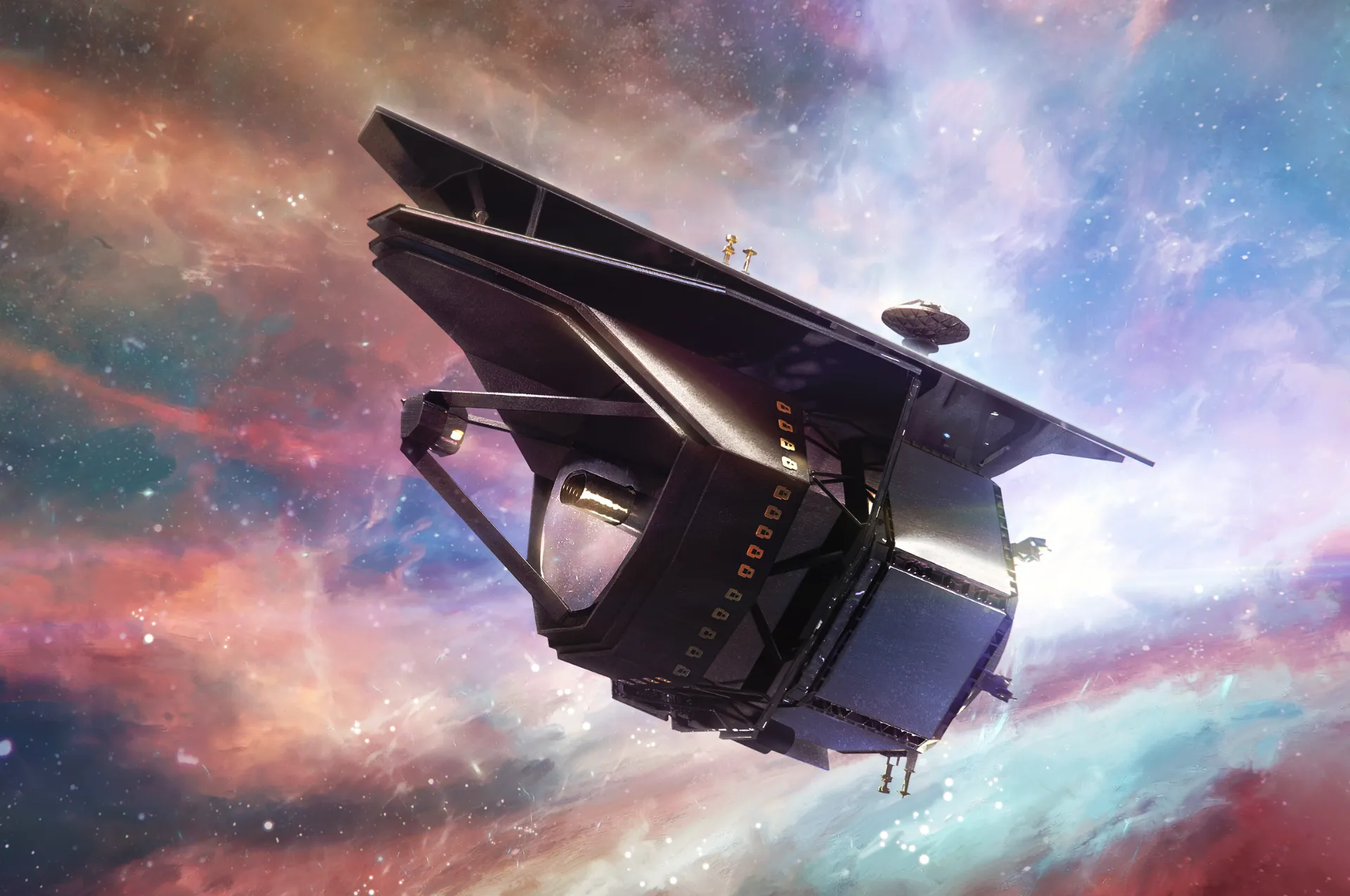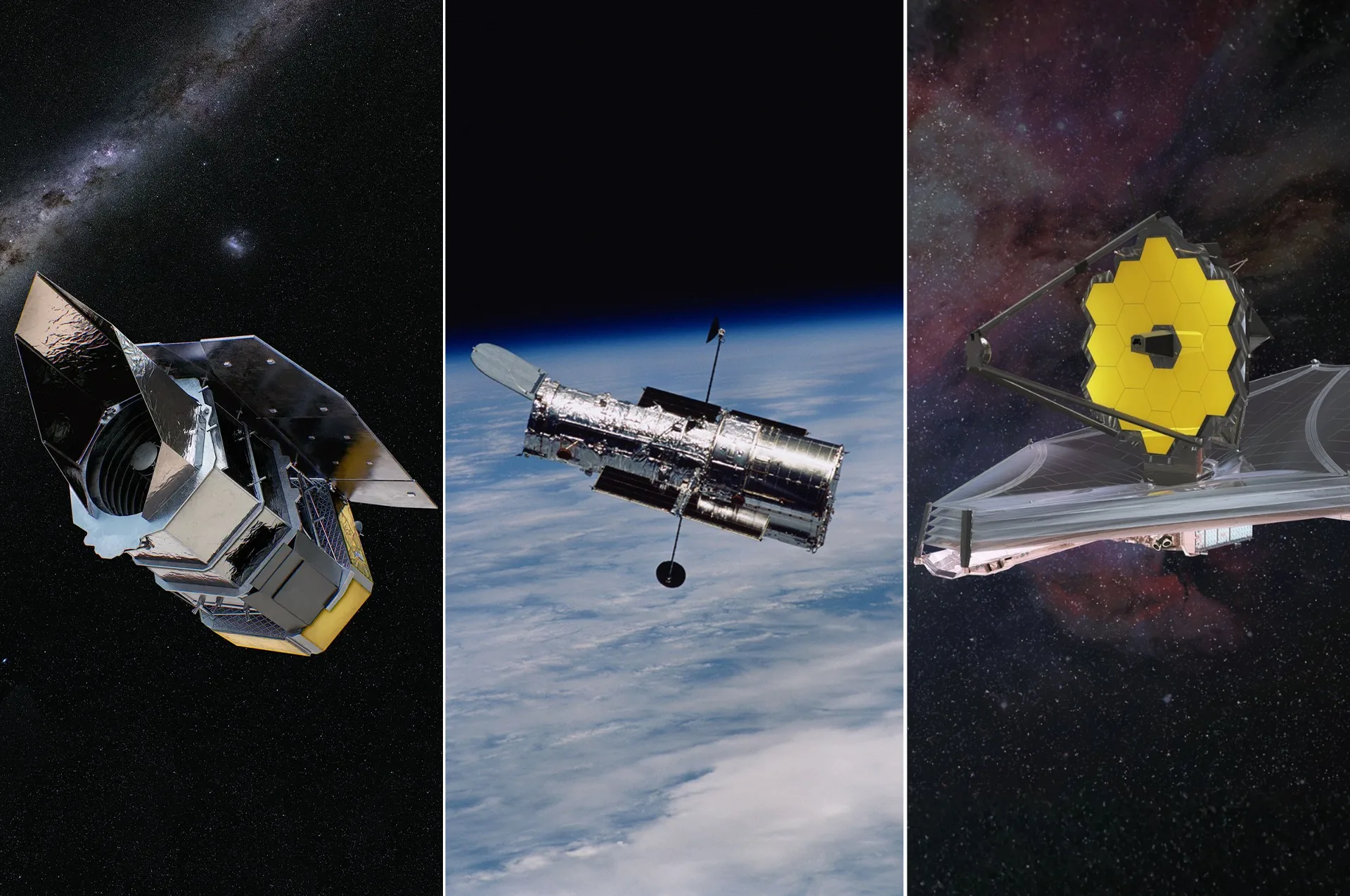
Roman vs James Webb vs Hubble is not simply a comparison of old and new space telescopes. Each observatory is designed to explore the universe in a different way. The Hubble Space Telescope has spent more than three decades capturing detailed views of the cosmos, while the James Webb Space Telescope looks deeper into the infrared universe and farther back in cosmic history. NASA’s newly launched Nancy Grace Roman Space Telescope adds another powerful ability: surveying enormous areas of the sky quickly while maintaining sharp resolution. Roman launched on August 30, 2026, and is now traveling toward the Sun–Earth L2 region.
Rather than replacing one another, these three telescopes complement each other. Think of Hubble as a detailed camera, Webb as a powerful deep-infrared observer, and Roman as a wide-angle survey telescope. Together, they can give astronomers both the big picture and close-up views of some of the universe’s greatest mysteries.
Explore NASA’s Roman Space Telescope mission
Field of View and Mirrors
Credit: NASA
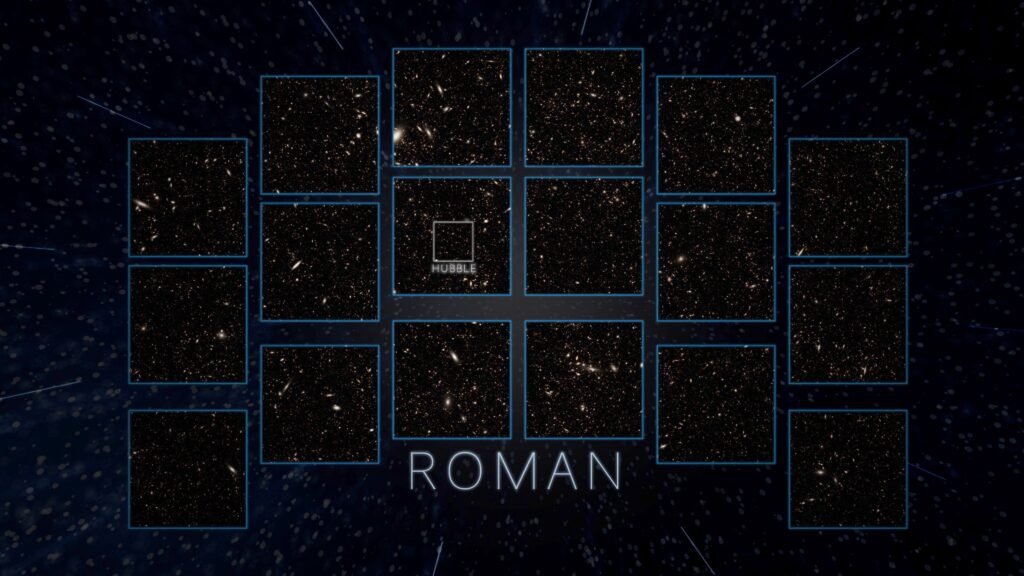
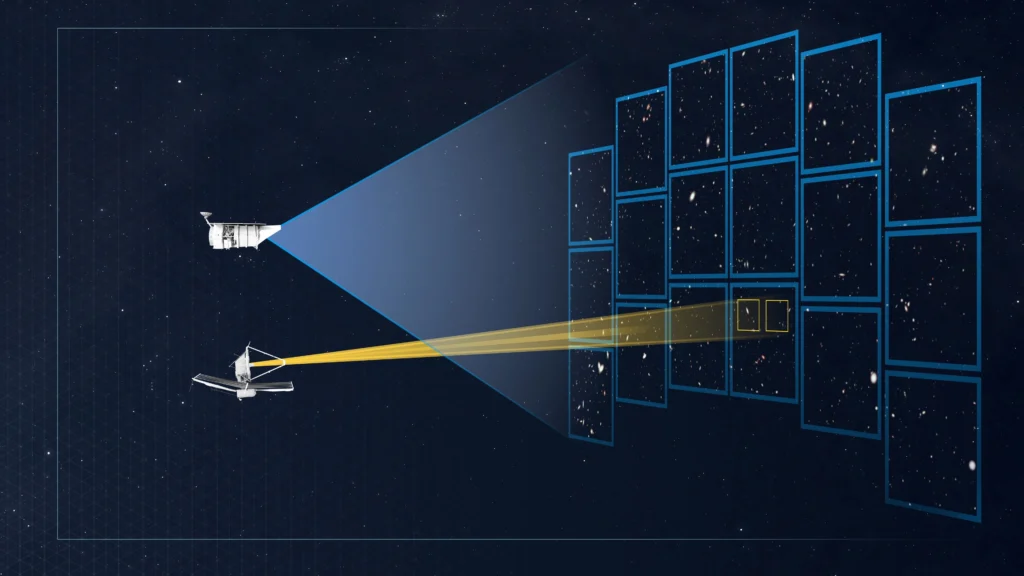
One of the biggest differences in the Roman vs James Webb vs Hubble comparison is how much of the sky each telescope can observe at once.
Roman and Hubble both have primary mirrors measuring 7.9 feet (2.4 meters) across. Roman’s optical design, however, gives its Wide Field Instrument a field of view at least 100 times larger than Hubble’s while maintaining similar infrared resolution. This allows Roman to survey huge regions of the universe far more efficiently.
Webb has a much larger 21-foot (6.5-meter) segmented primary mirror. Its greater light-gathering power allows it to detect extremely faint and distant objects in remarkable detail. Roman can capture images around 50 times larger than Webb’s, while Webb can see deeper into the infrared universe and farther back in time. In simple terms, Roman is built to survey wide areas, while Webb is built to closely examine faint and distant targets.
See NASA’s Roman and Webb comparison
What Each Space Telescope Sees Best
Credit: NASA
The three telescopes also observe different parts of the electromagnetic spectrum.
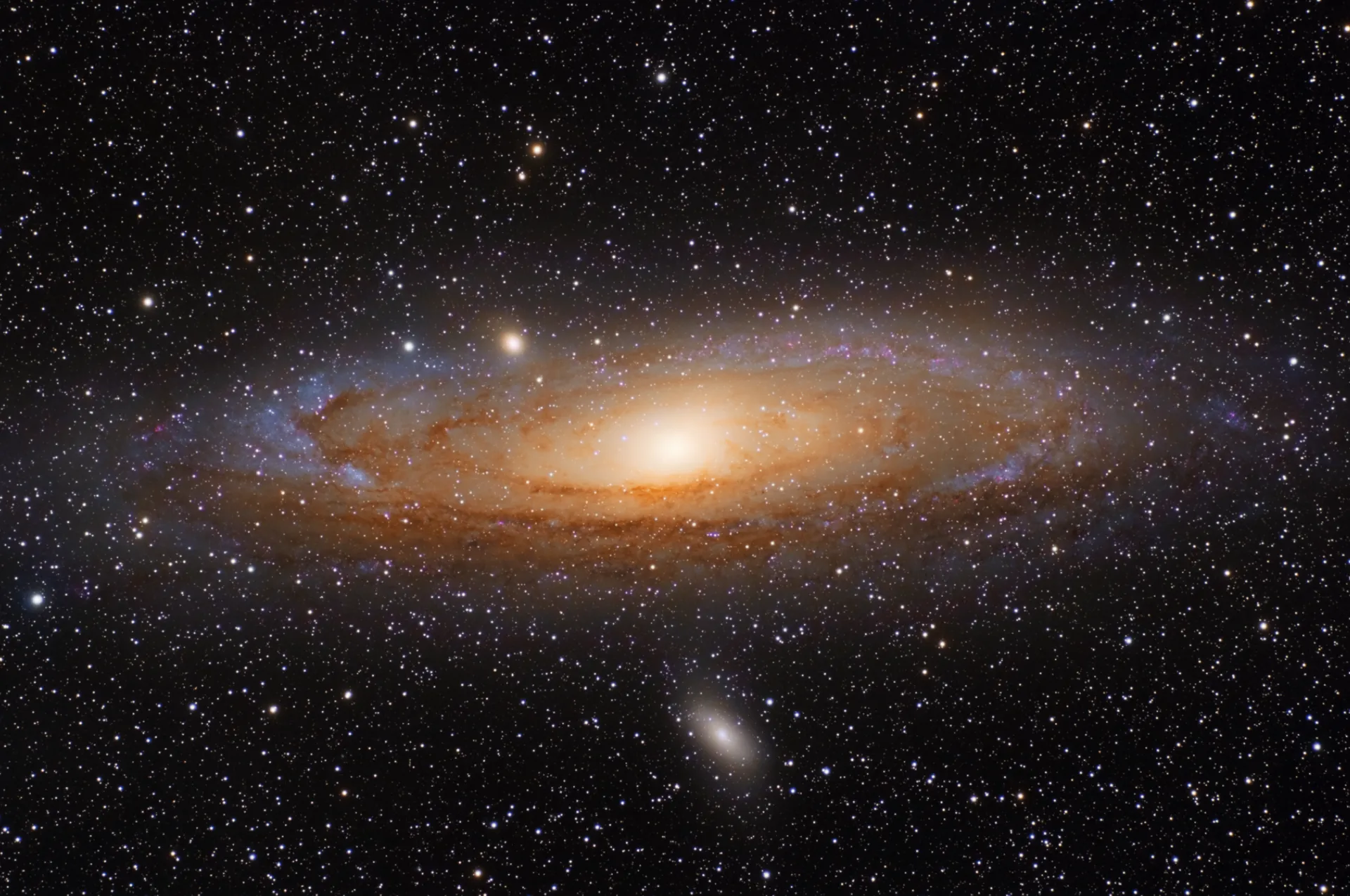
Hubble is especially valuable for ultraviolet and visible-light observations, while also reaching into the near-infrared. This makes it useful for detailed studies of galaxies, stars, nebulae, planets, and many other objects.
James Webb mainly observes infrared light. This allows it to see through cosmic dust and detect highly redshifted light from objects that existed billions of years ago. Its large mirror and infrared instruments make Webb particularly powerful for studying the early universe, star formation, and exoplanets.
Roman will also observe visible and near-infrared light, but its greatest strength is combining sharp imaging with an enormous field of view. It can rapidly map huge regions of space and identify rare objects, transient events, and large-scale cosmic patterns that narrower telescopes might miss.
Explore NASA’s James Webb Space Telescope
How Roman, Webb and Hubble Work Together
The most important point in the Roman vs James Webb vs Hubble comparison is that none of these observatories does exactly the same job.
Roman can scan enormous regions of the universe and identify interesting galaxies, exploding stars, exoplanets, and other unusual objects. Webb can then investigate selected targets in extraordinary infrared detail, while Hubble continues to provide valuable ultraviolet and visible-light observations.
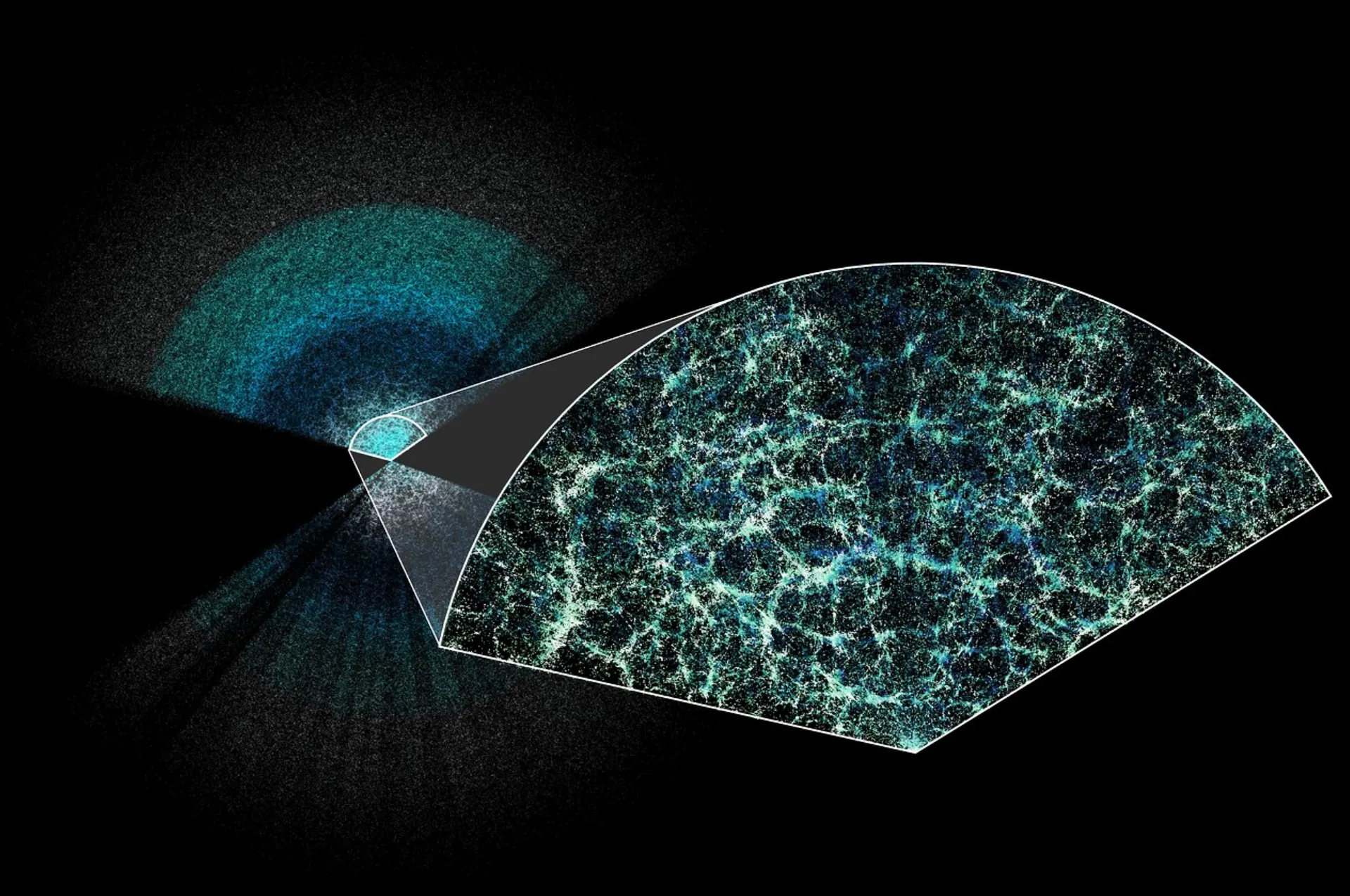
Roman’s wide surveys will also help scientists investigate dark energy, dark matter, galaxy evolution, black holes, and exoplanets. Its ability to repeatedly observe large sections of the sky may reveal objects that change or suddenly appear, while Webb and Hubble can provide more focused follow-up observations.
Ultimately, Roman vs James Webb vs Hubble is not a competition. Hubble provides a detailed and decades-long view of the universe, Webb looks deeper into the infrared cosmos, and Roman is designed to reveal the universe on an enormous scale.
By combining their unique strengths, these three observatories can help astronomers understand not only individual objects in space, but also how the universe as a whole has changed over billions of years.