Credit: Andrew McCarthy
A striking lunar eclipse is coming on August 27–28, 2026, and skywatchers across large parts of the world will have a chance to see it. This will be a deep partial lunar eclipse, with about 96% of the Moon passing through Earth’s darkest shadow. Because almost the entire Moon will enter the shadow, it could look very similar to a Blood Moon, even though a tiny portion will remain outside the umbra.
When Will the Eclipse Happen?
Credit: NASA
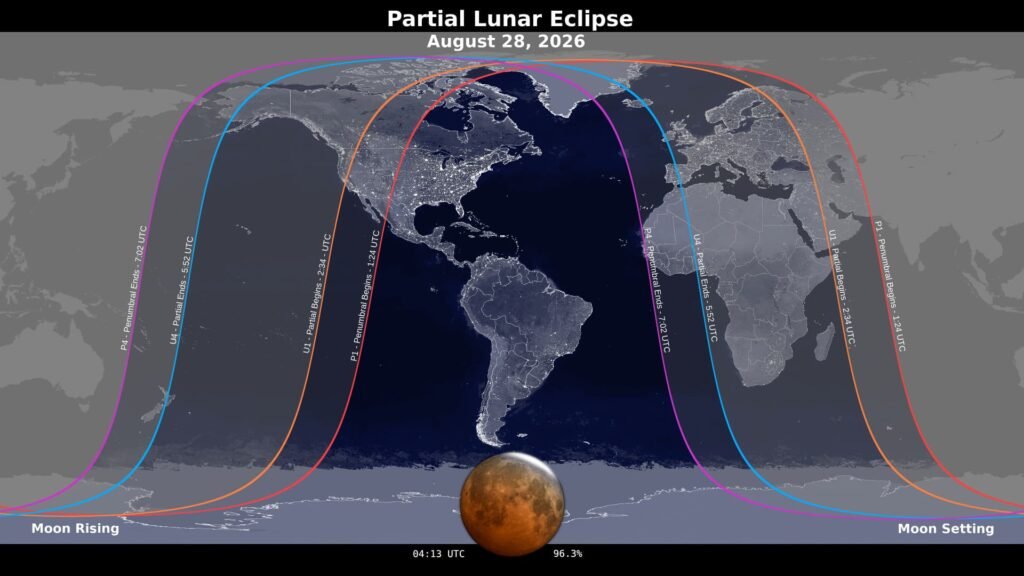
The eclipse will unfold over several hours, but the most interesting part is the deep partial phase. The partial eclipse begins at about 2:34 a.m. UTC on August 28, with the eclipse reaching its maximum at around 4:13 a.m. UTC. At that moment, about 96% of the Moon will be covered by Earth’s umbral shadow.
For people in North America, most of the eclipse will happen during the evening of August 27. Maximum eclipse will occur at around 9:12 p.m. PDT in Los Angeles, 10:12 p.m. MDT in Denver, 11:12 p.m. CDT in Chicago, and 12:12 a.m. EDT in New York on August 28.
In the UK and much of Europe, the event will take place during the early morning of August 28. The deepest part occurs around 5:13 a.m. BST in the UK and 6:13 a.m. CEST in central Europe. The Moon will be getting low in the sky, so a clear horizon will make a big difference.
Where Can You See It?
The eclipse will be visible across large parts of North America, South America, Europe, and western Africa. Observers across the Americas are in the prime viewing zone, with the Moon high and well placed throughout the key stages. For skywatchers in western Europe and Africa, the eclipse will unfold in the early morning hours just before dawn.
If you are in North America, look toward the southeast to southern sky during the evening of August 27. From Europe and Africa on the morning of August 28, the Moon will be low toward the west southwest, so an unobstructed view of the horizon will give you the best chance to catch it before moonset.
Unfortunately, regions across Asia and Oceania, including India, China, Japan, and Australia, will miss out on the event, as the Moon will remain below the horizon during all key phases.
What Will the Moon Look Like?
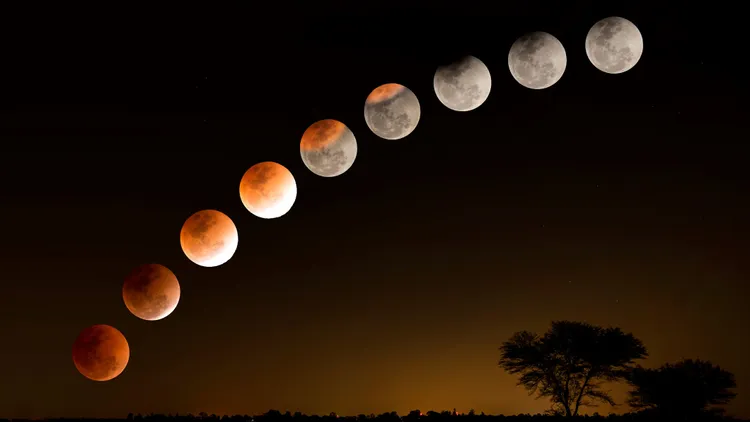
Credit: Getty Images
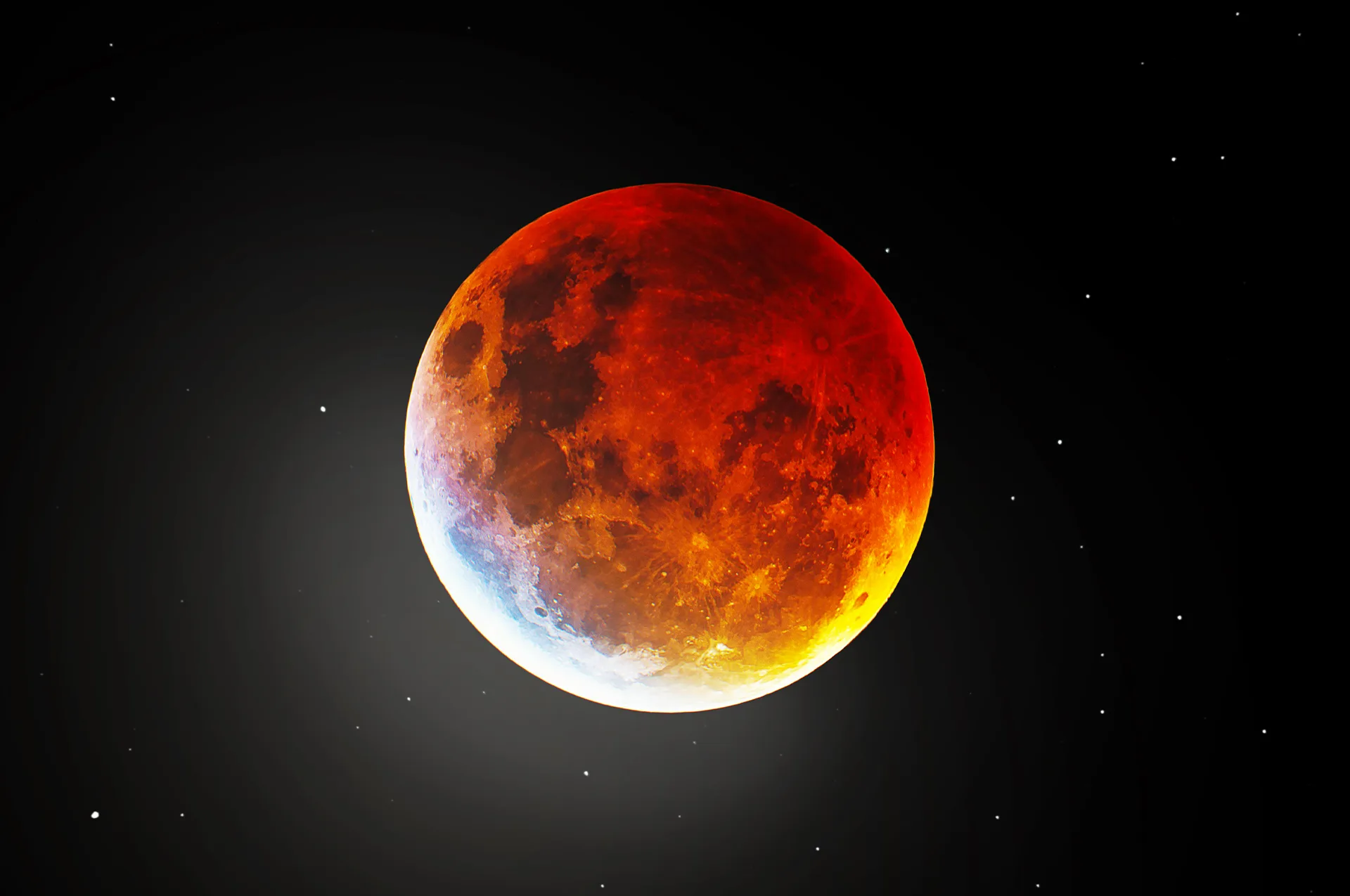
As Earth’s shadow moves across the Moon, you’ll see a dark curve slowly cover its bright surface. Near maximum eclipse, the Moon could take on shades of orange, copper or red. This happens because sunlight passing through Earth’s atmosphere is filtered and bent toward the Moon.
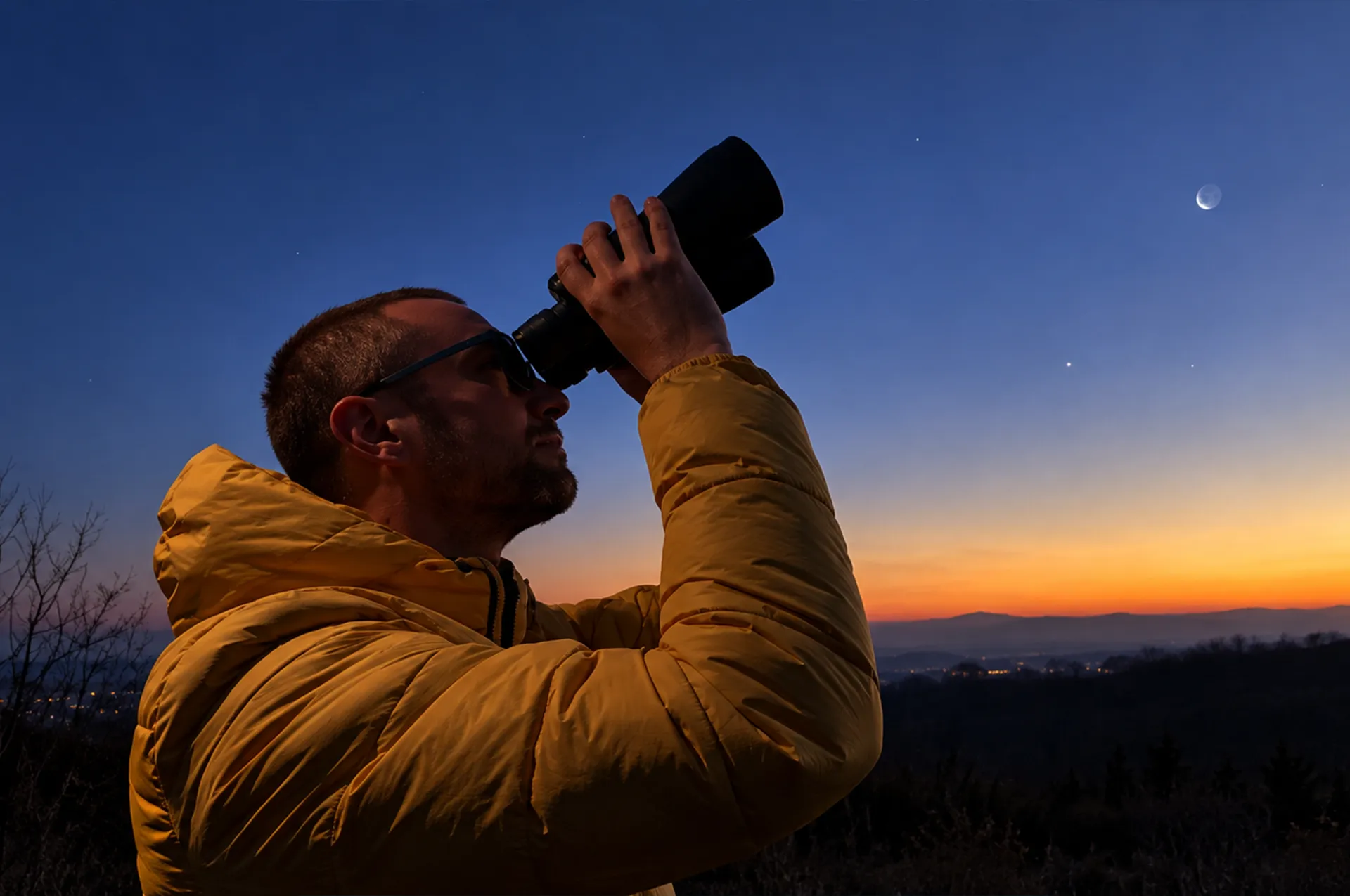
You don’t need special equipment to watch a lunar eclipse. Unlike a solar eclipse, it is completely safe to look at the eclipsed Moon with your naked eyes. Binoculars or a small telescope can make the changing colors and details easier to see.
If you’re in a region where the eclipse is visible, find a comfortable spot with a clear view of the horizon and give yourself some time to watch. The Moon changes slowly, so staying outside for a while will let you see Earth’s shadow gradually transform an ordinary full Moon into something much more unusual.
Look Up. Observe Vastness.
LUOV