

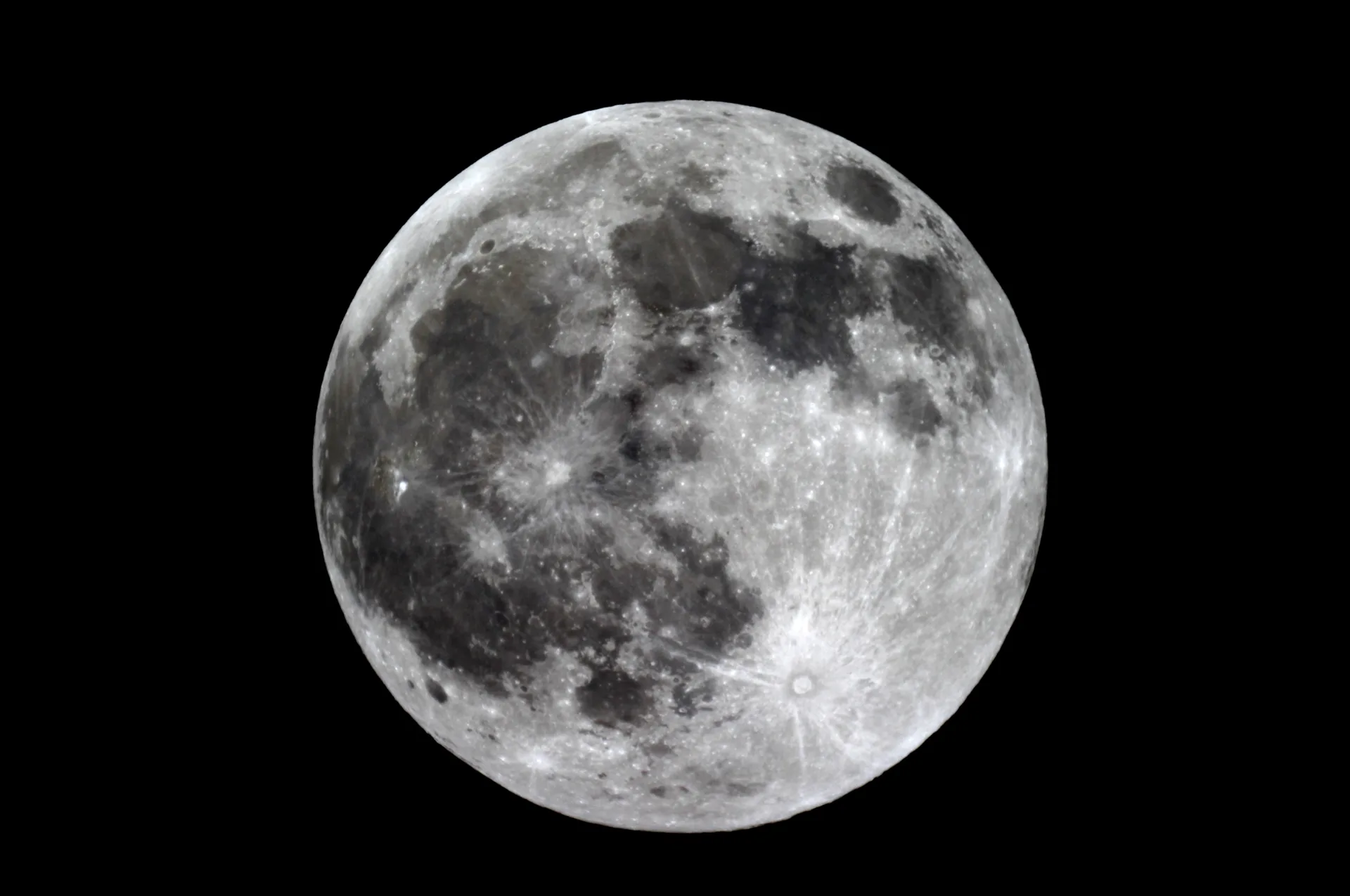
Credit: Canva
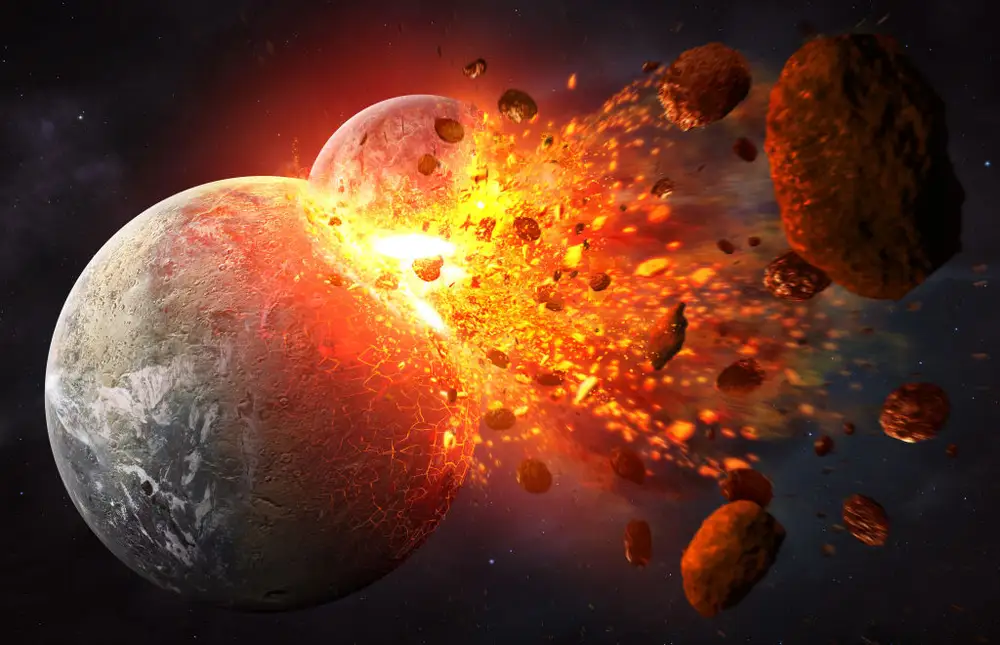
Moon Formation is one of the biggest mysteries scientists have worked to solve. Today, the most widely accepted explanation is called the Giant Impact Hypothesis. According to this idea, the Moon formed about 4.5 billion years ago when a young Earth collided with a Mars-sized object named Theia. The enormous impact blasted huge amounts of molten rock into space, and over time, that debris came together under gravity to create the Moon we see today.
For centuries, astronomers suggested different ideas about the Moon’s origin. Some believed the Moon formed alongside Earth, while others thought it was a wandering object captured by Earth’s gravity. Another theory proposed that the Moon broke away from a rapidly spinning young Earth. However, evidence collected during NASA’s Apollo missions changed our understanding and strongly supported the giant impact explanation.
The Giant Impact Theory
Around 60 million years after the Solar System began forming, Earth was still a young and violent world. At that time, Theia, a rocky body about the size of Mars, is thought to have collided with Earth. The collision was so powerful that much of both worlds melted or vaporized.
Instead of destroying Earth, the impact launched a vast cloud of hot rock into orbit around the planet. Over thousands of years, this material slowly clumped together through gravity, eventually forming a single large body, the Moon. Scientists believe the newly formed Moon was covered by a deep ocean of molten rock, known as a magma ocean, before it gradually cooled and solidified.
What Evidence Supports Moon Formation by Impact?
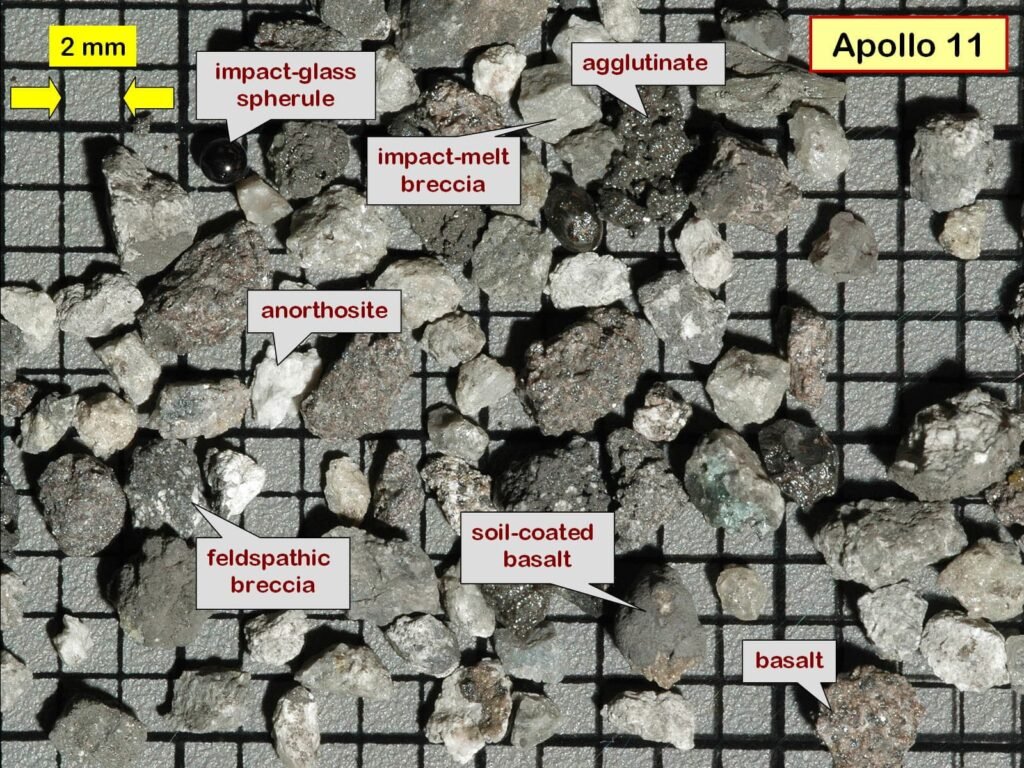
The strongest evidence comes from the Apollo missions, which returned 382 kilograms (842 pounds) of lunar rocks and soil to Earth. When scientists studied these samples, they discovered that Moon rocks have nearly the same chemical and isotopic composition as rocks from Earth’s mantle. This suggests that Earth and the Moon share a common origin rather than forming separately.
The samples also revealed important differences. Moon rocks contain much less water and fewer easily vaporized elements than similar rocks on Earth. They also show signs of forming at extremely high temperatures, exactly what scientists would expect after a massive collision. In addition, the Moon has a much smaller iron core than Earth, indicating that most heavy iron remained inside Earth while lighter rocky material formed the Moon. These discoveries fit remarkably well with the Giant Impact Hypothesis.
Is Moon Formation Completely Solved?
Although the Giant Impact Hypothesis is the leading explanation, scientists continue to improve the details. Computer simulations now test different impact angles, speeds, and sizes of Theia to better match what we observe today. Some newer models suggest that Earth and Theia formed from nearly identical material in the same region of the early Solar System, helping explain why Earth and Moon are so chemically similar. Others explore whether multiple smaller impacts or a giant cloud like structure called a synestia played a role after the collision.
Researchers also continue studying lunar meteorites and samples collected by recent and future lunar missions. Because the Moon has almost no atmosphere, weather, or active plate tectonics, its surface has preserved evidence from billions of years ago. Unlike Earth, where erosion and geological activity erase ancient clues, the Moon acts like a time capsule, allowing scientists to investigate the earliest history of our Solar System.
Moon Formation remains one of planetary science’s greatest success stories. Thanks to Apollo samples, advanced computer models, and decades of research, scientists now believe the Moon was born from a colossal collision between the young Earth and Theia about 4.5 billion years ago. While researchers continue refining the details, the Giant Impact Hypothesis explains more observations than any competing theory. Every new lunar mission brings fresh evidence, helping us better understand not only how the Moon formed, but also how Earth and the entire Solar System evolved.
Look Up. Observe Vastness.
LUOV

2 Comments
Oh! What an information about moon formation 👏I always been following and watching your web as well the intagram it’s so informative and useful. thanks for it and also I follow you instagram and answers the questions you post on stories every single day.ahhh! Yeah that’s it
That’s truly wonderful to hear. Thank you so much for sharing this with us and for following LUOV so closely. We truly hope you continue discovering and learning many fascinating things about space through LUOV.
– Patrik Bednarik, Founder of LUOV