Solar and Lunar Eclipse events are among the most exciting sights in astronomy, and August 2026 offers the rare chance to witness both within just over two weeks. A total solar eclipse will occur on August 12, followed by a dramatic partial lunar eclipse on August 27–28. Because solar and lunar eclipses often happen during the same eclipse season, seeing both in a single month is unusual but completely natural. Together, these events will give millions of people around the world an unforgettable opportunity to experience the changing relationship between the Sun, Earth, and Moon.
The Total Solar Eclipse on August 12
Credit: Getty Images
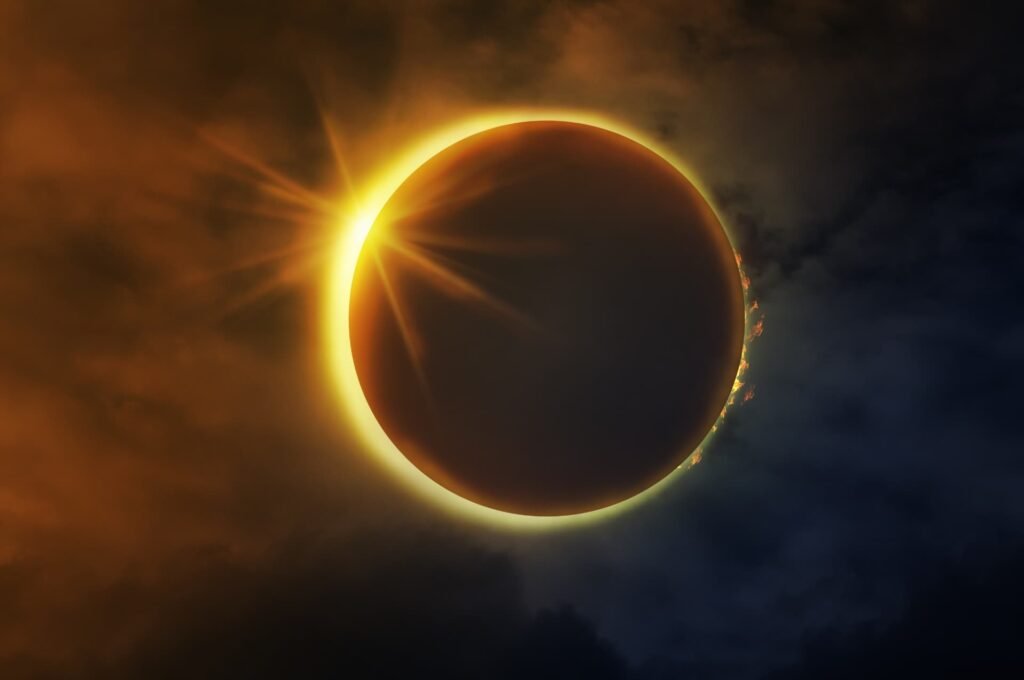
The first major event is the total solar eclipse on August 12, 2026. A solar eclipse happens when the Moon moves directly between Earth and the Sun, temporarily blocking the Sun’s light and casting a moving shadow across Earth’s surface. On a global scale, the eclipse will begin at 15:34 UTC, reach maximum eclipse at 17:46 UTC, and end at 19:57 UTC. The entire event will last for just over 4 hours and 23 minutes, although the period of totality at any single location will only last a few minutes.
People located along the narrow path of totality will experience one of nature’s most spectacular sights as the Moon completely covers the Sun, revealing its faint, glowing outer atmosphere known as the corona. The path of totality will cross Greenland, Iceland, northern Spain, a small part of Portugal, and parts of northern Russia. Millions more across much of Europe, northwestern Africa, Canada, the Arctic, the Atlantic Ocean, and parts of the northern United States will witness a partial solar eclipse, where only part of the Sun is covered. In mainland Europe, this will be the first total solar eclipse since 1999, making it a once in a generation event for many skywatchers. Around 980 million people will be able to see at least some part of the eclipse, although only about 15 million people will be inside the path of totality.
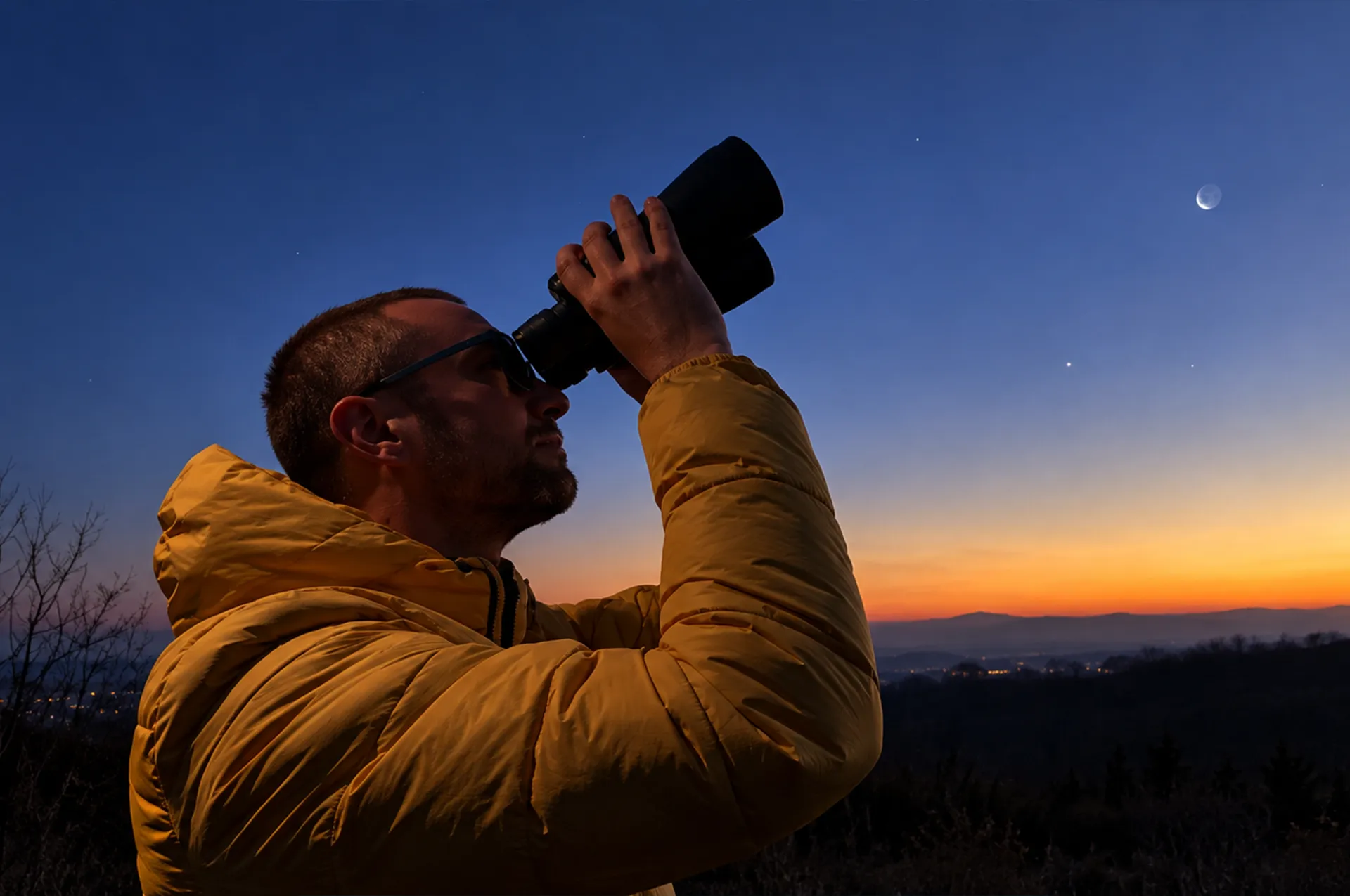
If you plan to observe the eclipse, eye safety is essential. During every partial phase, you must wear ISO certified eclipse glasses or use approved solar filters on telescopes, binoculars, or cameras. Looking directly at the Sun without proper protection can cause permanent eye damage in just a few seconds. Only observers standing within the path of totality may safely remove their eclipse glasses during the brief period when the Sun is completely covered. Once even a small part of the Sun reappears, eye protection must be worn again.
A Stunning Partial Blood Moon
Credit: Getty Images
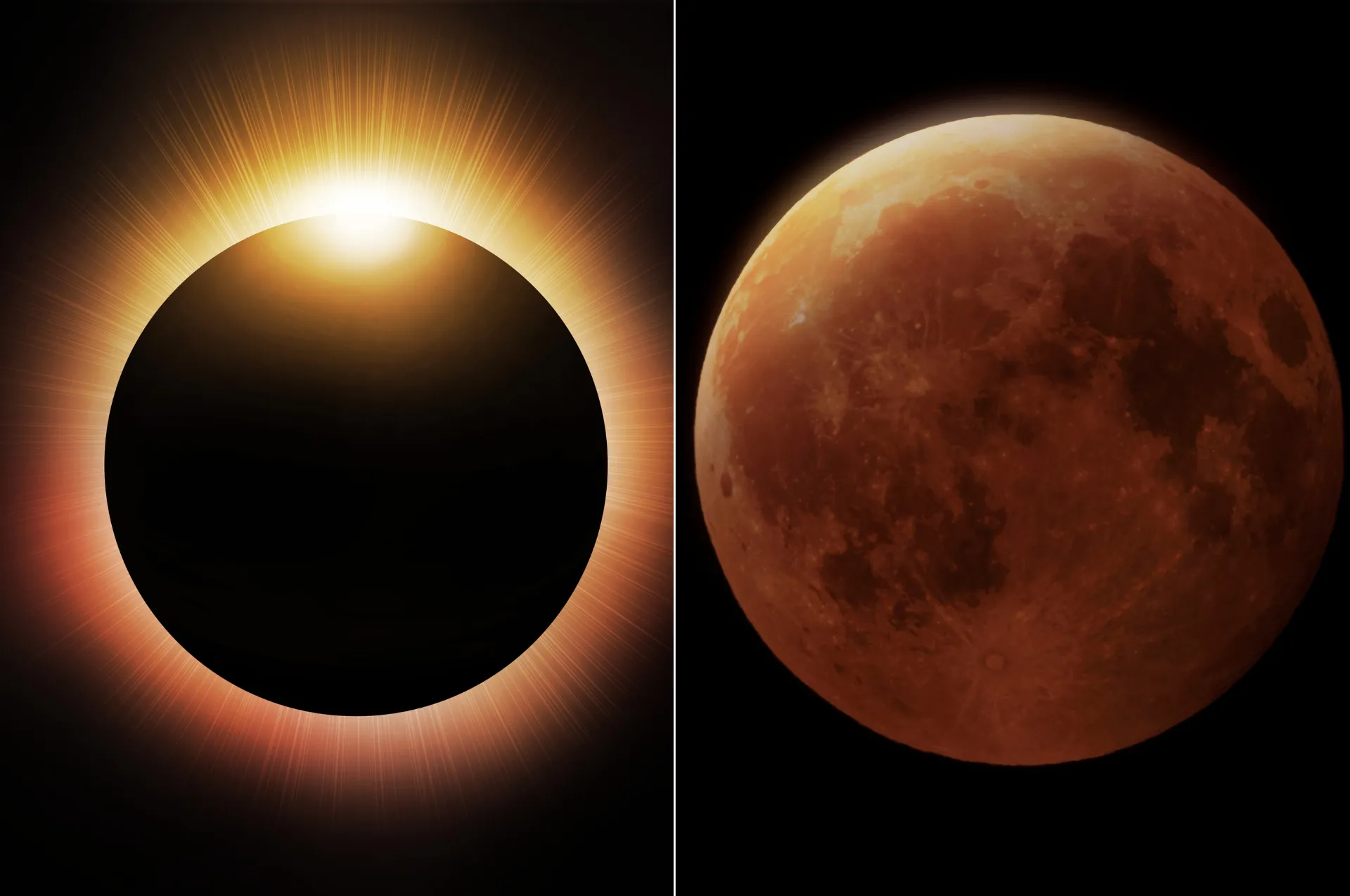
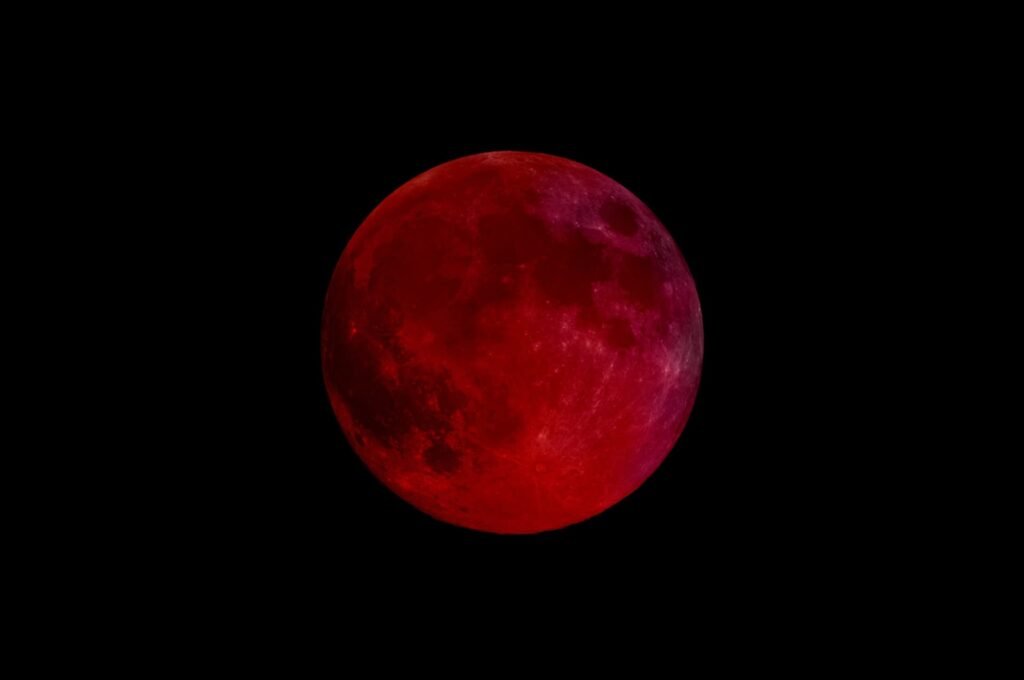
Just over two weeks later, the second Solar and Lunar Eclipse event arrives with a deep partial lunar eclipse on the night of August 27–28, 2026. Unlike a solar eclipse, a lunar eclipse occurs when Earth moves directly between the Sun and the Moon, causing Earth’s shadow to fall across the lunar surface. This eclipse will begin at 01:23 UTC on August 28, with the partial phase starting at 02:33 UTC. The eclipse will reach its maximum at 04:12 UTC, before the partial phase ends at 05:51 UTC and the penumbral eclipse concludes at 07:01 UTC. The entire event will last for more than five and a half hours, making it one of the longest lunar eclipse events of the year.
This eclipse will be especially impressive because about 96.2% of the Moon’s visible surface will enter Earth’s dark inner shadow, known as the umbra. As sunlight passes through Earth’s atmosphere, the blue wavelengths are scattered while the red and orange light bends toward the Moon, giving it a beautiful copper-red glow often called a Blood Moon. Although this is technically a partial lunar eclipse rather than a total one, only a tiny sliver of the Moon will remain outside the umbra, making it appear almost completely eclipsed to many observers.
The eclipse will be visible across North and South America, much of Europe, Africa, western Asia, and parts of the Pacific, Atlantic, and Indian Oceans, provided skies are clear. Unlike a solar eclipse, no special eye protection is required because the Moon reflects sunlight rather than producing its own light. You can safely enjoy the entire event with the naked eye, while binoculars or a small telescope will reveal finer details in the Moon’s changing colors and the advancing shadow. Whether you’re an experienced astronomer or a first-time observer, this nearly total Blood Moon promises to be one of the most memorable celestial events of 2026.
Why Both Eclipses Happen in the Same Month
Many people wonder why both eclipses occur so close together. The answer lies in what astronomers call an eclipse season. About every six months, the Sun, Earth, and Moon align closely enough for eclipses to occur. If a solar eclipse happens during this period, a lunar eclipse usually follows about two weeks later, or vice versa.
Although eclipse seasons are a regular part of our solar system, each eclipse is unique because of differences in the Moon’s distance, Earth’s position, and the exact alignment of the three bodies. August 2026 is particularly exciting because it combines a total solar eclipse with an almost total “Blood Moon” lunar eclipse in the same month. Whether you watch one event or both, they offer an excellent chance to appreciate the predictable yet remarkable motions of our celestial neighbors.