Credits: Canva
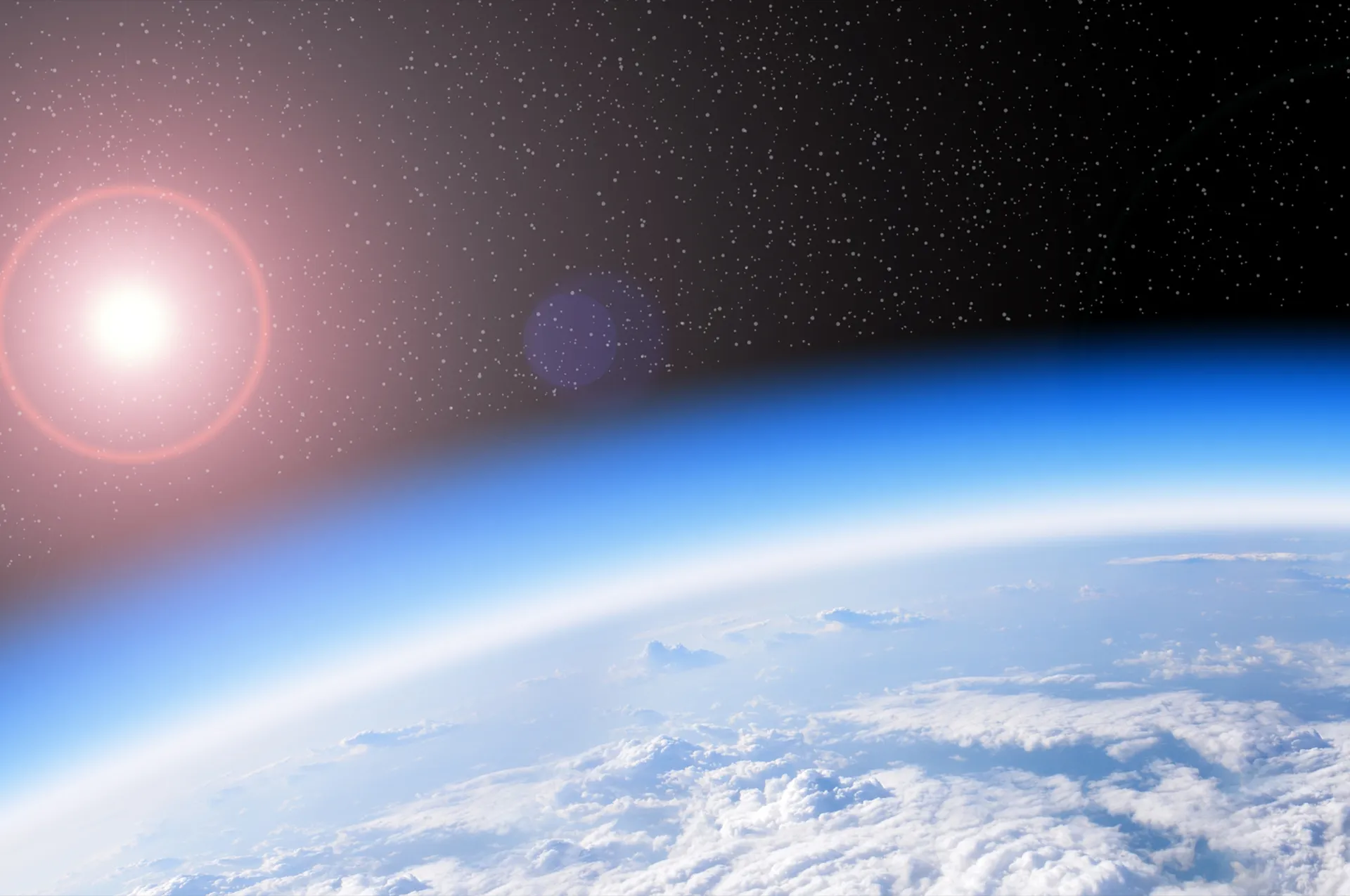
The Ozone Layer is one of Earth’s most important natural defenses. Located high in the stratosphere, it absorbs most of the Sun’s harmful ultraviolet (UV) radiation before it reaches the surface. Without this protective shield, life on Earth would face much higher risks of skin cancer, cataracts, weakened immune systems, and damage to plants, animals, and marine ecosystems. Although the ozone layer contains only a tiny amount of ozone gas compared to the rest of the atmosphere, its role in protecting life is enormous. Scientists have also found encouraging signs that this vital layer is slowly recovering after decades of international efforts to reduce harmful chemicals.
What Is the Ozone Layer?
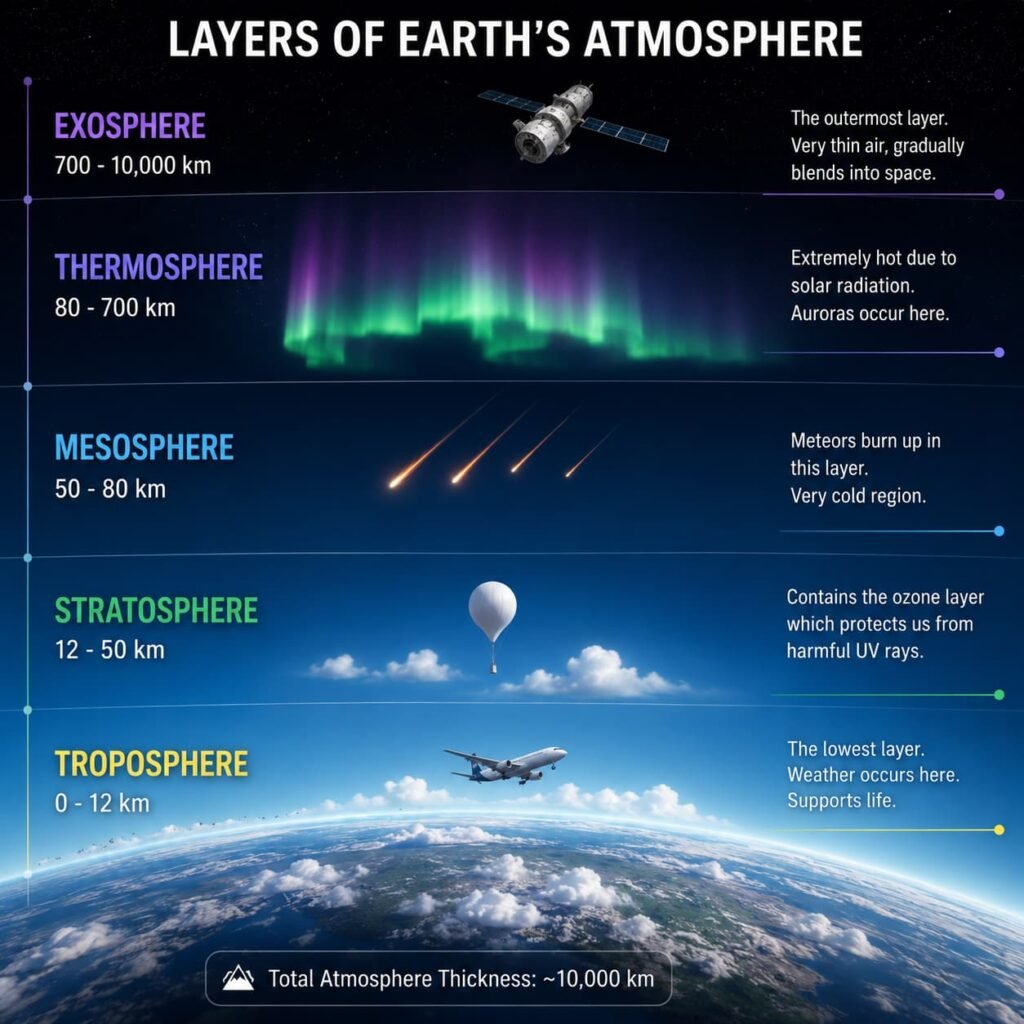
The Ozone Layer is a region of the stratosphere, about 15 to 35 kilometers above Earth’s surface, where ozone (O₃) is much more concentrated than in other parts of the atmosphere. Ozone is a molecule made of three oxygen atoms, unlike the oxygen we breathe, which contains only two.
Its main job is to absorb ultraviolet-B (UV-B) and nearly all ultraviolet-C (UV-C) radiation from the Sun. These types of UV rays can damage DNA in living cells and increase the risk of diseases. Some ultraviolet-A (UV-A) rays still pass through the atmosphere, but they are much less harmful than UV-B and UV-C. The ozone layer acts like an invisible sunscreen for our planet, making Earth’s surface safe enough for life to thrive.
Why the Ozone Layer Became Thinner
Credit: NASA
During the 20th century, scientists discovered that certain human-made chemicals were damaging the Ozone Layer. These chemicals, known as ozone-depleting substances (ODS), include chlorofluorocarbons (CFCs), halons, and several industrial solvents. They were widely used in refrigerators, air conditioners, aerosol sprays, and foam products.
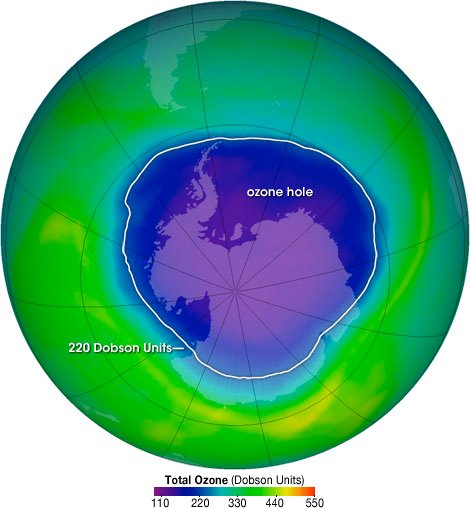
When these chemicals reach the stratosphere, sunlight breaks them apart, releasing chlorine and bromine atoms. A single chlorine atom can destroy thousands of ozone molecules through repeated chemical reactions. Over time, this process caused significant ozone depletion, especially above Antarctica, creating what is commonly called the “ozone hole.” This hole is not a complete gap but a region where ozone levels become extremely low during the Southern Hemisphere’s spring.
How the Ozone Layer Is Recovering
One of the greatest environmental success stories began in 1987 with the Montreal Protocol, an international agreement signed by countries around the world. The treaty aimed to phase out the production and use of ozone-depleting substances. As these chemicals have steadily declined in the atmosphere, scientists have observed gradual recovery of the Ozone Layer.
According to recent scientific assessments, the Antarctic ozone hole in 2024 was smaller than in 2023 and the smallest since 2020. Experts expect the ozone layer to continue recovering over the coming decades if global commitments remain in place. While recovery is encouraging, scientists continue monitoring ozone levels because climate conditions and remaining ozone-depleting substances can still influence how quickly the layer returns to its natural state
The Ozone Layer protects every living thing on Earth. Healthy ozone levels reduce harmful UV exposure, helping protect people from skin cancer and eye damage while also supporting crops, forests, and tiny marine organisms that form the base of ocean food chains.
Although the ozone layer is recovering, continued international cooperation remains essential. Proper disposal of old refrigeration equipment, careful management of industrial chemicals, and adherence to global environmental agreements all help preserve this natural shield. The success of the Montreal Protocol shows that when nations work together and follow scientific evidence, they can solve global environmental challenges. Protecting the ozone layer today ensures a healthier and safer planet for future generations.