The Venus – Jupiter Conjunction is about to create one of the most beautiful sights of 2026. On the evenings of June 8 and June 9, the two brightest planets visible from Earth will appear incredibly close together in the twilight sky. For many people, it may look as if Venus and Jupiter are almost touching above the horizon.
Of course, this is only an illusion. The two planets are actually hundreds of millions of kilometers apart. However, from our viewpoint on Earth, their paths in the sky briefly bring them together in a stunning celestial display. Astronomers call this a conjunction. What makes this event special is just how close the planets will appear. At their closest, they will be separated by only about 1.5 degrees, roughly the width of your little finger held at arm’s length.
How to Spot the Venus Jupiter Conjunction
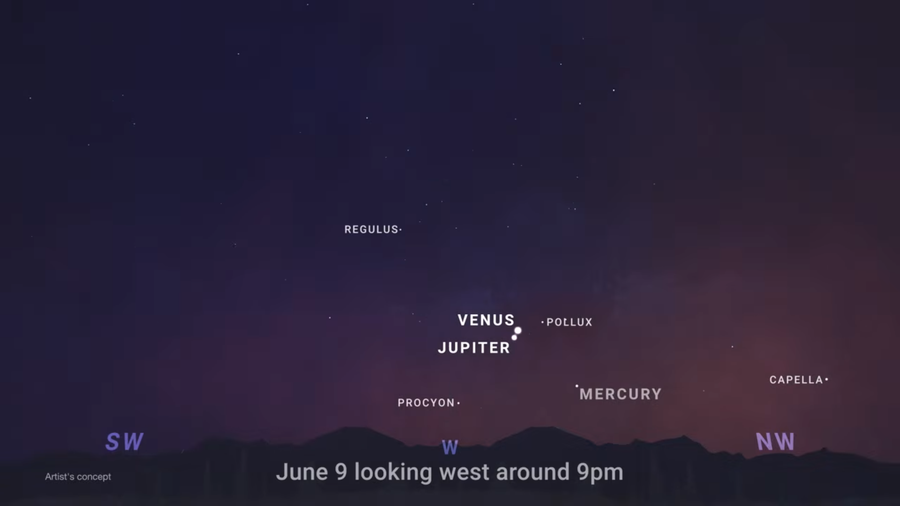
Credit: NASA
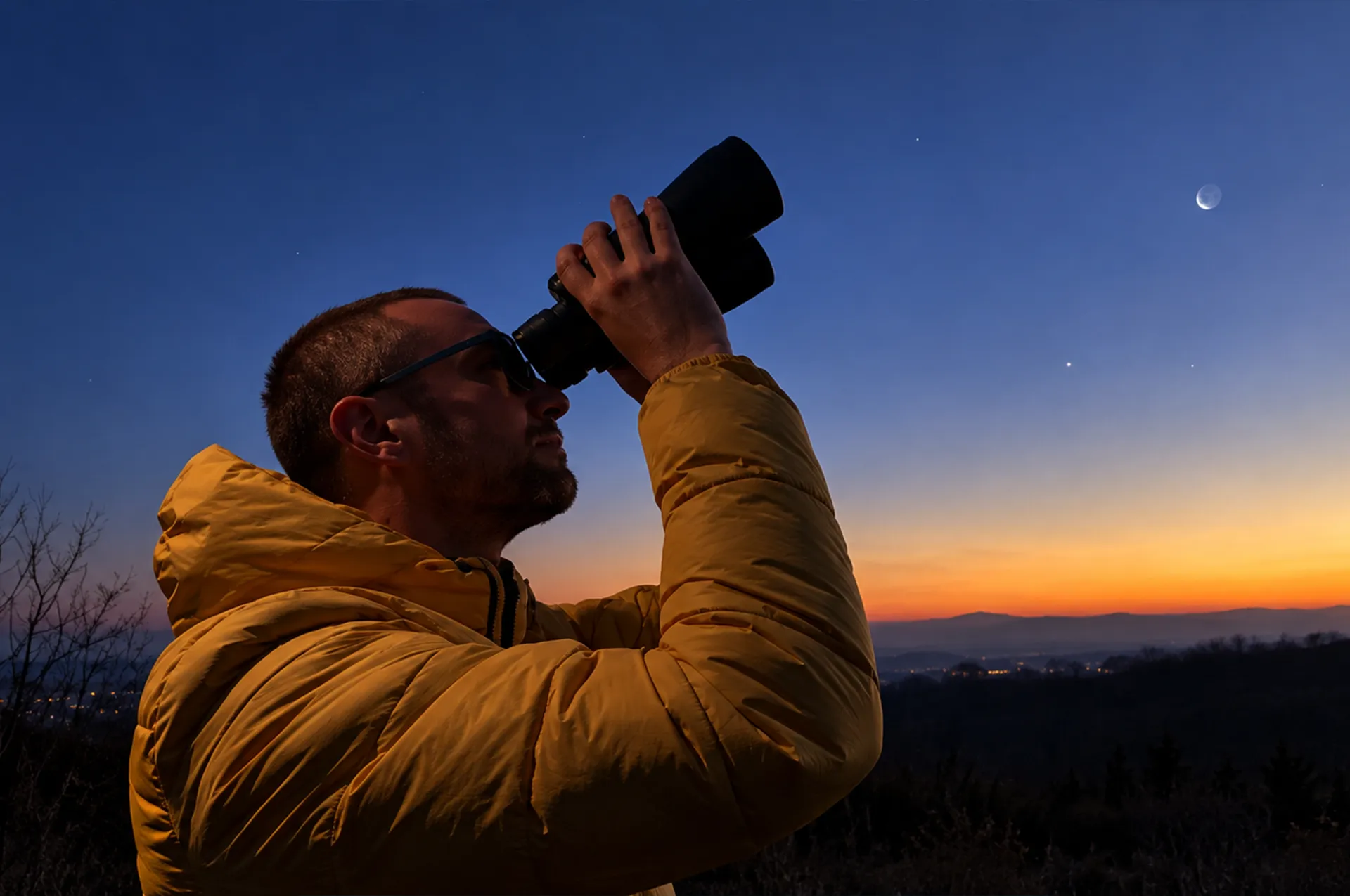
Seeing the Venus Jupiter Conjunction is surprisingly easy. You do not need a telescope, binoculars, or any astronomy experience. All you need is a clear evening sky.
Head outside about 45 minutes after sunset on June 8 or June 9. Find a location with a clear view of the western or west-northwestern horizon. This is important because both planets will appear fairly low in the sky and will set not long after the Sun. If buildings, trees, or hills block your western view, consider moving to a more open area.
The first object you will notice is Venus. It will shine like a brilliant white beacon and will be impossible to miss. Venus is the brightest planet in our sky and is often called the “Evening Star.” Jupiter will appear very close by, glowing slightly softer and warmer in color. Together, they will create a striking double-planet display that stands out even before the sky becomes completely dark.
What Will You Actually See?
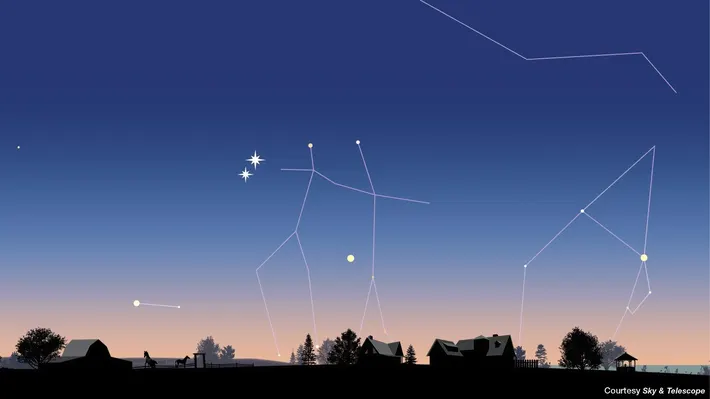
Many people expect planets to look large through the naked eye, but they will appear as two exceptionally bright points of light. The magic comes from their closeness.
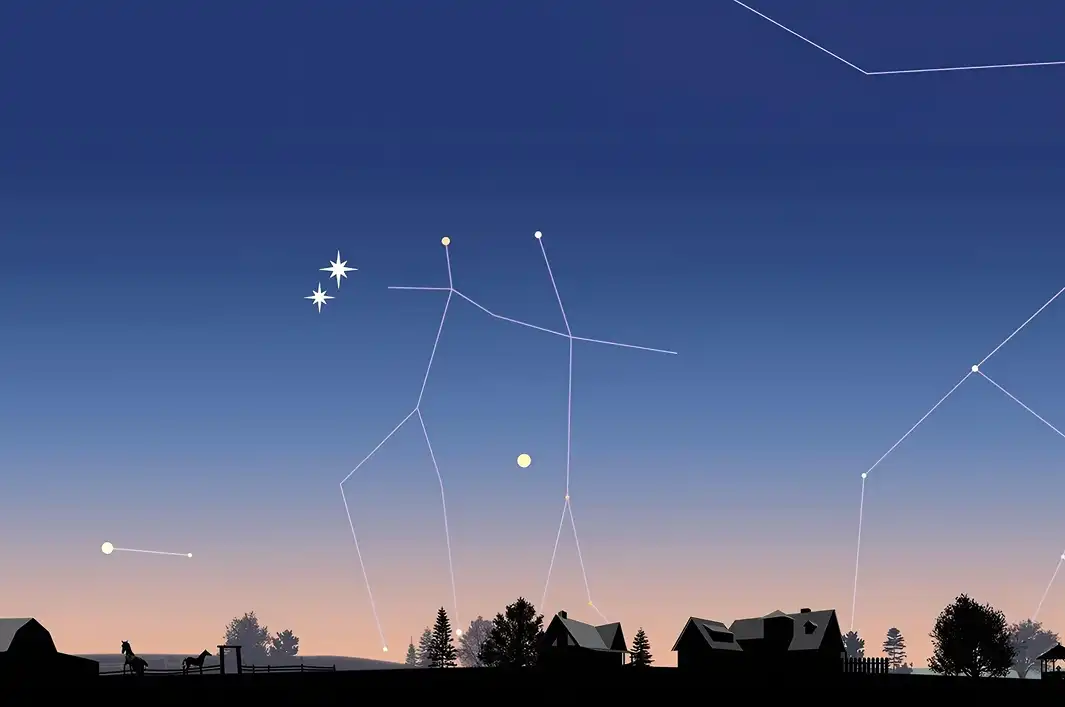
Imagine looking toward a colorful sunset while two brilliant worlds seem to hang side by side above the horizon. That is the view skywatchers will enjoy during the conjunction. Through binoculars, both planets can fit comfortably within the same field of view, making the experience even more impressive.
If sky conditions are excellent, you might also notice Mercury lower in the twilight glow beneath Venus and Jupiter. This creates an even more beautiful scene and gives observers a chance to spot three planets during a single evening.
Tips for the Best Viewing Experience
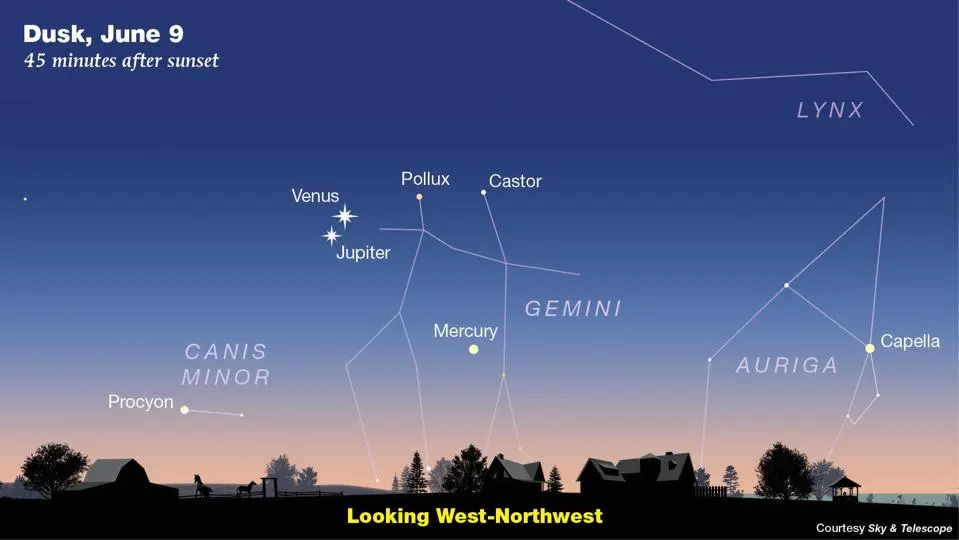
Look for the planetary duo in the western sky about 45 minutes after sunset.
Sky & Telescope
The biggest challenge will not be finding the planets; it will be finding a clear horizon. Check the weather forecast and choose a location away from tall buildings and heavy haze.
If you enjoy photography, bring a smartphone or camera and arrive before sunset. Capturing Venus and Jupiter above a colorful horizon, mountain range, or city skyline can create a memorable image. Because the planets will be so close together, they will easily fit within the same frame. Many astrophotographers consider conjunctions like this among the most rewarding celestial events to photograph.
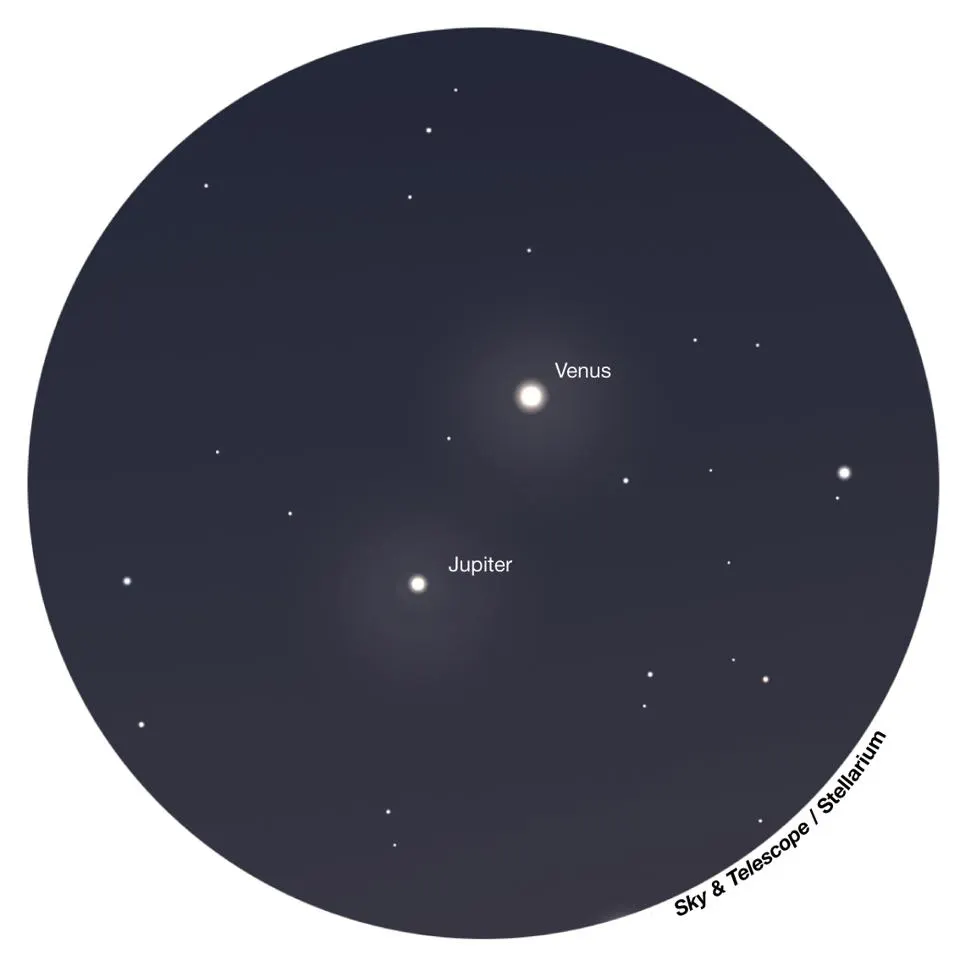
This is how Venus and Jupiter will appear as seen through binoculars (at a magnification of about 7×) on the evening of June 9, 2026.
Sky & Telescope / Stellarium
On June 8 and June 9, take a few minutes after sunset and look toward the western sky. As daylight fades and the first stars begin to appear, Venus and Jupiter will shine together in a way that feels almost unreal. It is one of those rare moments when the universe puts on a show that is simple enough for everyone to enjoy, yet beautiful enough to leave a lasting memory.