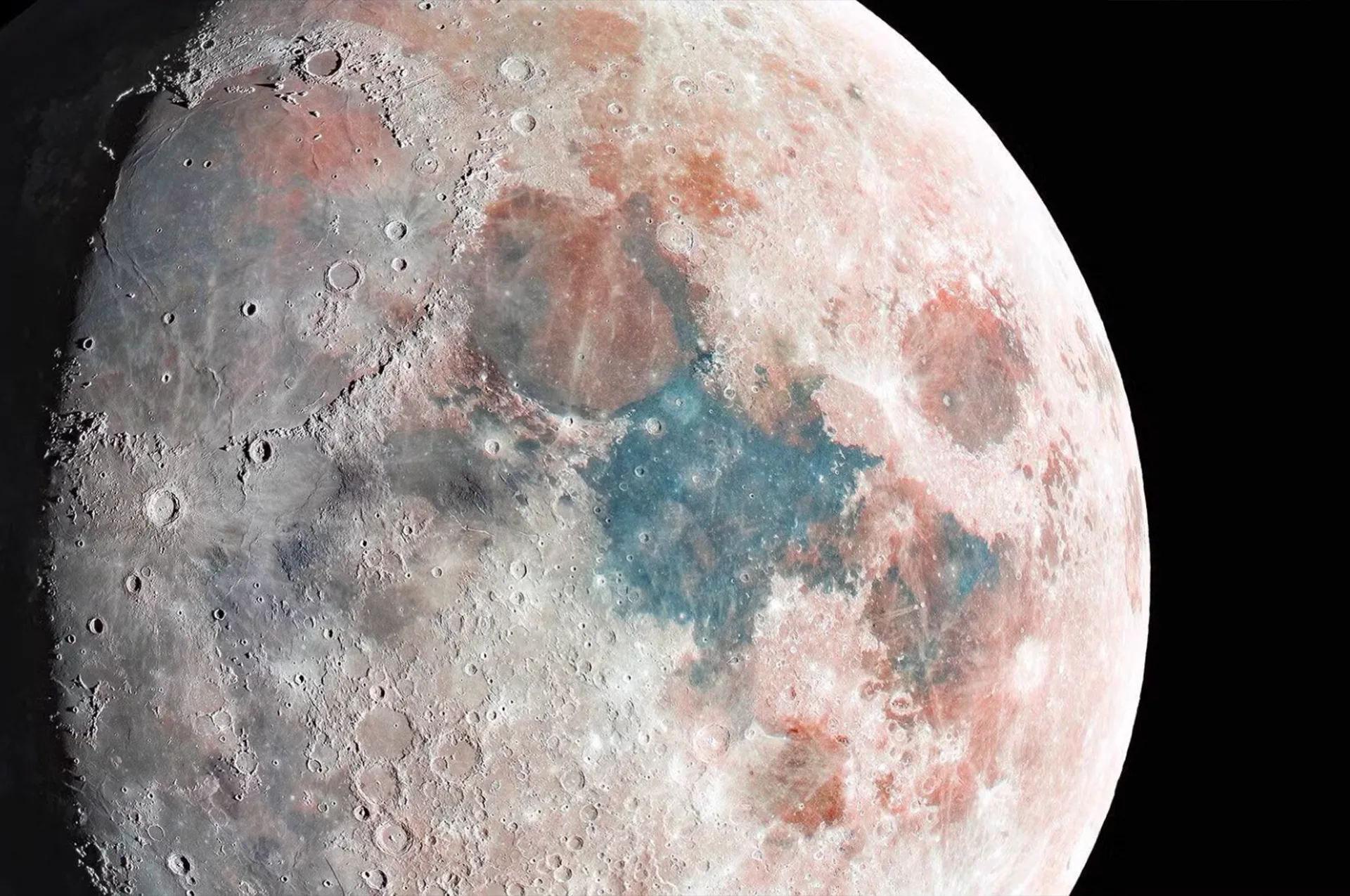
Photo credit: u/Daryavaseum
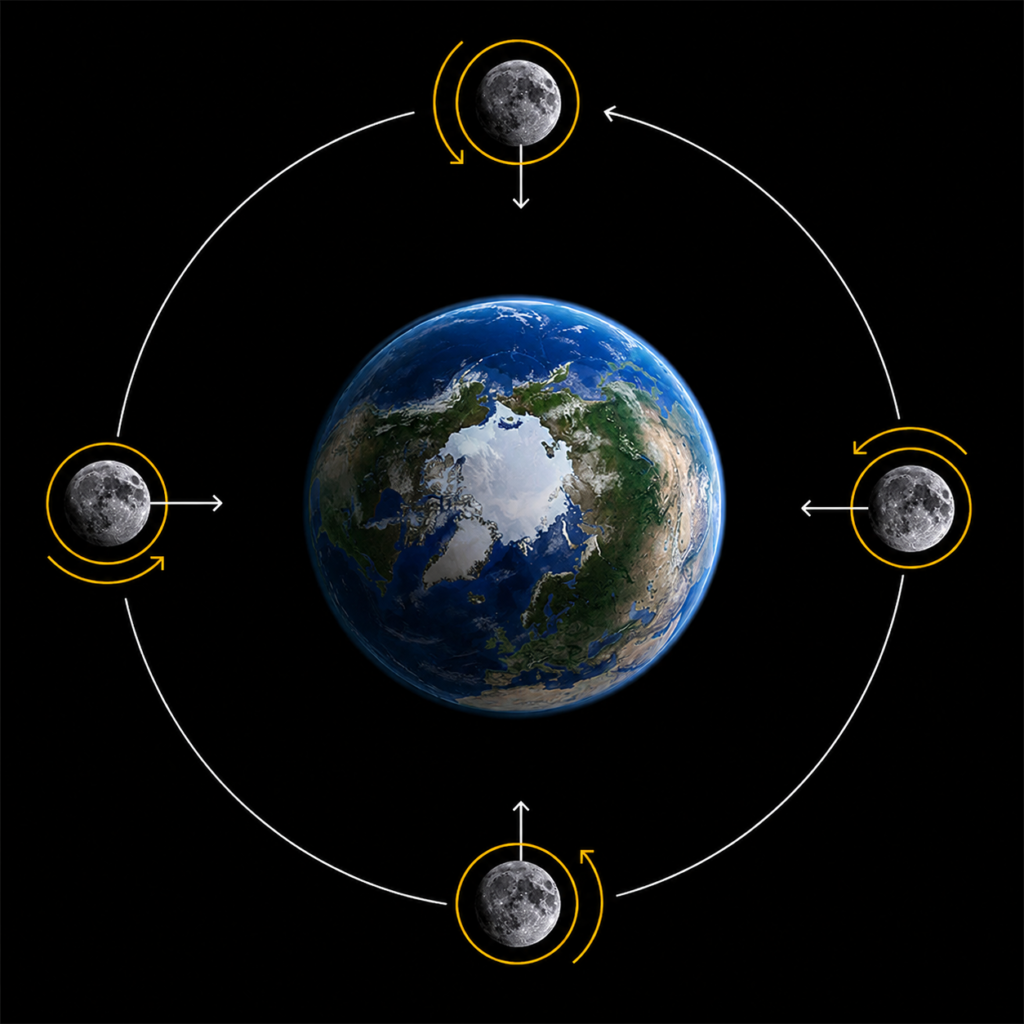
Why do we only see one side of the Moon? The answer lies in a phenomenon called tidal locking, which keeps the same lunar face pointed toward Earth. Many people think the Moon does not rotate because it always shows the same face to Earth. In reality, the Moon is constantly spinning. The reason we only see one side is because its rotation takes exactly the same amount of time as its orbit around Earth. This natural phenomenon is called tidal locking, and it has kept the same lunar face pointed toward our planet for billions of years.
What Is Tidal Locking?
Credit NASA
Tidal locking happens because of gravity. Long ago, the young Moon spun much faster than it does today. Earth’s gravity pulled unevenly on the Moon, creating tiny bulges in its shape. As the Moon rotated, these bulges were slightly out of line with Earth. Gravity kept pulling them back into place, slowly reducing the Moon’s spin over millions of years.
Eventually, the Moon reached a stable state where it rotates once on its axis in the same time it takes to orbit Earth, about 27.3 days. Because these two motions match perfectly, the same side of the Moon always faces Earth, just like a dancer who keeps facing their partner while moving in a circle. This synchronized motion is known as synchronous rotation, and it is common among many large moons in our Solar System.
Does the Moon Really Never Show Its Other Side?
Not exactly. Although we always see the same general face, the Moon performs a gentle wobble called libration. This small back-and-forth motion happens because the Moon’s orbit is slightly elliptical and its axis is tilted a little. Over time, this wobble allows us to see about 59% of the Moon’s surface, rather than exactly half.
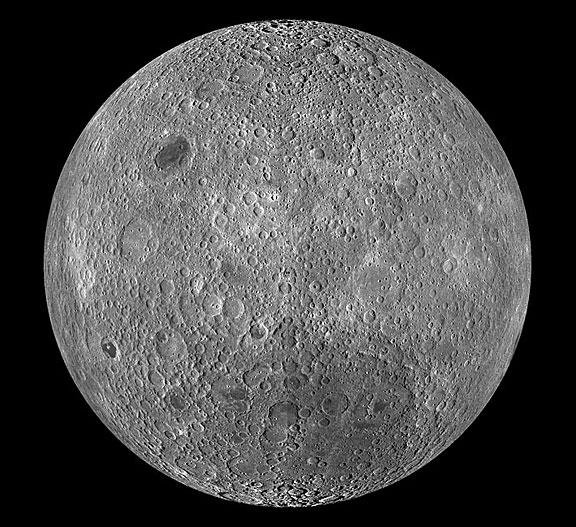
The side that always faces Earth is called the near side, while the opposite side is known as the far side. Many people incorrectly call it the “dark side,” but that name is misleading. The far side receives just as much sunlight as the near side. It experiences day and night just like every other part of the Moon. It is only “dark” from our point of view because we cannot normally see it from Earth.
Have Humans Explored the Far Side of the Moon?
Credits: NASA
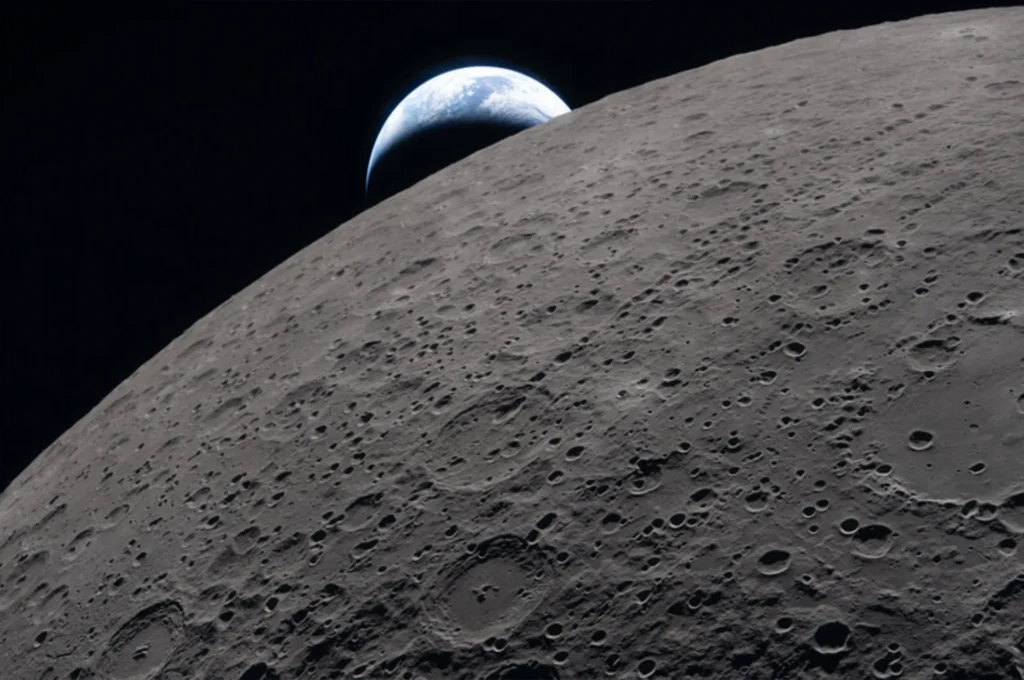
Even though astronauts have never landed on the Moon’s far side, scientists have explored it using robotic spacecraft. The first images of the hidden side came from the Soviet Luna 3 mission in 1959. Later, astronauts aboard Apollo 8 became the first humans to see the far side with their own eyes while orbiting the Moon in 1968. In 2019, China’s Chang’e 4 mission made history by achieving the first-ever soft landing on the far side surface. Since then, several orbiters and landers have mapped and studied the entire lunar surface in remarkable detail.
Interestingly, the far side looks quite different from the side we see from Earth. The near side contains many dark volcanic plains called maria, which formed when ancient lava filled giant impact basins. The far side, however, has far fewer maria and is covered mostly by bright, rugged highlands. Scientists believe this difference exists because the Moon’s crust is thicker on the far side, making it harder for lava to reach the surface after asteroid impacts.
Credits: NASA
Understanding Why We Only Ever See One Side of the Moon teaches us more than just an interesting space fact. It shows how gravity can shape the motion of entire worlds over billions of years. Tidal locking is not unique to our Moon. Many moons orbiting Jupiter and Saturn are also tidally locked, and astronomers believe many planets around distant stars may be as well.
The next time you look up at the Moon, remember that it is spinning, even though it does not seem like it. Its perfectly synchronized dance with Earth is a remarkable example of how gravity quietly controls the movements of objects throughout the universe.