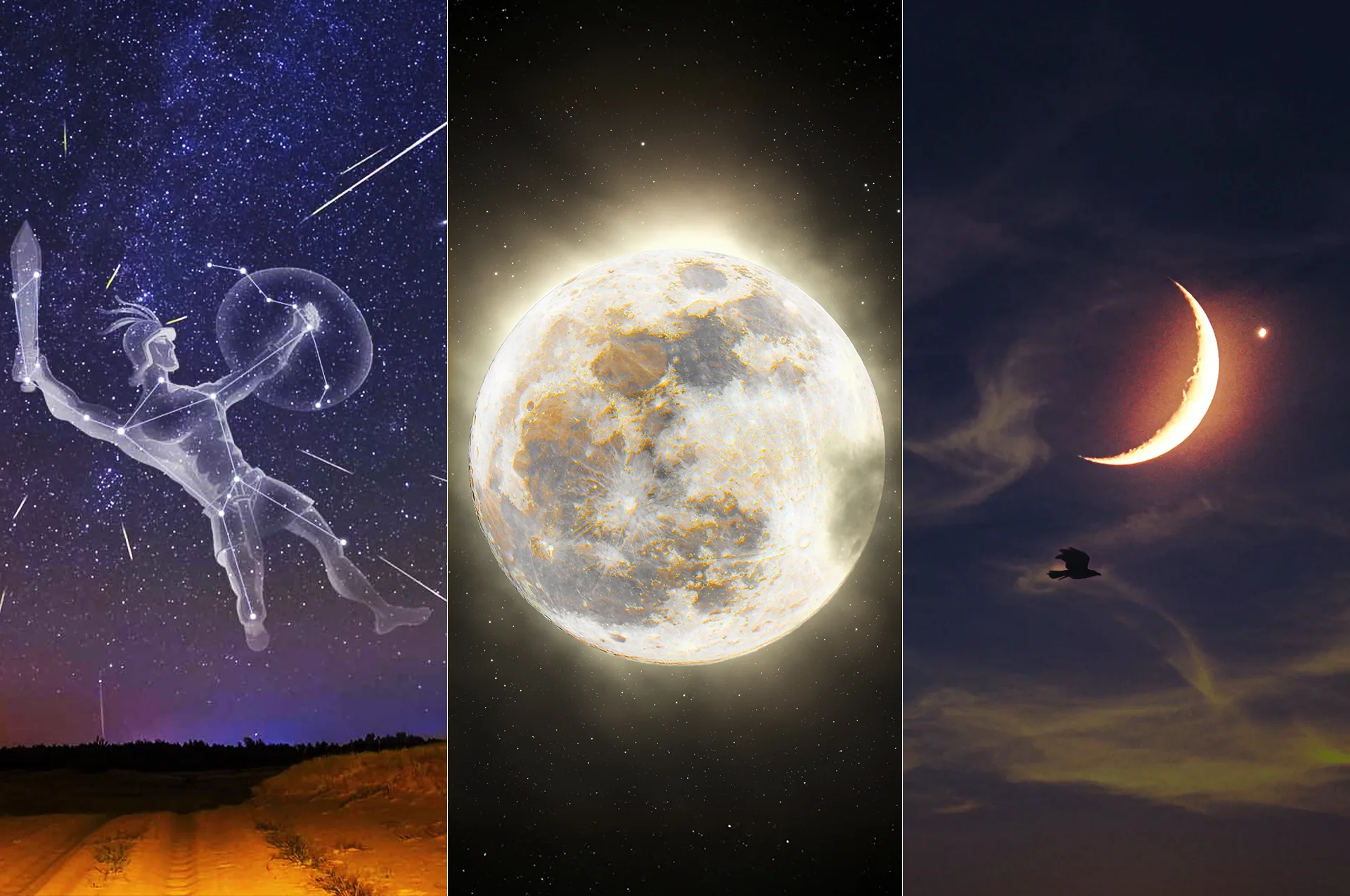
Why does the Moon change shape? Moon phases explain why the Moon appears to change in the night sky, from a thin crescent to a bright, full circle. Although it may look as if the Moon is growing, shrinking, or changing its shape, its actual form stays almost the same. What changes is how much of its sunlit half we can see from Earth.
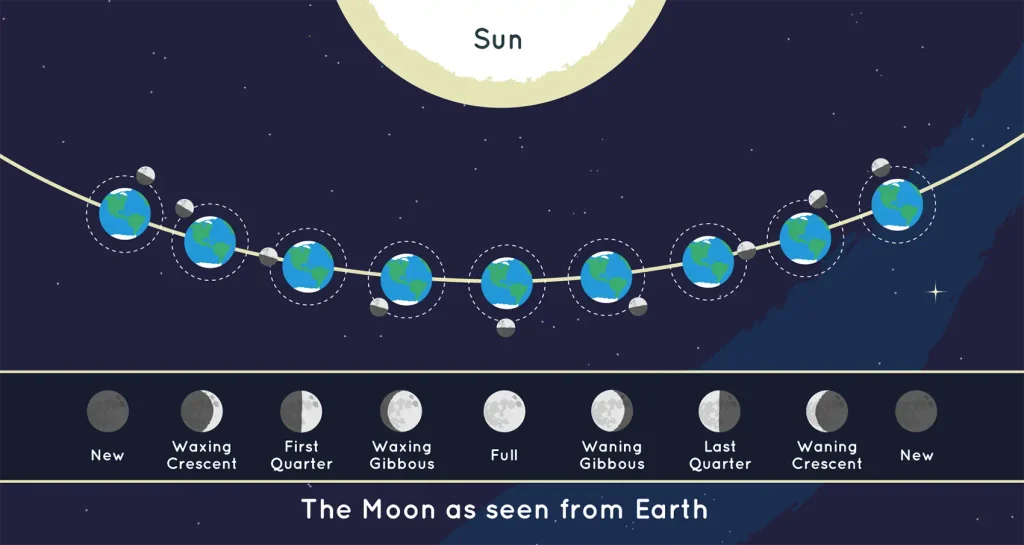
The Moon does not produce its own light. Instead, it reflects sunlight, just as Earth does. At any given time, the Sun illuminates roughly half of the Moon. As the Moon travels around Earth, our viewing angle changes, making different portions of that illuminated half visible to us. This repeating pattern is known as the lunar cycle, and it takes about 29.5 days to complete.
The Eight Moon Phases Explained
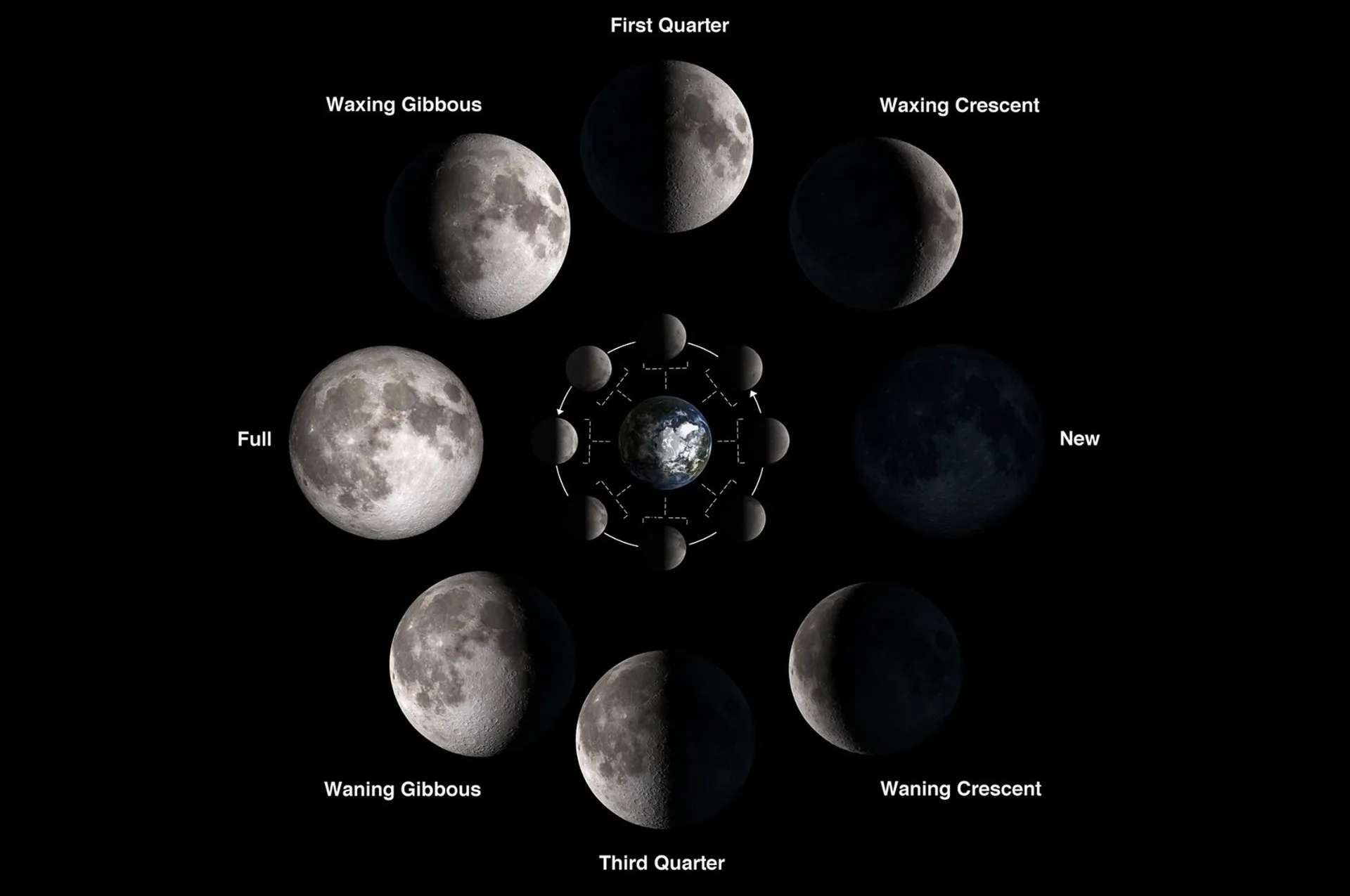
The Moon passes through eight main phases as it moves around Earth. These phases follow a regular pattern, beginning with the new Moon, progressing toward a full Moon, and then becoming thinner again. The terms waxing and waning describe whether the illuminated portion we see is increasing or decreasing. Here is what each phase means.
New Moon: The Moon is between Earth and the Sun, so its sunlit side faces mostly away from us. It is usually difficult to see.
Waxing Crescent: A thin, curved sliver of light becomes visible and grows each night.
First Quarter: We see approximately half of the Moon’s visible face illuminated.
Waxing Gibbous: More than half of the visible face is lit, and the Moon continues growing brighter.
Full Moon: Earth faces the Moon’s fully illuminated side, making it appear as a bright, complete circle.
Waning Gibbous: The illuminated portion begins to decrease after the full Moon.
Third Quarter (Last Quarter): Approximately half of the visible face is illuminated again, but the opposite half from the first quarter.
Waning Crescent: A narrow crescent remains before the cycle returns to the new Moon.
The entire sequence takes about 29.5 days from one new Moon to the next. The exact appearance and timing depend on the Moon’s position in its orbit
Why Does the Moon Take 29.5 Days to Change Its Phases?
The Moon takes about 27.3 days to complete one orbit around Earth relative to distant stars. However, Earth is also moving around the Sun, so the Moon must travel a little farther before the Sun, Earth, and Moon return to the same arrangement. That is why the complete phase cycle takes about 29.5 days.
This repeating pattern also explains why the Moon rises at different times throughout the month. On average, moonrise occurs around 50 minutes later each day, although the actual difference varies with location and season. Watching the Moon over several evenings is an easy way to notice these changes for yourself.
Are Moon Phases Caused by Earth’s Shadow?
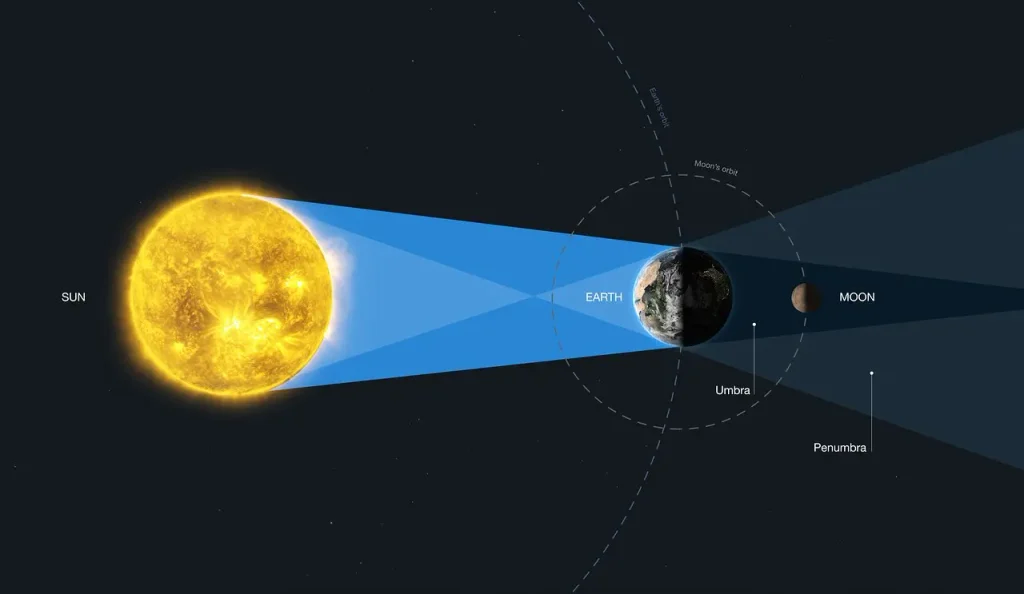
One common misconception is that Earth’s shadow causes the Moon to change shape. In reality, ordinary Moon phases occur because we see different portions of the Moon’s sunlit half as it orbits Earth. Earth’s shadow is involved in a different event called a lunar eclipse.
A lunar eclipse happens when Earth moves between the Sun and the Moon, causing its shadow to fall on the Moon. This alignment does not occur every month because the Moon’s orbit is tilted slightly compared with Earth’s orbit around the Sun. As a result, the Moon usually passes above or below Earth’s shadow.
How to Observe the Moon Phases
You do not need a telescope to explore Moon phases. Look at the Moon on clear evenings and note its shape, position, and the time you see it. Repeat this over several weeks, or take a photograph each night from roughly the same location. You will begin to notice the illuminated portion growing from a crescent to a full Moon before shrinking again.
A pair of binoculars can reveal more detail, including craters and the boundary between the lit and dark areas. This boundary is called the terminator, and the shadows near it can make lunar surface features especially easy to see. With regular observations, the Moon’s changing appearance becomes a simple and fascinating demonstration of how the Sun, Earth, and Moon move together through space.
Why Does the Moon Change Shape?
The Moon does not actually change its shape during the month. Its phases are caused by sunlight illuminating half of the Moon while its changing position around Earth alters how much of that illuminated half we can see. Once you understand this simple geometry, the progression from a new Moon to a full Moon and back becomes much easier to follow. The next time you look up at the night sky, you will know that the Moon’s changing appearance is part of a predictable celestial cycle.
To learn more about the traditions behind each full Moon, explore our guide to Full Moon names and their meanings.
Look Up. Observe Vastness.
LUOV