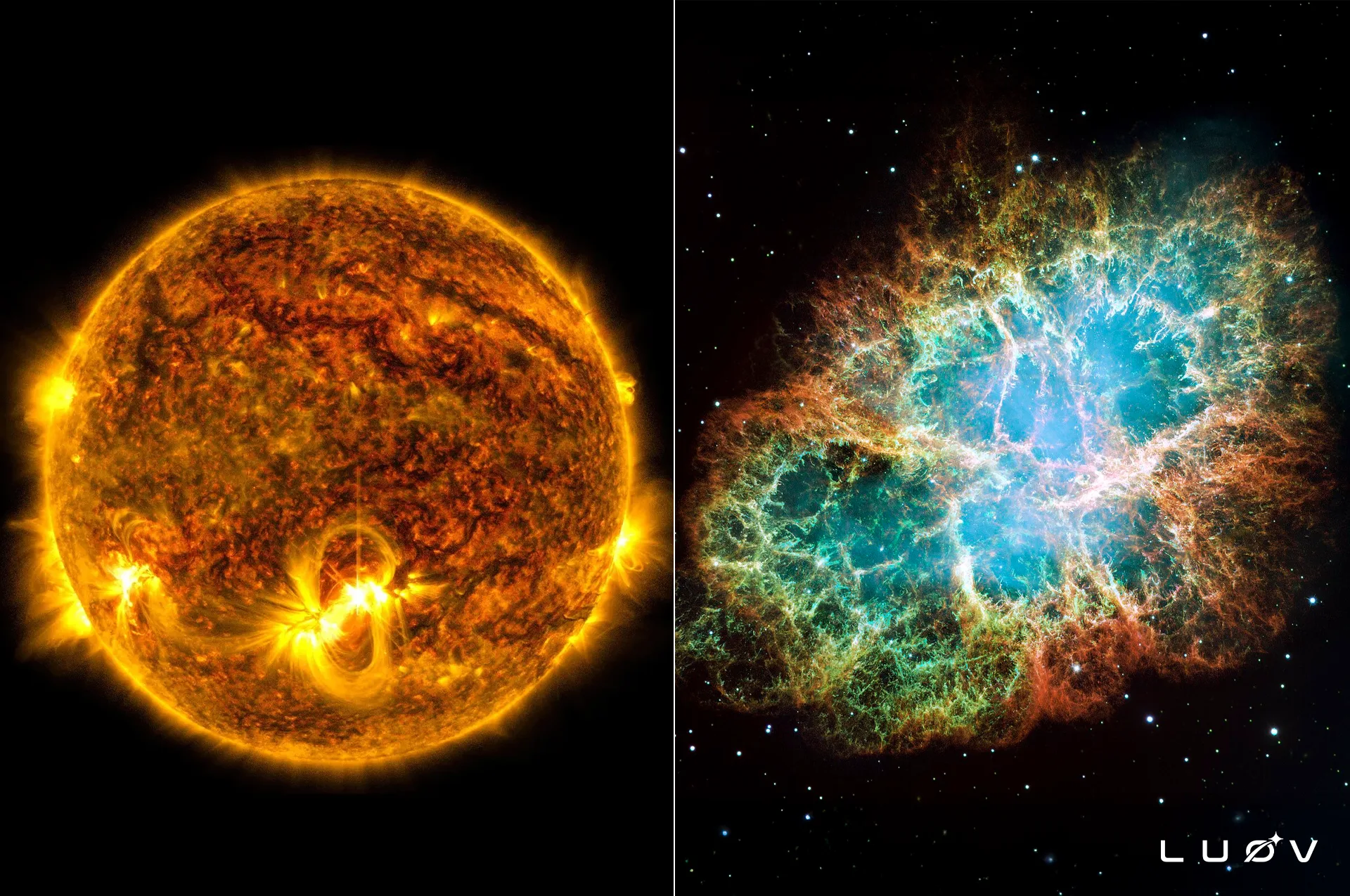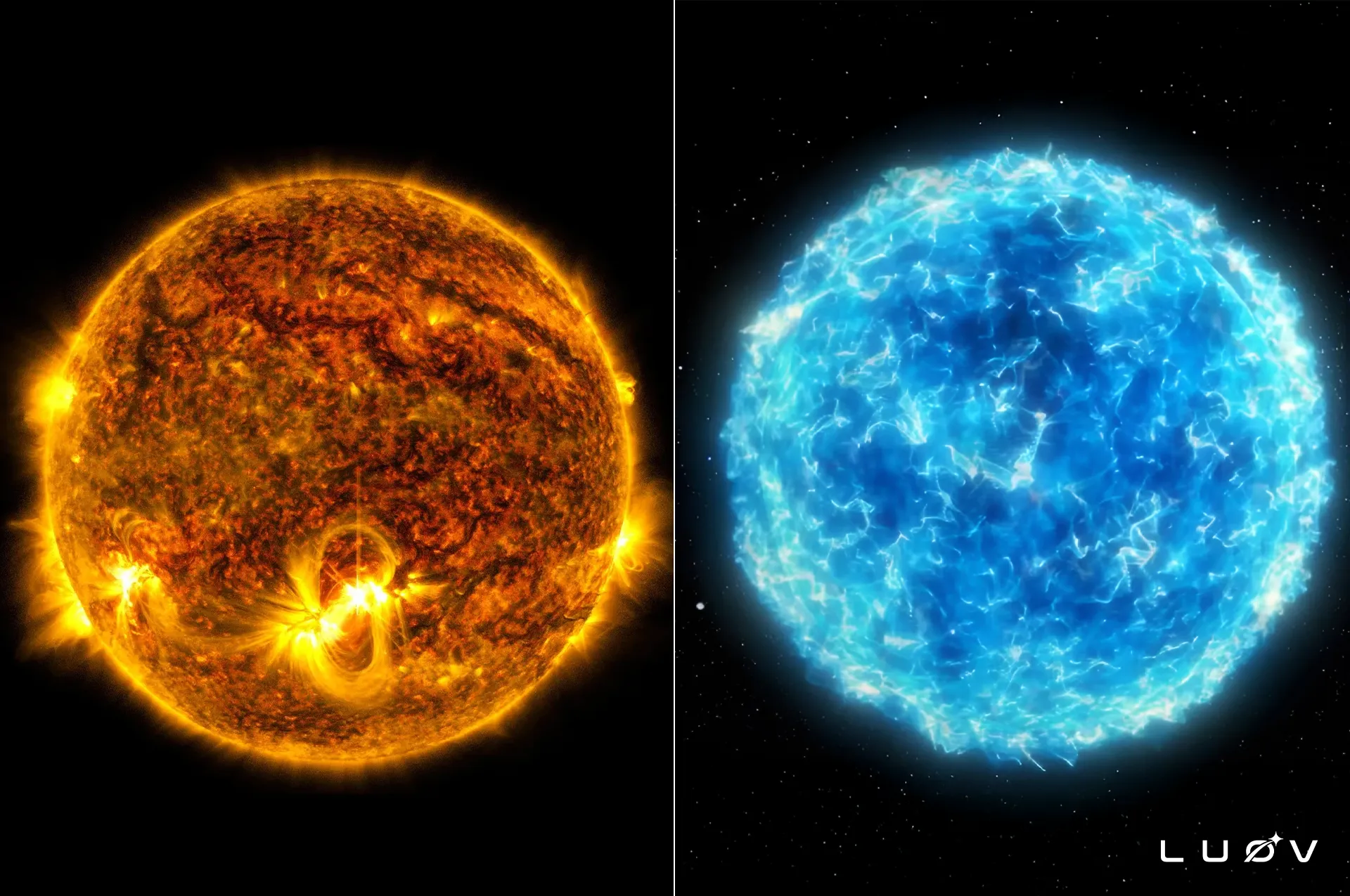
Star colors are mainly determined by a star’s surface temperature. Hotter stars appear blue or blue white, while cooler stars look orange or red. The Sun sits between these extremes and appears yellowish from Earth, although sunlight viewed from space is closer to white.
This happens because a star releases light across many wavelengths. As its surface temperature increases, the strongest part of its light shifts toward shorter, bluer wavelengths. Cooler stars release relatively more of their energy at longer, redder wavelengths. This is why the color of a star can give astronomers a useful clue about how hot its surface is.
Star Colors and Temperature
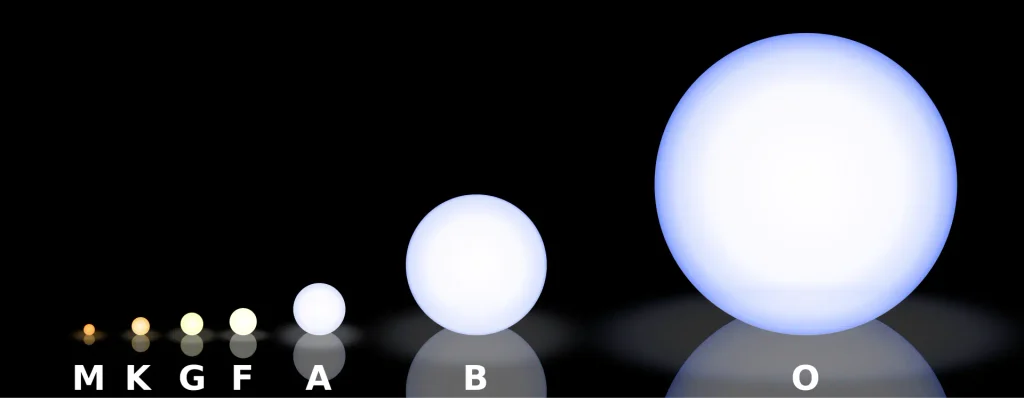
The relationship between star colors and temperature becomes clearer when astronomers classify stars using the spectral sequence O, B, A, F, G, K, and M. O type stars are the hottest and generally appear blue, while M type stars are the coolest and appear red. The Sun is a G type star with a surface temperature of roughly 5,800 K.
For a simple guide, blue stars can have surface temperatures of around 25,000 K or more, white stars around 10,000 K, yellow stars around 6,000 K, orange stars around 4,000 K, and red stars around 3,000 K. These are approximate values, but they show why color is such a useful indicator of stellar temperature.
What Star Colors Tell Us
Star colors can reveal much more than temperature. Combined with spectroscopy, they help astronomers understand a star’s spectral type, luminosity, size, and stage of evolution. Spectroscopy means studying the different wavelengths of light produced by an object. The patterns in this light provide information that cannot be obtained from color alone.
You can even see these differences yourself. Betelgeuse in Orion appears orange red because its surface is relatively cool, while the much hotter Rigel appears blue white. Another striking example is Albireo, a double star whose two components appear orange and blue when viewed through binoculars or a telescope. The contrast provides a beautiful demonstration of how temperature influences star colors.
Why Do Some Stars Look White?

Not every star looks strongly colored to our eyes. Many stars appear white because they are too faint for our color-sensitive vision to detect clearly. Human eyes become less sensitive to color in very dim conditions, so binoculars or a telescope can make subtle star colors easier to notice.
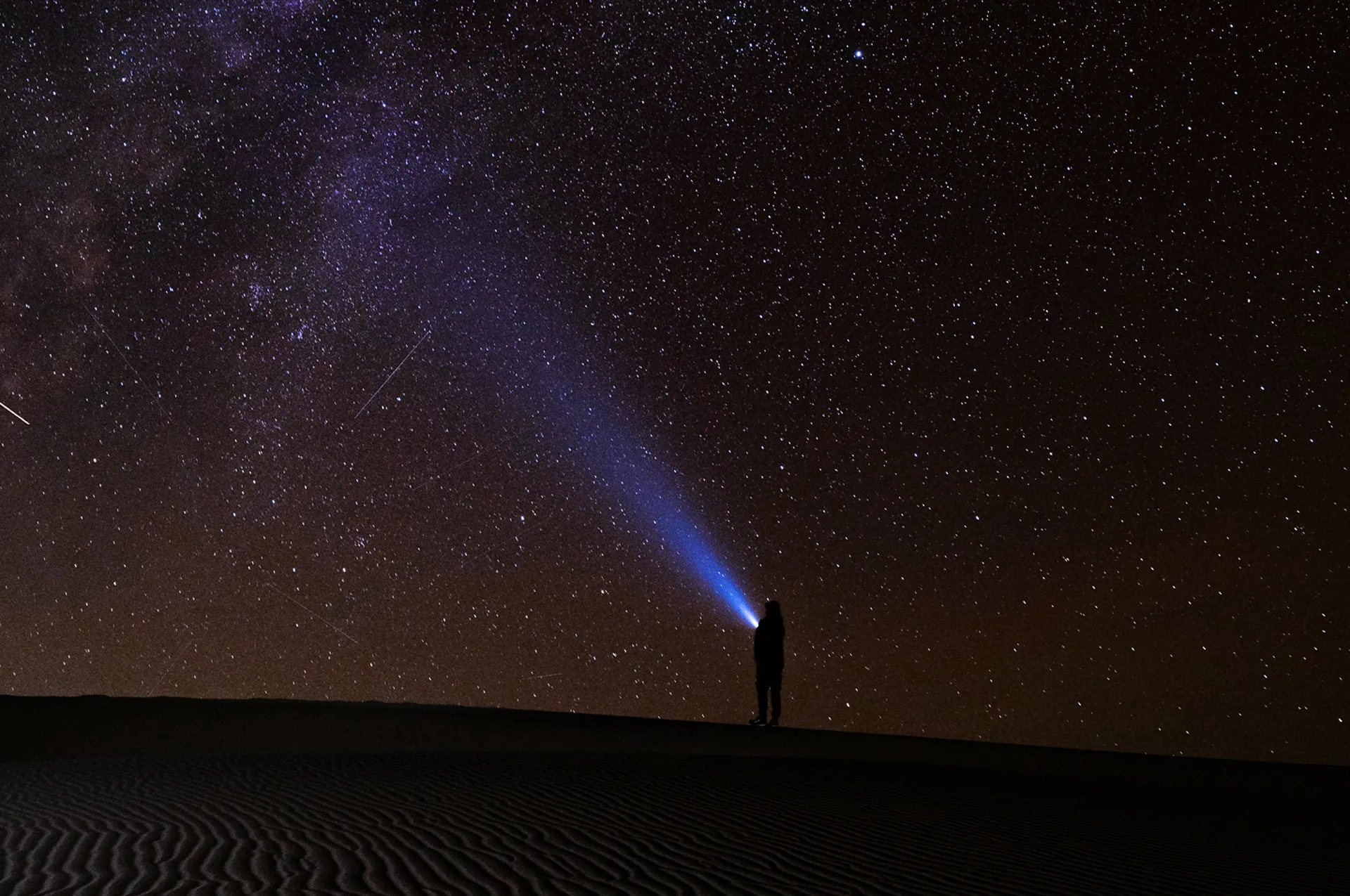
So the next time you look at the night sky, pay attention to the tiny differences between stars. A blue star is telling you that its surface is extremely hot, while a red or orange star is cooler by stellar standards.
Star colors are not just beautiful. They are clues that help astronomers understand the temperature and physical nature of distant stars. To learn what can happen when some massive stars reach the end of their lives, explore our guide on what is a Supernova.
Look Up. Observe Vastness.
LUOV