Why do stars twinkle when you look up at the night sky?
On a clear night, stars appear to flicker, change brightness, and sometimes even shift between different colours. Although this effect makes stars look like tiny sparkling lights, the stars themselves are not actually switching on and off. The real reason lies in Earth’s atmosphere and the way starlight travels through it before reaching our eyes.
What Causes Stars to Twinkle?
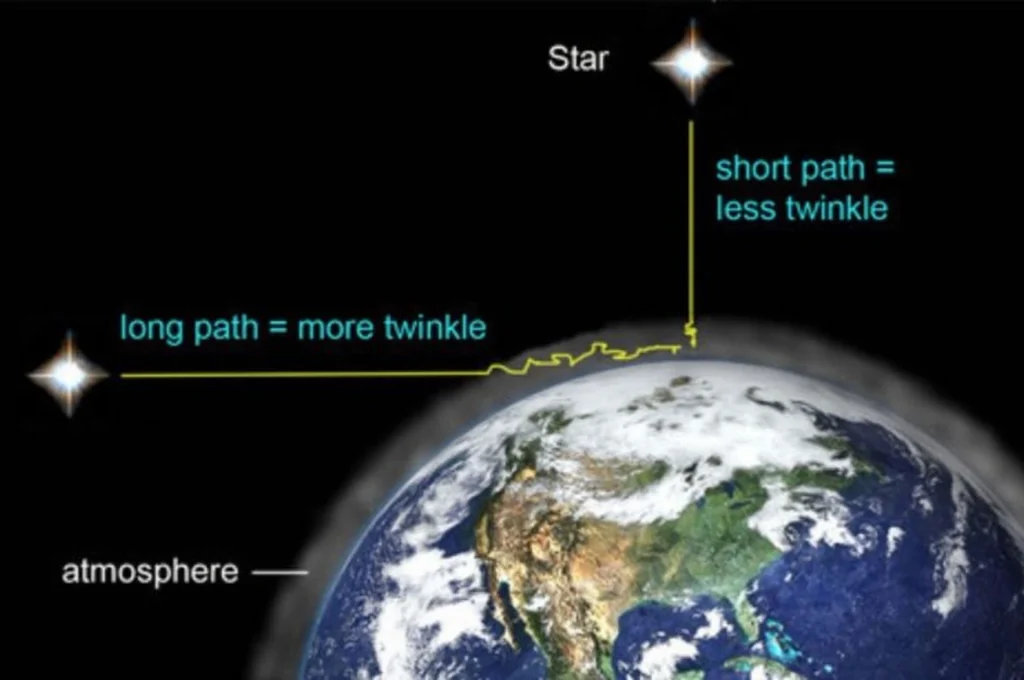
The scientific name for the twinkling of stars is astronomical scintillation. It happens when light from distant stars passes through different layers of Earth’s atmosphere before reaching the ground.
Earth’s atmosphere is constantly moving. It contains pockets of warm and cool air that have different temperatures and densities. As starlight travels through these changing air layers, its path bends slightly due to a process called refraction. Since the atmosphere is always shifting, the direction in which the light bends also changes from moment to moment.
These small changes make the amount of light reaching our eyes appear to increase and decrease rapidly. As a result, a star may look brighter one moment and slightly dimmer the next. This continuous change creates the familiar twinkling effect we see in the night sky.
How Earth’s Atmosphere Changes Starlight
To understand why stars twinkle, imagine looking at an object through a swimming pool while the water is moving. The object may appear distorted, shifted, or unsteady because the moving water changes how light travels through it.
A similar thing happens when we observe stars from Earth. Their light travels through thousands of kilometres of atmosphere, passing through air layers with constantly changing temperatures and densities. Each layer can bend the light slightly differently, making the star’s apparent brightness and position change.
This effect is particularly noticeable when a star is close to the horizon. Its light must travel through a much longer path in Earth’s atmosphere than when it is directly overhead. More atmospheric disturbance can therefore make the star appear to twinkle more strongly.
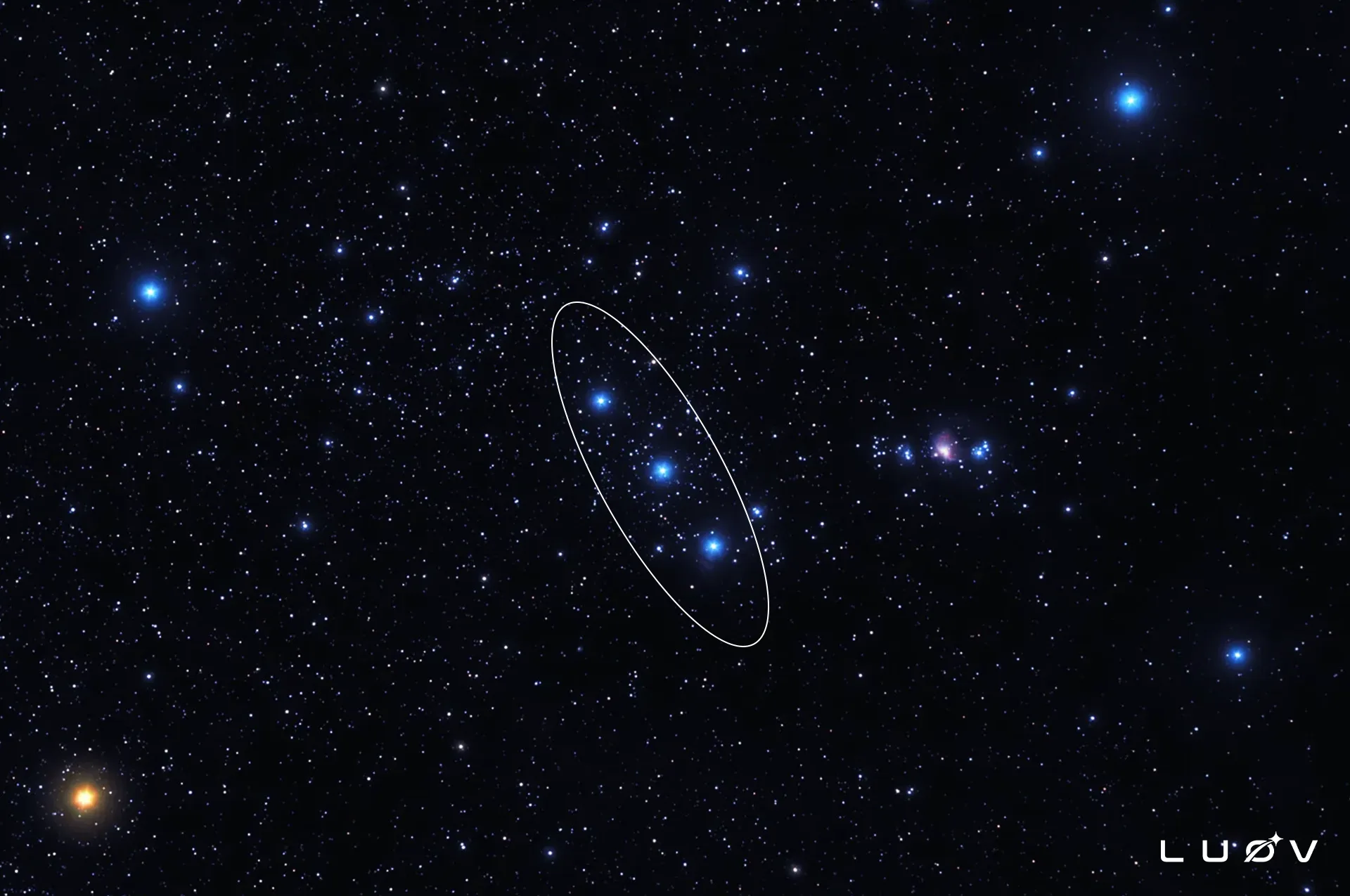
Sometimes, stars also seem to flash different colours, such as red, blue, or white. This happens because Earth’s atmosphere can bend different wavelengths of light by slightly different amounts. The effect can be especially noticeable in bright stars such as Sirius, which may appear to flash several colours when viewed near the horizon.
Why Do Stars Twinkle But Planets Don’t?
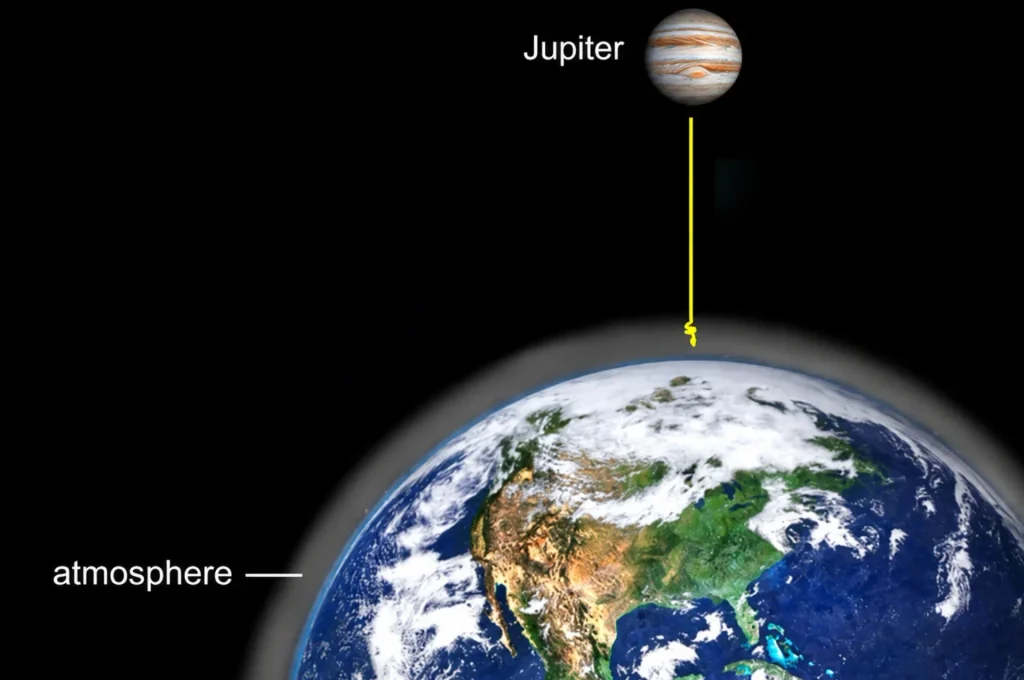
One interesting question about the night sky is why stars twinkle while planets usually appear steady. The main reason is their apparent size in the sky, which is related to their distance from Earth.
Stars are incredibly far away, so even the largest stars appear like tiny points of light when viewed from Earth. Their light comes from an extremely small area in our sky, making it more sensitive to atmospheric disturbances. Even small changes in the path of their light can cause noticeable changes in brightness.
Planets, on the other hand, are much closer to Earth. Although they also appear small to our eyes, they have a visible disk rather than a single point of light. Light from different parts of that disk travels through slightly different atmospheric paths. The fluctuations tend to average out, making planets appear much steadier than stars.
However, planets are not completely free from this effect. When they are close to the horizon or atmospheric conditions are particularly turbulent, they can also appear to flicker. This is why the difference is noticeable but not absolute.
Do Stars Twinkle in Space?
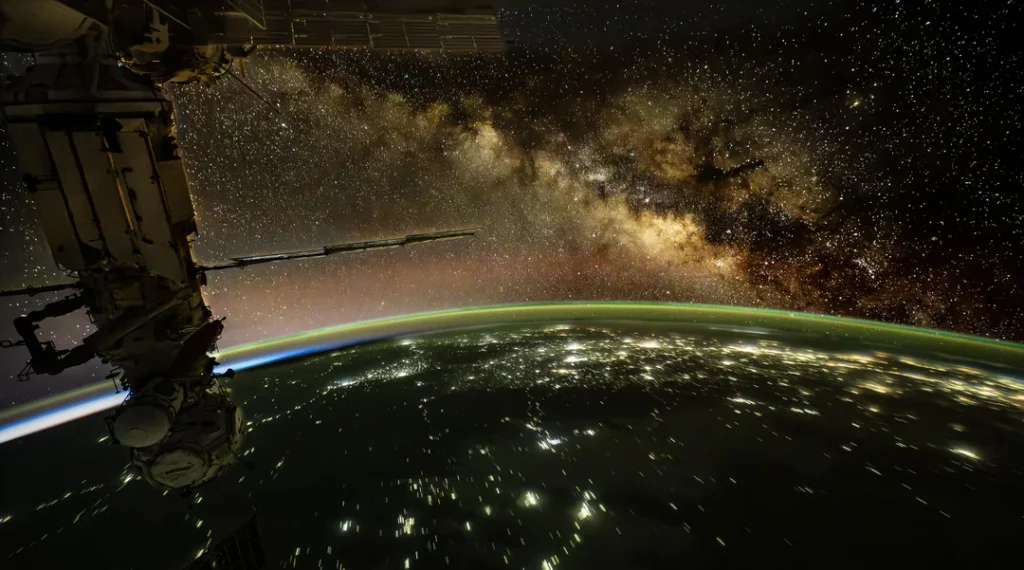
No, stars do not normally twinkle when observed from space. Astronauts looking at stars beyond Earth’s atmosphere see them as steady points of light rather than the rapidly flickering objects we observe from the ground.
The reason is simple: space does not have Earth’s thick, turbulent atmosphere to constantly bend and distort incoming starlight. Without these atmospheric disturbances, the apparent brightness of a star remains much steadier.
This is also one reason why space telescopes, such as the Hubble Space Telescope and the James Webb Space Telescope, can capture incredibly detailed observations of distant objects without atmospheric twinkling affecting their images. Ground-based telescopes, however, must deal with atmospheric distortion, which astronomers call astronomical seeing. Poor seeing can make stars appear blurry or cause their images to move around in a telescope.
To see how these major space observatories compare, explore our guide to Roman vs. James Webb vs. Hubble.
Look Up. Observe Vastness.
LUOV