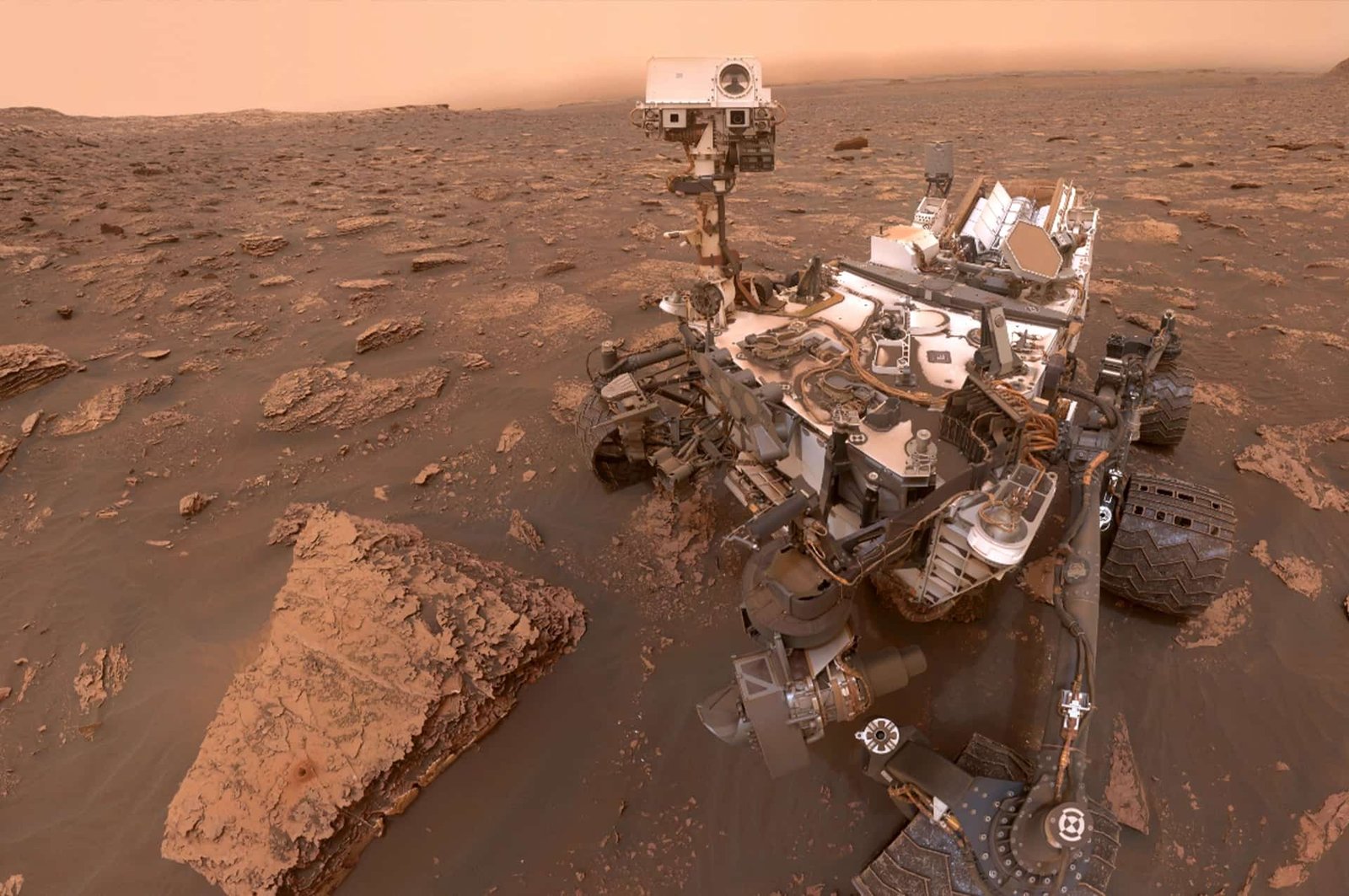
NASA’s Curiosity Mars rover took this selfie on Oct. 25, 2020, after drilling a rock sample from a spot nicknamed “Mary Anning.” After years of extensive analysis, the sample has revealed the greatest diversity of organic molecules ever found on Mars.
Credit: NASA/JPL-Caltech/MSSS
Organic Molecules on Mars: A New Discovery by Curiosity
Organic Molecules on Mars are once again in focus after NASA’s Curiosity rover discovered compounds never seen before on the Red Planet. These carbon-based molecules were found inside ancient rocks, offering new clues about Mars’ past environment. In science, “organic” does not always mean life, but it does point to the building blocks that life needs.
Curiosity made this discovery in Gale Crater, a region scientists believe once had lakes and flowing water. By drilling into rocks and analyzing the samples, the rover detected complex organic compounds that had been preserved for billions of years. This suggests Mars once had stable conditions where such chemistry could develop and survive.
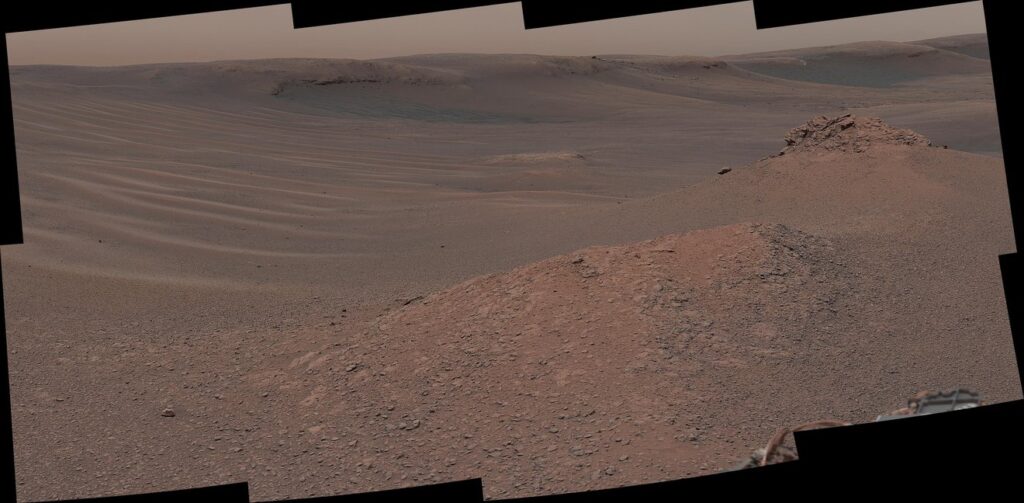
Curiosity’s Mastcam captured this mosaic on Feb. 3, 2019, showing clay-rich regions on Mount Sharp that formed when water existed billions of years ago. The “Mary Anning 3” sample was collected here.
Credit: NASA/JPL-Caltech/MSSS
Why This Location Matters on Mars
The discovery of Organic Molecules on Mars becomes even more important when we look at where it happened. The samples came from a clay-rich region on Mount Sharp. Clay minerals usually form in the presence of water, meaning this area likely had lakes or streams long ago.
Water is a key ingredient for life as we know it. Finding organic molecules in a place shaped by water strengthens the idea that Mars may once have been habitable. These ancient environments could have supported chemical reactions needed for life, even if life itself has not been confirmed.
What Makes These Organic Molecules Unique?
Unlike earlier findings, these Organic Molecules on Mars are more complex. Previous missions had detected simpler carbon compounds, but Curiosity’s latest results show a wider variety of organic chemistry. These molecules were released when the rover heated rock samples, allowing scientists to study their structure.
Another important detail is how well these molecules were preserved. Mars has a thin atmosphere and is exposed to radiation that can destroy organic material. The fact that these compounds survived suggests they were protected inside rocks for billions of years.
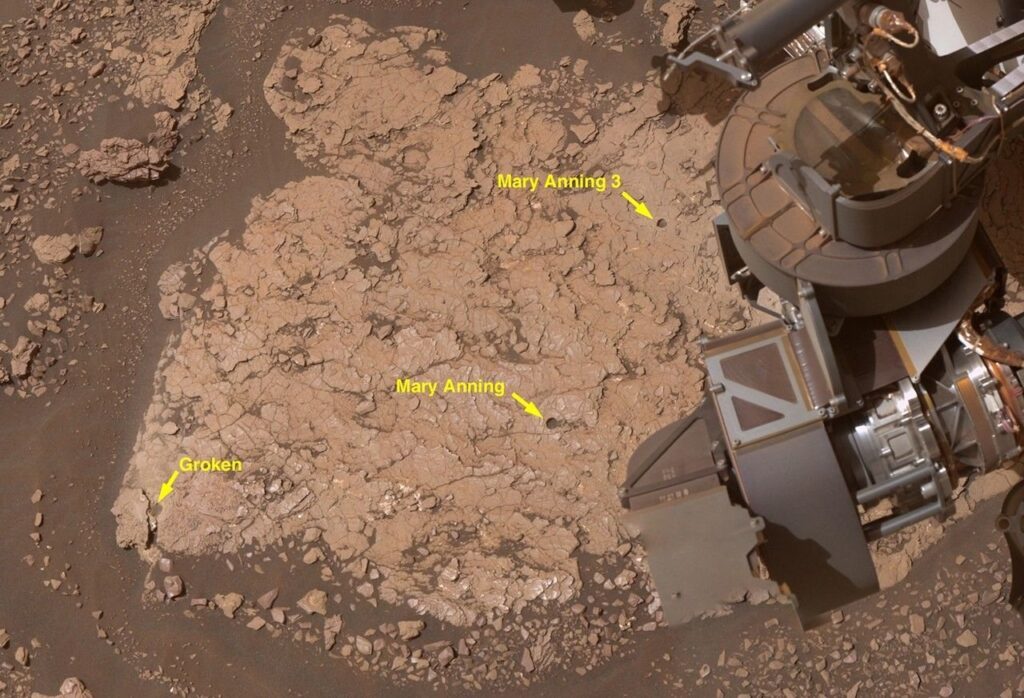
This annotated close-up shows three drill holes made by Curiosity in October 2020 at “Mary Anning.” The “Mary Anning 3” sample revealed a diverse set of organic molecules.
Credit: NASA/JPL-Caltech/MSSS
How Did Organic Molecules Form on Mars?
The big question remains: where did these Organic Molecules on Mars come from? There are two main possibilities. They may have formed through natural chemical reactions involving water, heat, and minerals. This type of chemistry can happen without life.
The second possibility is more exciting but still unproven. These molecules could be linked to ancient microbial life. Scientists are careful with this idea because there is no direct evidence of life yet. However, the presence of organic compounds shows that Mars had the right ingredients for life at some point in its history.
What This Means for Future Mars Exploration
The discovery of Organic Molecules on Mars is an important step in understanding the planet’s past. It confirms that Mars once had environments where complex chemistry could develop. This helps guide future missions, especially those searching for signs of life.
NASA’s Perseverance rover is already collecting samples that may one day be returned to Earth. These samples could provide more detailed answers about Mars’ chemistry and whether life ever existed there.
For now, Curiosity’s findings remind us that Mars was not always the dry and cold world we see today. It once had water, active geology, and the chemical ingredients that make the search for life worth continuing.
Source: https://www.jpl.nasa.gov/news/nasas-curiosity-finds-organic-molecules-never-seen-before-on-mars/