October 2026 astronomy events bring a mix of bright planets, meteor showers, a New Moon and a Full Moon to the night sky. Whether you enjoy casual stargazing or photographing the stars, October offers several good reasons to step outside after dark.
The month begins with Saturn at opposition, followed by the Draconid meteor shower and a dark New Moon. Later, Mercury reaches greatest eastern elongation, while the Orionids and the Hunter’s Moon round out the month.
October 3: Saturn at Opposition
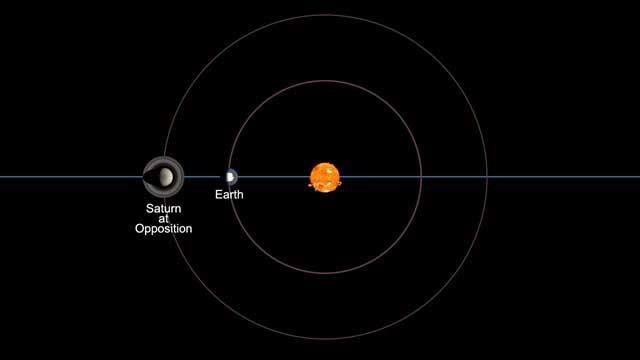
Illustration of Saturn at opposition, showing Earth aligned between Saturn and the Sun as the planet appears opposite the Sun in the night sky. Credit: NASA
One of the most notable October 2026 astronomy events happens on October 3, when Saturn reaches opposition. This means Saturn appears opposite the Sun in Earth’s sky, rising around sunset, remaining visible throughout the night and setting around sunrise.
Opposition is also one of the best times of the year to observe Saturn because the planet is well placed for nighttime viewing. With a telescope, observers can see its famous ring system, while to the naked eye Saturn appears as a bright, steady point of light.
For anyone planning a night of observing, our guide to the best time to stargaze explains how moonlight, darkness and timing can affect what you see.
October 8–9: Draconid Meteor Shower
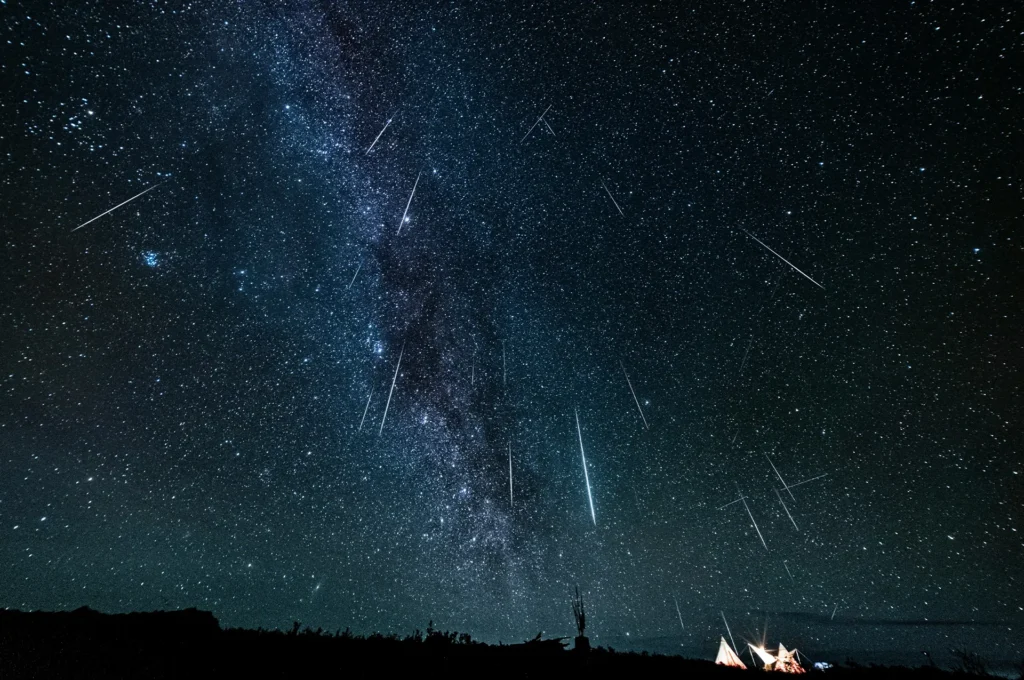
Long-exposure view of the Draconid meteor shower, showing multiple meteors streaking across a dark night sky with the Milky Way visible in the background. Credit: Unsplash
The Draconid meteor shower reaches its predicted peak around October 8–9. Unlike many meteor showers that are best viewed before dawn, the Draconids are primarily an evening shower, making the hours after nightfall especially useful for watching.
Conditions are particularly favorable in 2026 because the peak occurs shortly before the New Moon. With little moonlight interfering, observers under dark skies may see around 10 meteors per hour under ideal conditions.
Find a dark location with a wide view of the sky and allow your eyes time to adjust. You can also read our guide on how to stargaze without a telescope for simple ways to improve naked-eye observing.
October 10: New Moon
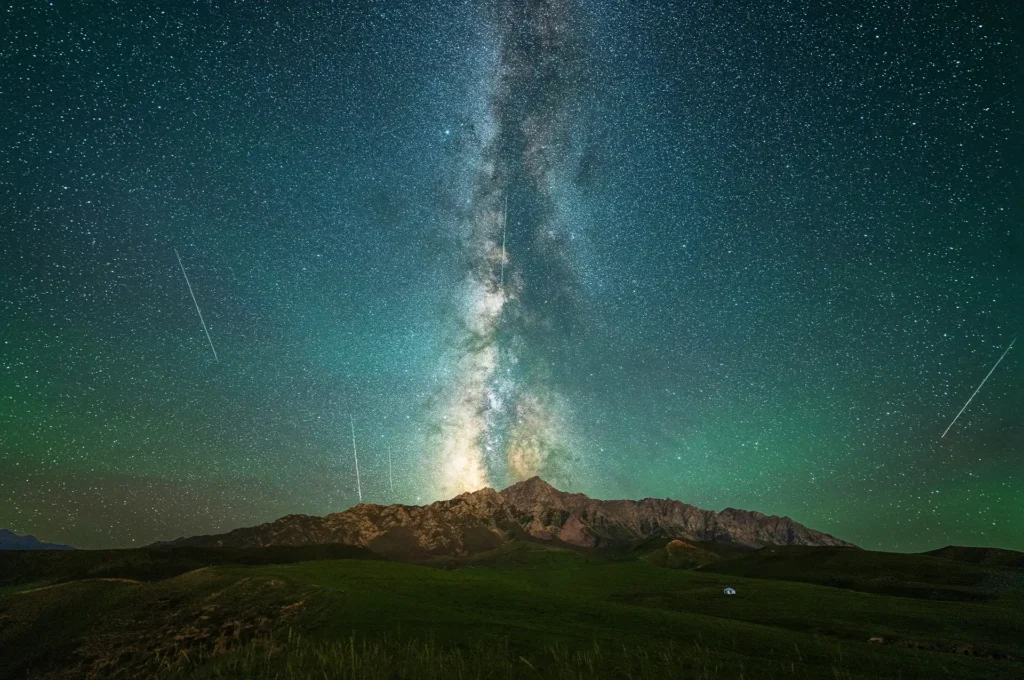
Dark-sky view during the New Moon, showing the Milky Way and several meteors above a mountain landscape with minimal moonlight. Credit: Unsplash
On October 10, the Moon reaches its New Moon phase. During New Moon, the illuminated side of the Moon faces mostly away from Earth, leaving the night sky free from bright moonlight.
This makes the nights around New Moon especially useful for looking for faint stars, the Milky Way and deep-sky objects. It can also be an excellent opportunity for night-sky photography, particularly from locations away from city lights.
A darker sky can reveal details that are easily hidden by moonlight and artificial light pollution, making New Moon one of the most rewarding periods of the month for stargazing.
October 12: Mercury at Greatest Elongation East
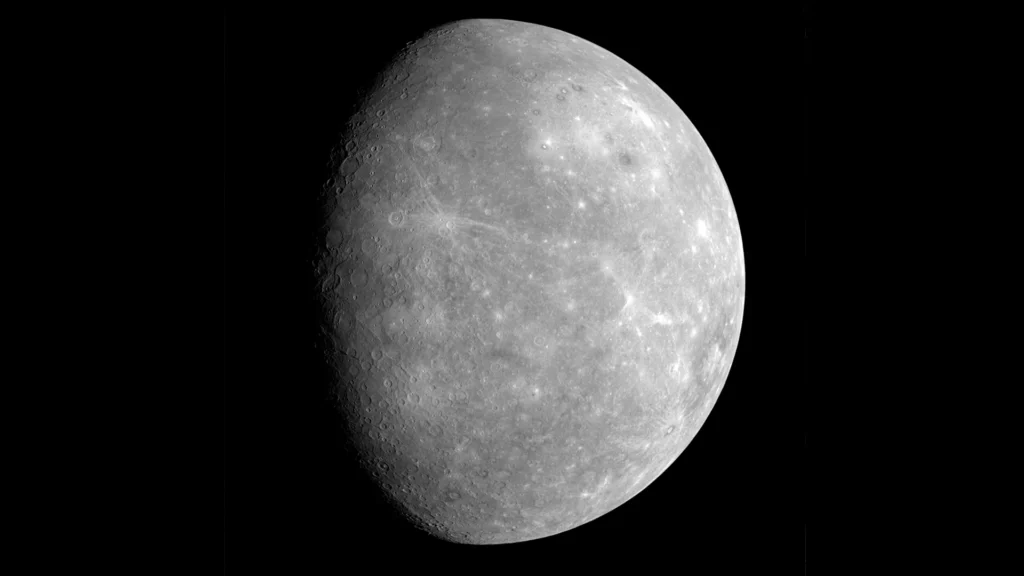
Detailed view of Mercury’s cratered surface, representing the planet during greatest eastern elongation when it appears farthest east of the Sun in Earth’s evening sky. Credit: NASA
On October 12, Mercury reaches greatest eastern elongation, appearing about 25 degrees from the Sun in Earth’s sky. This places Mercury at one of its greatest apparent separations from the Sun during this evening apparition.
Because Mercury normally remains close to the Sun from our viewpoint, it can be difficult to observe. Around greatest elongation, however, the planet has a better chance of becoming visible shortly after sunset.
Look toward the western horizon from a location with a clear view. Visibility will vary considerably by latitude: this particular apparition is especially favorable for observers in the Southern Hemisphere, while Mercury will remain much lower in the evening sky for many Northern Hemisphere observers.
October 21–22: Orionid Meteor Shower
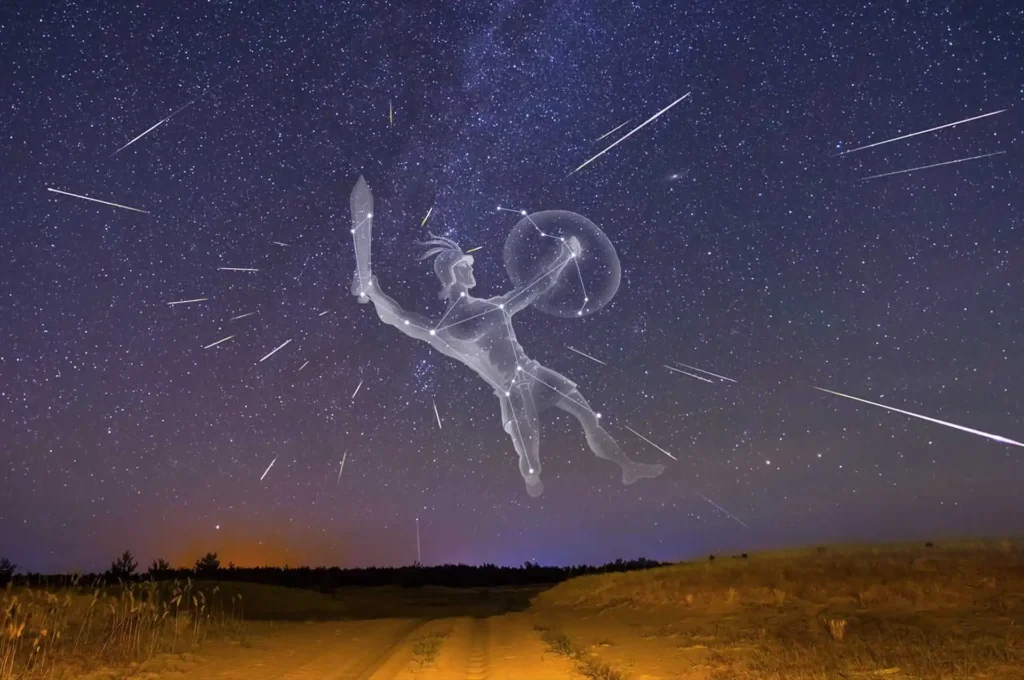
Illustration of the Orionid meteor shower with meteors radiating across the sky around the Orion constellation. Credit: Star Walk
The Orionid meteor shower peaks around October 21–22. These meteors are created when Earth passes through particles left behind by Halley’s Comet, one of the most famous comets in astronomical history.
NASA lists the Orionids as active from October 2 through November 7, 2026, with roughly 10 to 20 meteors per hour possible under dark skies. The meteors are also known for their high speeds as they enter Earth’s atmosphere.
In 2026, a bright waxing Moon will interfere with part of the night around the peak. However, observers may still find a darker observing window before dawn after the Moon has set.
October 26: Hunter’s Moon
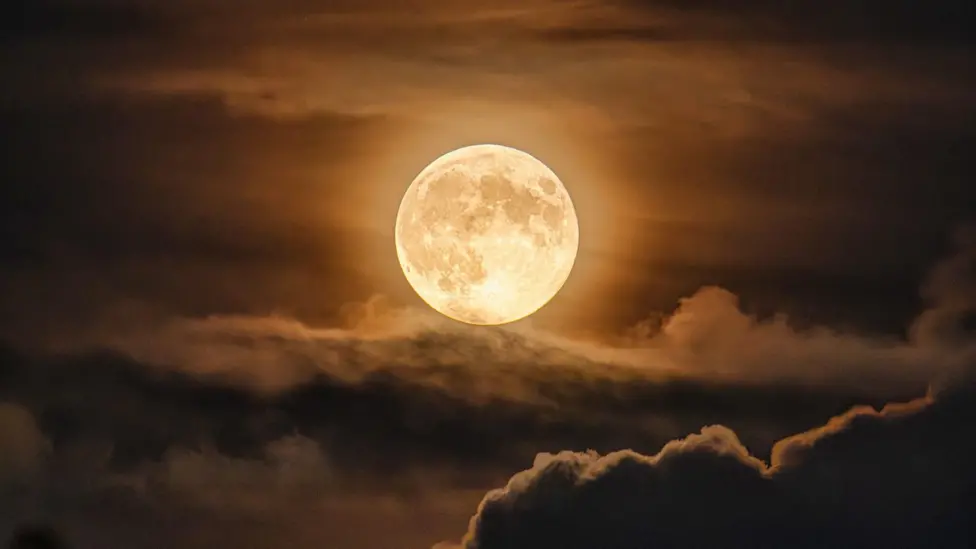
The Hunter’s Moon glowing with a warm orange color above clouds near the horizon. Credit: Oren Douek, Milton Keynes.
The final major event among the October 2026 astronomy events is the Hunter’s Moon on October 26. The Hunter’s Moon is traditionally the Full Moon that follows the Harvest Moon, which in 2026 occurs in September.
If you would like to explore where these traditional names come from, LUOV has a complete guide to Full Moon names and their meanings, as well as our 2026 Full Moon calendar.
Full Moons can be especially striking around moonrise, when the Moon appears close to the horizon. It can often look orange or golden because its light passes through more of Earth’s atmosphere, scattering more of the shorter blue wavelengths before the light reaches your eyes.
October 2026 Night Sky
From Saturn’s rings to shooting stars and the glowing Hunter’s Moon, October 2026 astronomy events offer something for almost every kind of skywatcher.
You do not need expensive equipment to enjoy many of them. A dark location, clear weather and a little patience can be enough to turn an ordinary October night into a memorable astronomy experience.
Look Up. Observe Vastness.
LUOV