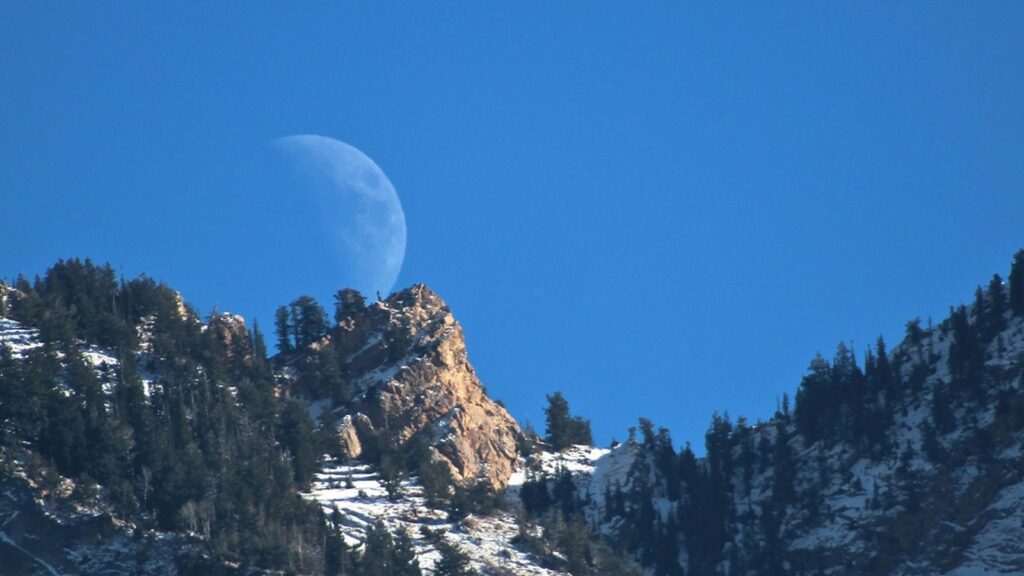
A Wolf Moon creeps over the rock formations of Sierra de Guadarrama in January 2025.
(Image credit: Marcos del Mazo/LightRocket via Getty Image)
Have you ever noticed that the Moon sometimes looks much bigger in the night sky? Some nights it appears huge and bright near the horizon, while on other nights it seems smaller and farther away. This can feel confusing, especially because the Moon itself does not suddenly grow or shrink.
The truth is that several different space phenomena can change how large the Moon appears to us. The most common reasons include the Moon Illusion, Supermoons, and Micromoons. Each one works differently, but together they explain why the Moon sometimes looks much bigger than usual.
The Moon Illusion Makes the Moon Appear Huge
Credit: NASA/Bill Dunford
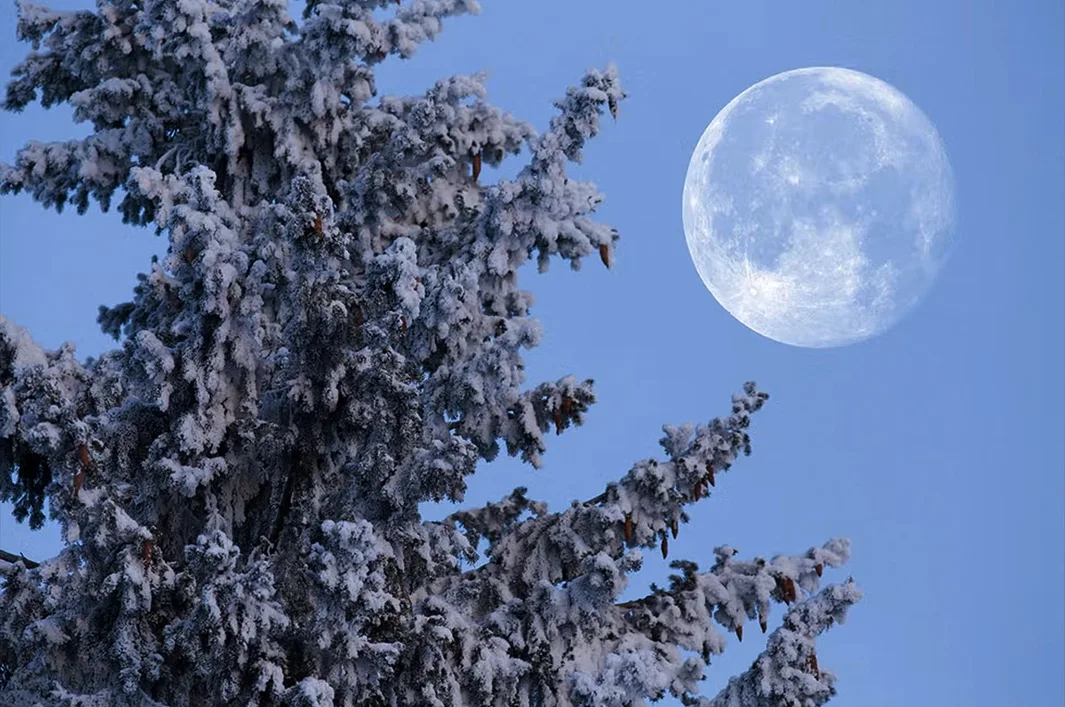
One of the biggest reasons why the Moon looks bigger is something called the Moon Illusion. This happens when the Moon is close to the horizon during moonrise or moonset.
At that moment, the Moon appears larger because our brains compare it to objects on Earth like trees, buildings, mountains, or roads. Since these objects give us a sense of distance and scale, the Moon looks enormous beside them. However, NASA explains that the Moon’s actual size in the sky stays almost the same throughout the night.
Interestingly, if you cover the Moon with your finger when it is near the horizon and then compare it later when it is overhead, you will notice it is nearly identical in size. The illusion exists mostly because of how the human brain processes distance and perspective.
What Is a Supermoon?
Credit: NASA, JPL-Caltech
Another reason why the Moon looks bigger is the appearance of a Supermoon. Unlike the Moon Illusion, a Supermoon is a real astronomical event.
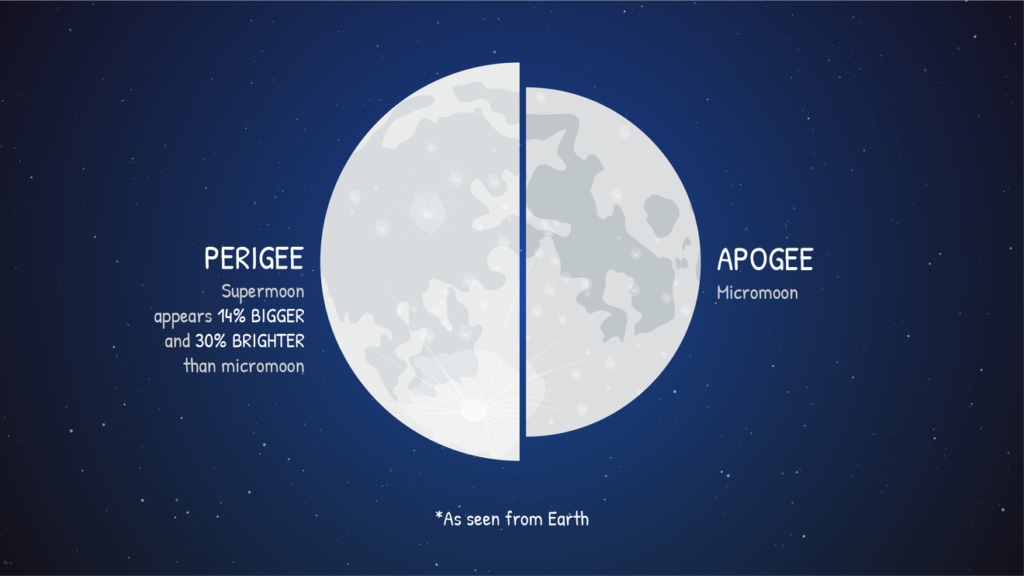
The Moon does not orbit Earth in a perfect circle. Its orbit is slightly stretched into an oval shape. Because of this, there are times when the Moon moves closer to Earth. When a full Moon happens during this closer point in its orbit, it is called a Supermoon.
A Supermoon can appear around 14% larger and up to 30% brighter than a normal full Moon. While that difference may not sound massive, it becomes very noticeable when the Moon rises near the horizon. At that point, the Supermoon combines with the Moon Illusion, creating the giant Moon effect many people love to photograph.
Supermoons are especially popular among skywatchers because they make the night sky feel brighter and more dramatic.
What Is a Micromoon?
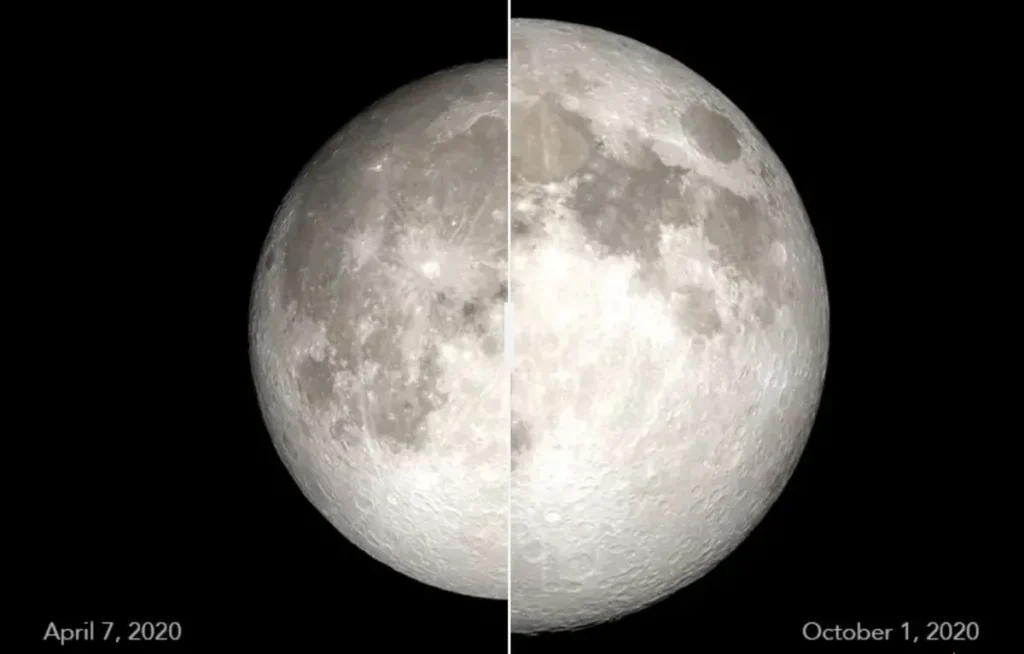
A composite of two photographs of full moons, one showing a smaller micromoon and another showing a larger supermoon. (Image credit: NASA)
A Micromoon is basically the opposite of a Supermoon. It happens when the full Moon appears during the farthest point in the Moon’s orbit around Earth.
Because the Moon is farther away, it looks slightly smaller and dimmer than usual. The difference is real, but most people do not notice it unless they compare photos of a Supermoon and a Micromoon side by side.
Even though Micromoons are less famous, they are still interesting because they show how the Moon’s changing distance affects its appearance in the sky.
The Moon Is Always Changing Our Perspective
The Moon may seem different from night to night, but these changes are caused by a mix of science and human perception. The Moon Illusion tricks our brains into seeing a larger Moon near the horizon. A Supermoon makes the Moon genuinely appear bigger because it is closer to Earth. A Micromoon makes it appear smaller because it is farther away.
Together, these effects create some of the most beautiful sights in the night sky. Whether the Moon appears massive above the horizon or small and distant high overhead, it continues to capture human attention just as it has for thousands of years.