This overview shows the planets of our solar system arranged from the Sun outward, highlighting their relative sizes and positions.
Credit: NASA
Planet moons count is one of the simplest ways to understand how different planets are in our solar system. Some planets have no moons at all, while others have hundreds orbiting around them. These differences are not random. They depend on factors like gravity, distance from the Sun, and how each planet formed billions of years ago.
In general, smaller planets closer to the Sun have fewer moons, while larger planets farther away have many more. This guide explains the planet moons count clearly, one planet at a time, so it is easy to understand even if you are new to astronomy.
Mercury
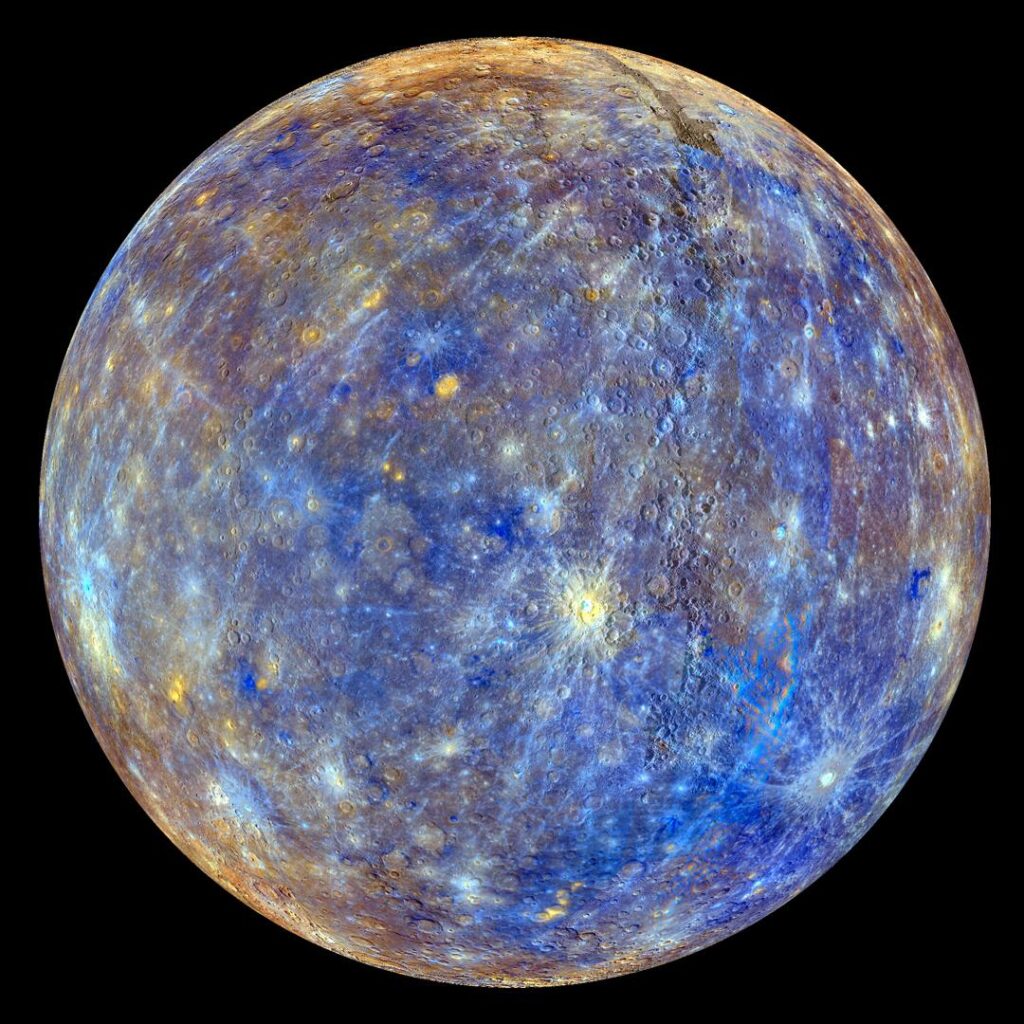
This detailed view of Mercury shows its heavily cratered surface, shaped by billions of years of impacts and solar exposure.
Credit: NASA
Mercury has 0 moons. It is the closest planet to the Sun, and this location plays a major role in its lack of satellites. The Sun’s strong gravity pulls strongly on anything near Mercury, making it difficult for the planet to capture or keep a moon.
Mercury is also very small, which means it does not have enough gravitational strength to hold onto passing objects. Because of these reasons, Mercury remains completely moonless.
Venus
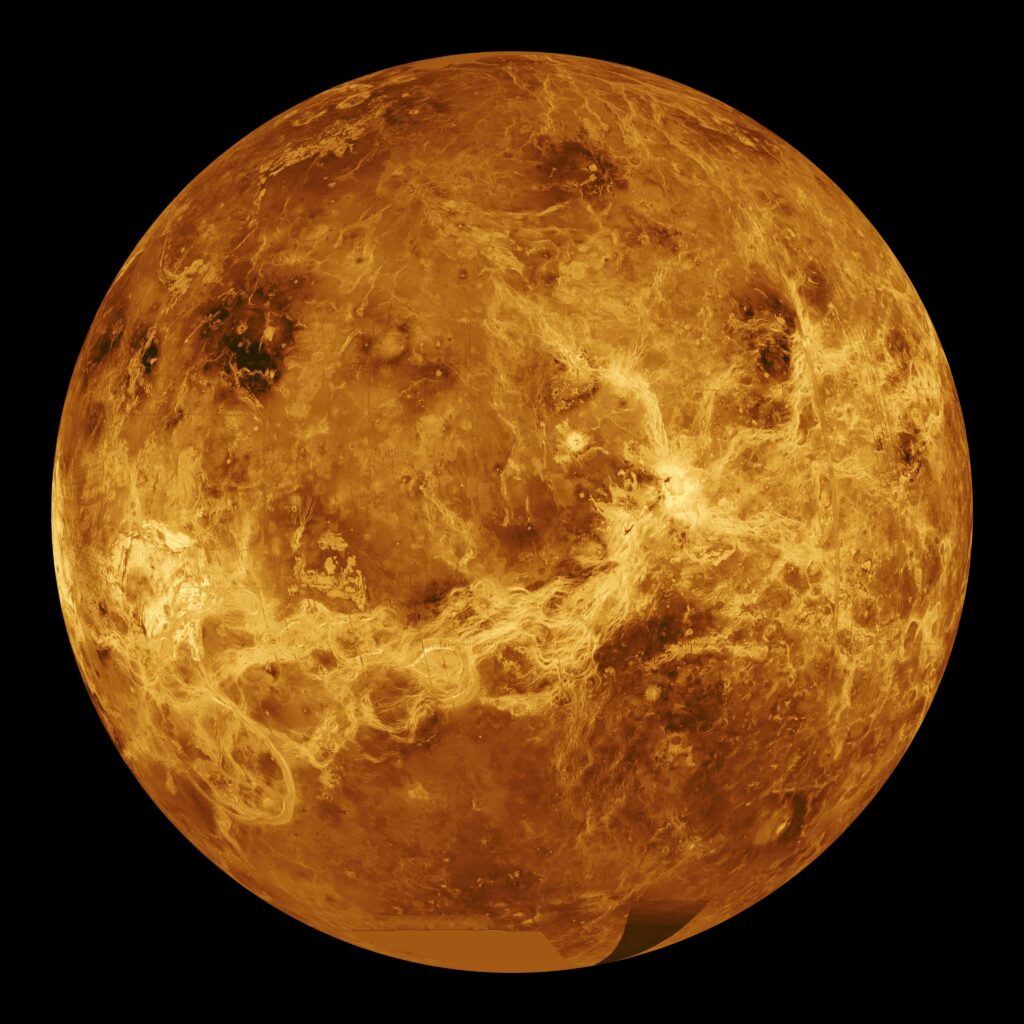
This global view of Venus highlights its thick cloud cover, which traps heat and hides the surface below.
Credit: NASA/JPL
Venus also has 0 moons, making it similar to Mercury in this way. Scientists think Venus may have once had a moon long ago, but it could have been lost due to collisions or strong gravitational interactions.
Venus rotates very slowly and in the opposite direction compared to most planets. This unusual rotation may also have affected its ability to keep a stable moon over time. Today, Venus is still a planet without any natural satellites.
Earth
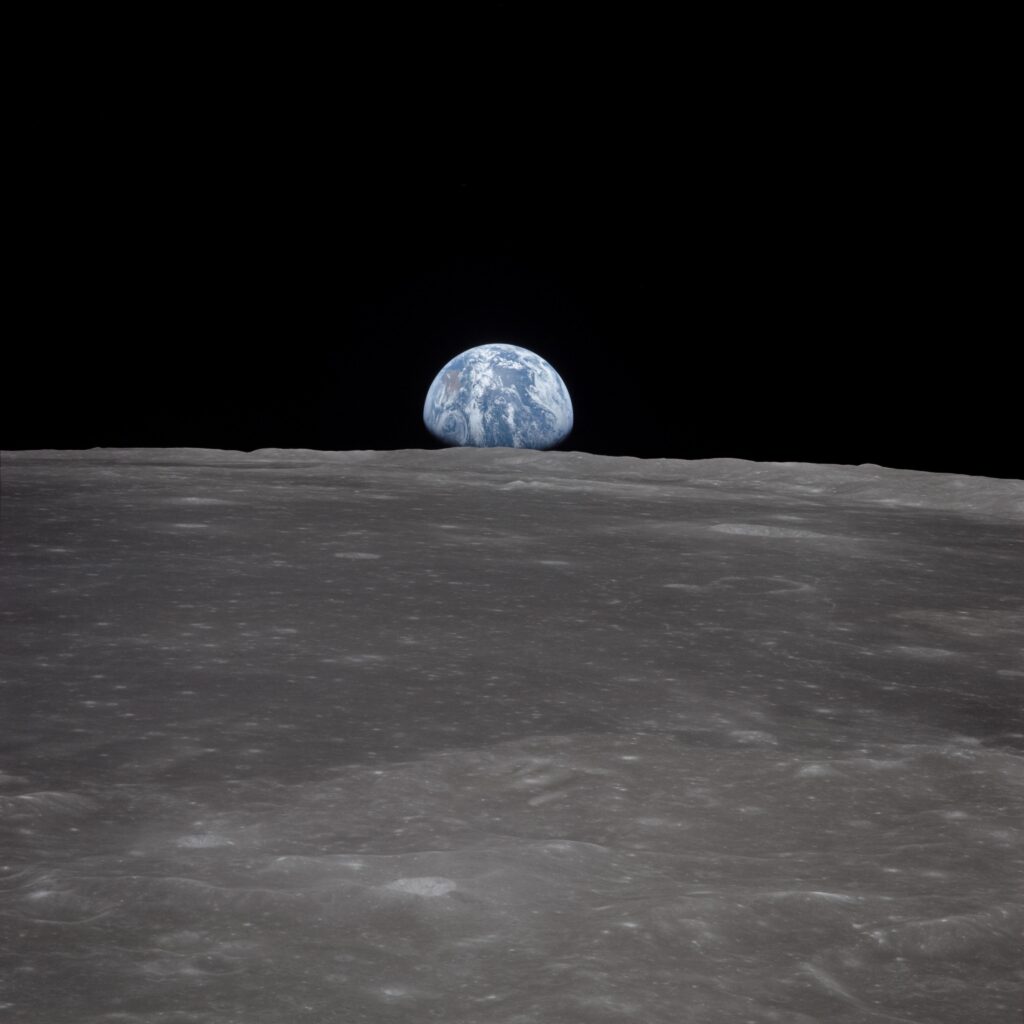
This image shows Earth and its Moon together, demonstrating the strong gravitational relationship between the two bodies.
Credit: NASA
Earth has 1 moon, which is simply called The Moon. It is one of the most important natural satellites in the solar system because of its size and influence.
The Moon helps stabilize Earth’s tilt, which keeps our climate relatively stable. It also causes ocean tides through gravitational pull. Scientists believe the Moon formed when a large object collided with Earth early in its history, and the debris came together to form a single large satellite.
In addition to the Moon, Earth sometimes has small temporary objects nearby, often called mini moons. However, these are not permanent and usually stay only for a short time.
Mars
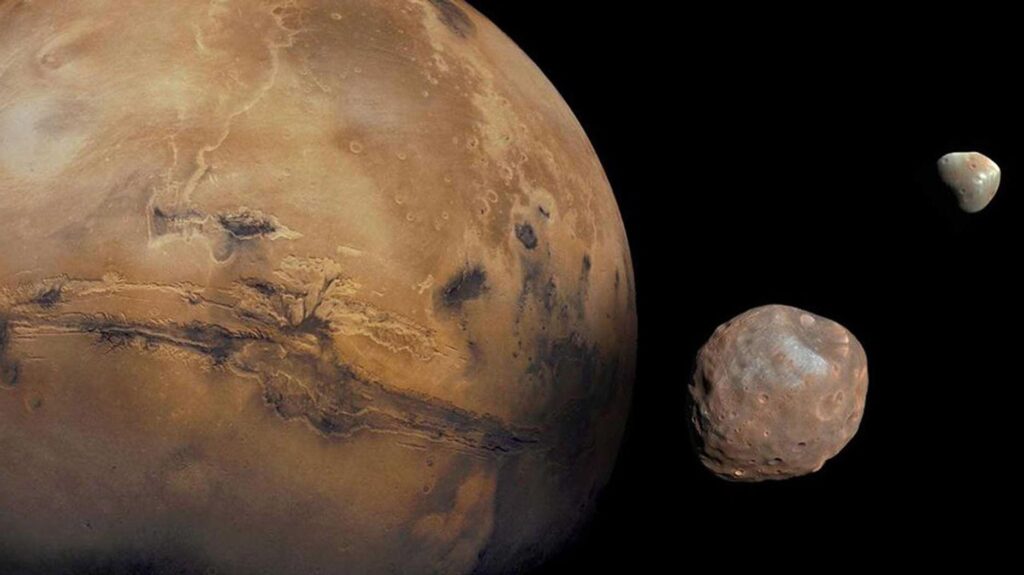
Mars appears as a dusty red world, accompanied by its small moons Phobos and Deimos, which are irregular in shape.
Credit: NASA/JPL-Caltech
Mars has 2 moons, named Phobos and Deimos. These moons are much smaller than Earth’s Moon and have irregular shapes.
They are likely captured asteroids, meaning they were not formed with Mars but were pulled in by its gravity. Phobos orbits very close to Mars and is slowly moving inward. In the distant future, it may break apart or collide with the planet.
Deimos is farther away and more stable, but both moons are quite different from the large, round moons seen around bigger planets.
Jupiter
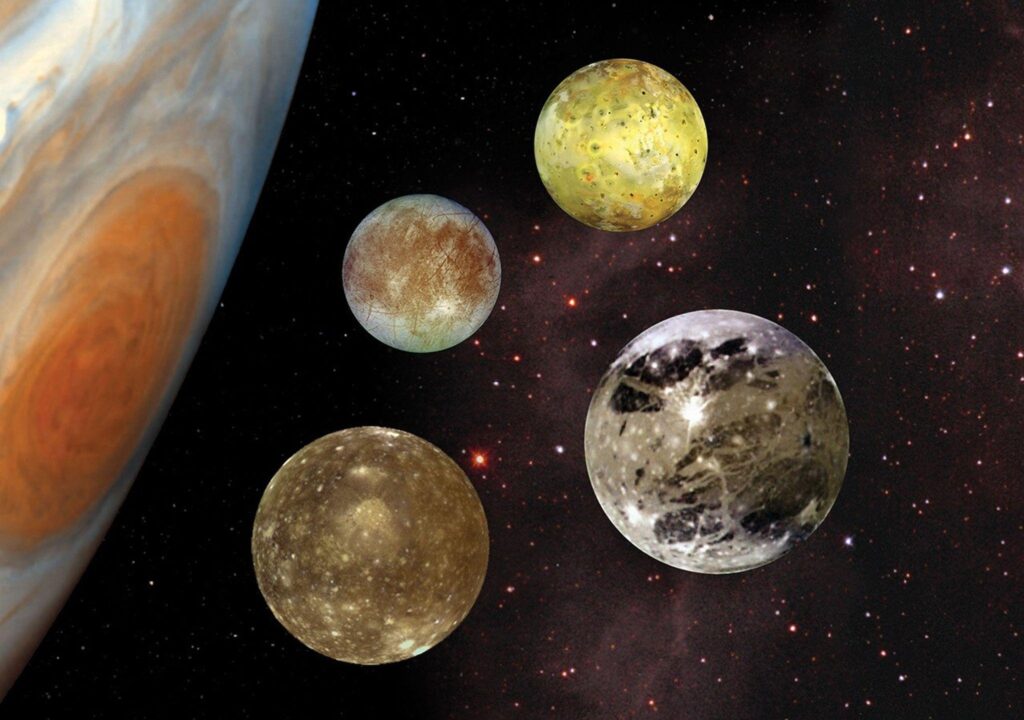
This “family portrait,” a composite of the Jovian system, includes the edge of Jupiter with its Great Red Spot, and Jupiter’s four largest moons, known as the Galilean satellites. From top to bottom, the moons shown are Io, Europa, Ganymede, and Callisto
Jupiter has 101 moons, making it one of the most moon rich planets. Its massive size gives it very strong gravity, which allows it to capture and hold many objects.
Among these, four large moons stand out. They are Io, Europa, Ganymede, and Callisto. These are known as the Galilean moons. Ganymede is the largest moon in the entire solar system, even bigger than the planet Mercury.
Europa is especially interesting because scientists believe it may have a hidden ocean beneath its icy surface, which could have the right conditions for life.
Saturn
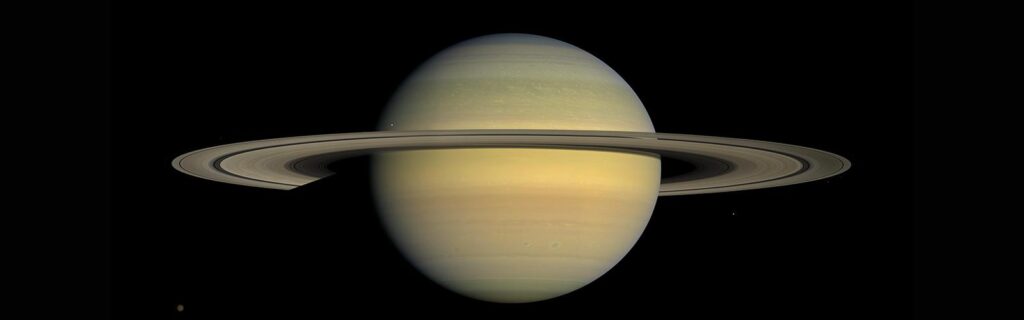
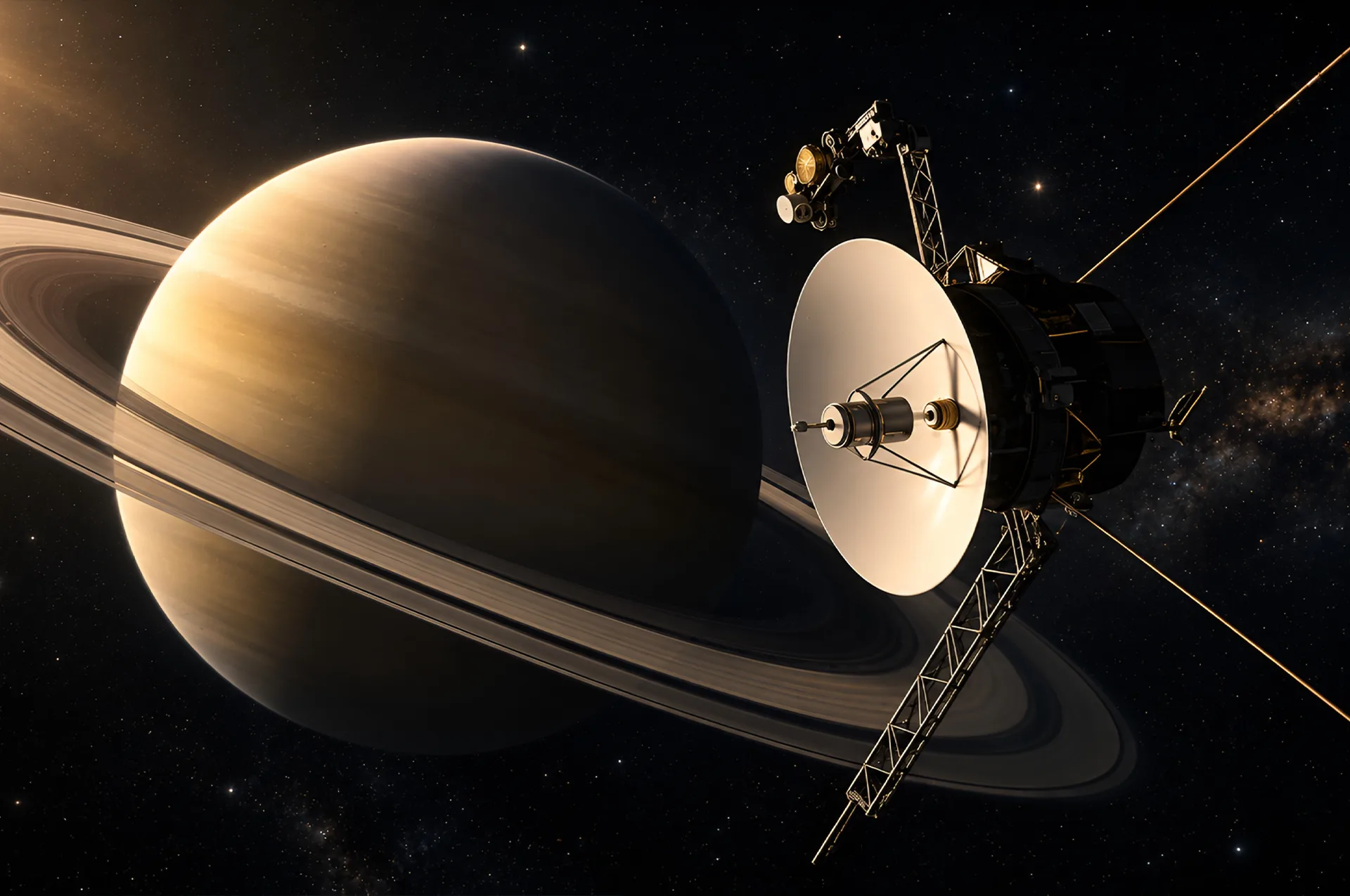
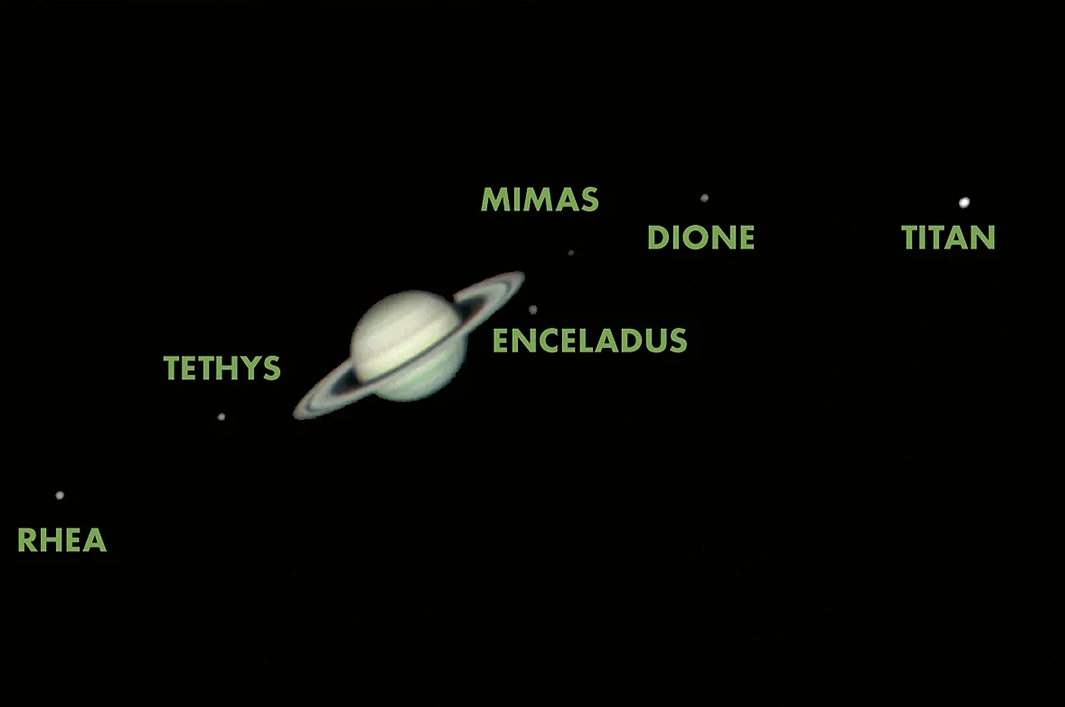
NASA’s Cassini spacecraft captured one of its last looks at Saturn, and its main rings from a distance.
The images used to create this view were taken on Oct. 28, 2016. The spacecraft arrived at Saturn in 2004, and the mission ended Sept.15, 2017.
Credits: NASA/JPL-Caltech/Space Science Institute
Saturn has the highest planet moons count with 292 moons. This makes it the planet with the most moons in the solar system.
One of its most important moons is Titan. Titan has a thick atmosphere and liquid lakes on its surface, which is very rare. Another moon, Enceladus, shows signs of water beneath its icy crust, with jets of ice particles shooting into space.
Saturn also has many small moons that interact with its rings, helping shape and maintain their structure.
Uranus
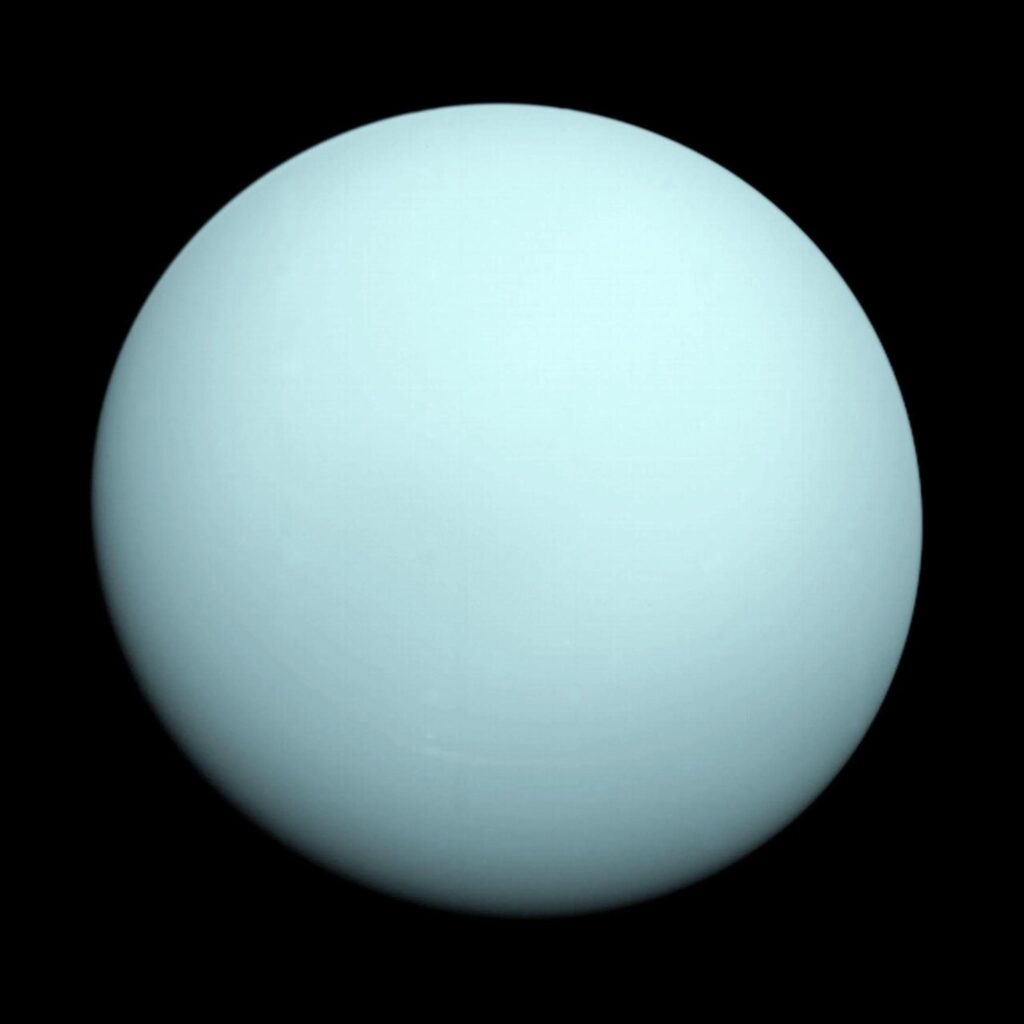
Uranus appears as a pale blue planet with a tilted axis, giving it a unique orientation in space.
Credit: NASA/JPL
Uranus has 29 moons. These moons are unique because they are named after characters from literature instead of mythology.
Uranus itself rotates on its side, which makes its moon system quite unusual. The moons orbit in a tilted plane, creating a different kind of motion compared to other planets.
Some of these moons show signs of past geological activity, which makes them interesting for study.
Neptune
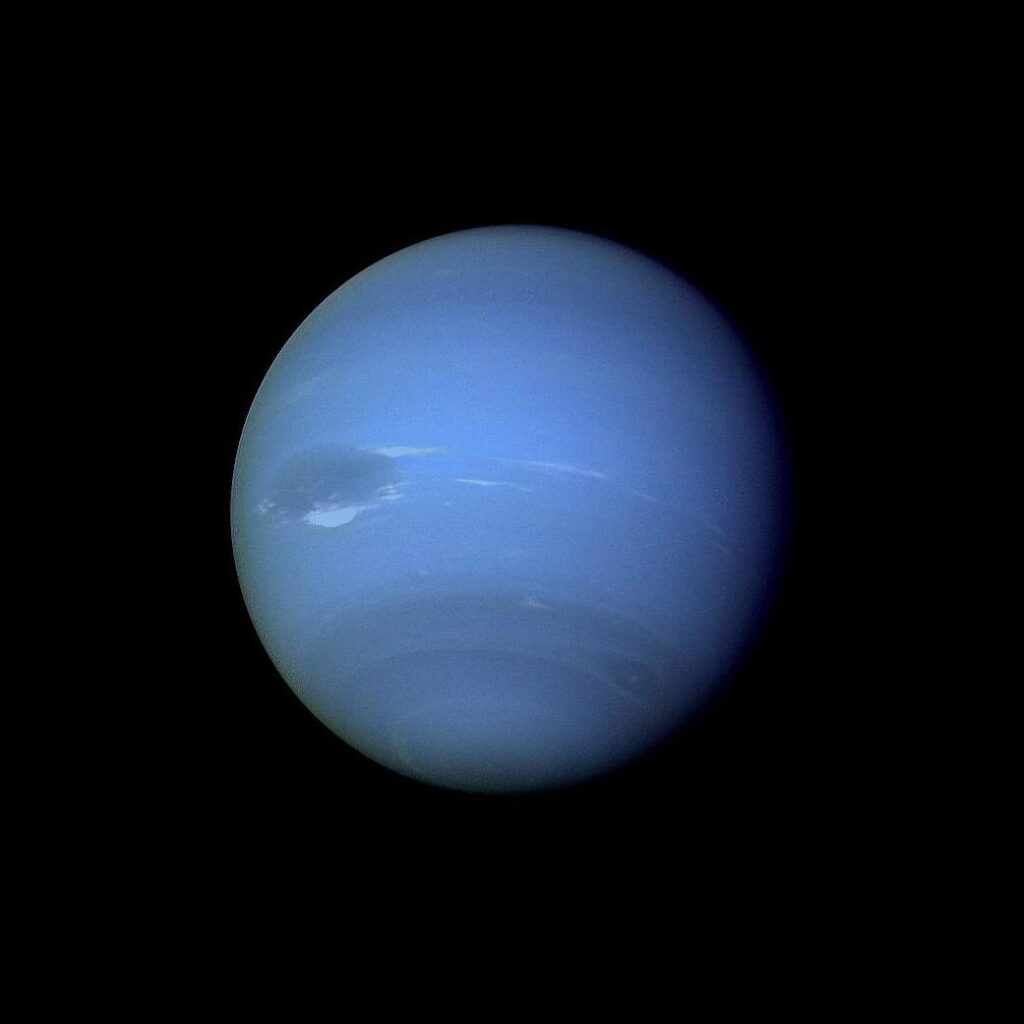
Neptune’s deep blue color stands out, with its largest moon Triton showing signs of icy surface activity.
Credit: NASA/JPL
Neptune has 16 moons. The most important one is Triton, which is very different from most other moons.
Triton orbits Neptune in the opposite direction, which suggests it was captured rather than formed with the planet. It is also geologically active, with icy volcano like features on its surface.
This makes Triton one of the most unique moons in the solar system.
Why Planet Moons Count Is Different
The planet moons count varies mainly because of gravity and distance from the Sun. Larger planets like Jupiter and Saturn can attract and hold many moons, while smaller planets cannot.
As technology improves, scientists continue to discover new moons, especially around the outer planets. This means the planet moons count may keep increasing in the future as we explore deeper into space.