Water on the Moon has long been a fascinating mystery, and a new study is helping scientists narrow down exactly where it might exist. For years, researchers believed the Moon was mostly dry, but recent discoveries have changed that idea. Now, scientists are using advanced models and data to pinpoint the most likely locations of water, especially in the form of ice.
The latest research suggests that water is not spread evenly across the Moon. Instead, it is likely trapped in specific regions, mainly near the lunar poles. These areas remain extremely cold because sunlight rarely reaches them. As a result, water ice can survive there for long periods without evaporating into space.
Why Water on the Moon Matters for Future Missions
Finding water on the Moon is not just a scientific curiosity it has real importance for future space exploration. Water can be used for drinking, growing food, and even making rocket fuel by splitting it into hydrogen and oxygen. This means astronauts could rely less on supplies from Earth, making long term missions more practical.
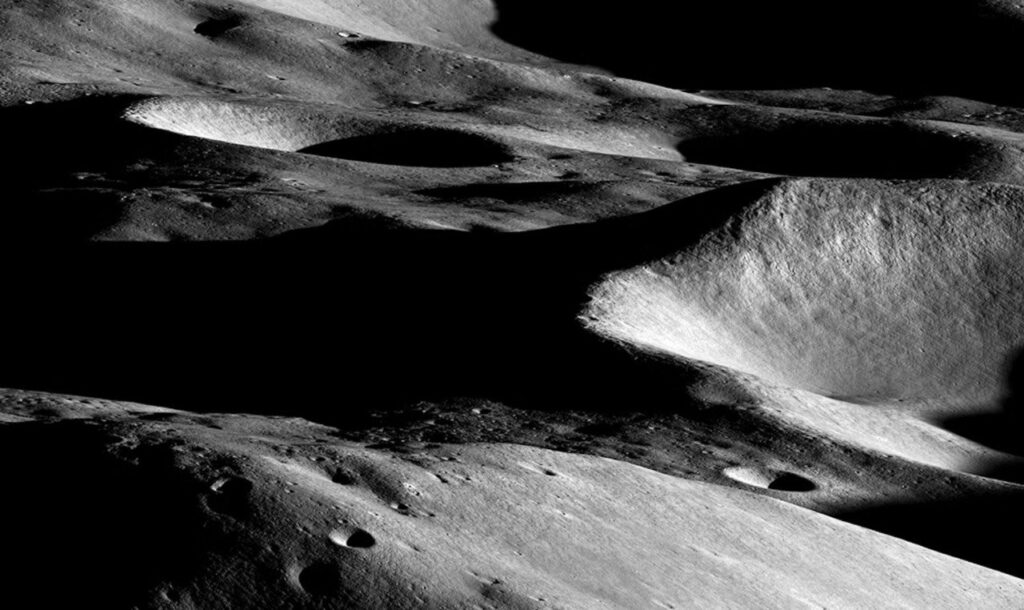
The new study highlights that permanently shadowed craters near the poles are the most promising places to look. These craters act like natural freezers, keeping temperatures so low that water ice remains stable. This discovery helps space agencies plan future missions more efficiently by focusing on specific locations instead of searching blindly.
How Scientists Detect Water on the Moon
Understanding water on the Moon requires a mix of observations and computer modeling. Scientists use data from orbiting spacecraft, which measure how sunlight reflects off the lunar surface. Certain patterns in this reflected light can indicate the presence of water or hydroxyl molecules.
The recent study improved these methods by combining temperature data with surface analysis. Researchers found that even small changes in temperature can affect where water can exist. For example, areas that receive just a little sunlight might still be cold enough to hold ice beneath the surface.
This approach gives a clearer picture of how water behaves on the Moon. Instead of thinking of it as large ice sheets, scientists now believe water may be scattered in tiny grains mixed with lunar soil.
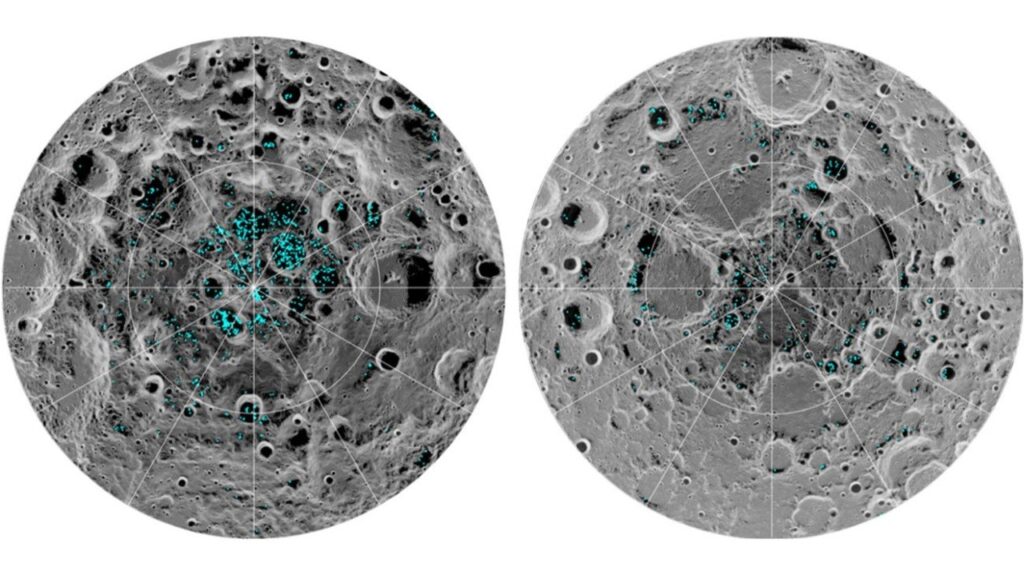
The image shows water ice at the Moon’s poles. Blue marks ice, mainly in cold, shadowed craters. First direct evidence of surface ice.
Credit: NASA
What This Means for the Future of Lunar Exploration
The discovery of more precise locations for water on the Moon marks a big step forward in space science. It helps answer key questions about how water arrived on the Moon in the first place. Some scientists believe it came from comets or asteroids, while others think it formed through interactions with solar wind.
More importantly, this research supports upcoming missions aimed at returning humans to the Moon. By knowing where water is likely to be found, astronauts can land closer to these resources. This could lead to the creation of permanent lunar bases in the future.
In simple terms, water changes everything. It turns the Moon from a barren world into a place where humans could live and work. As scientists continue to refine their models and gather new data, our understanding of the Moon will only grow deeper.
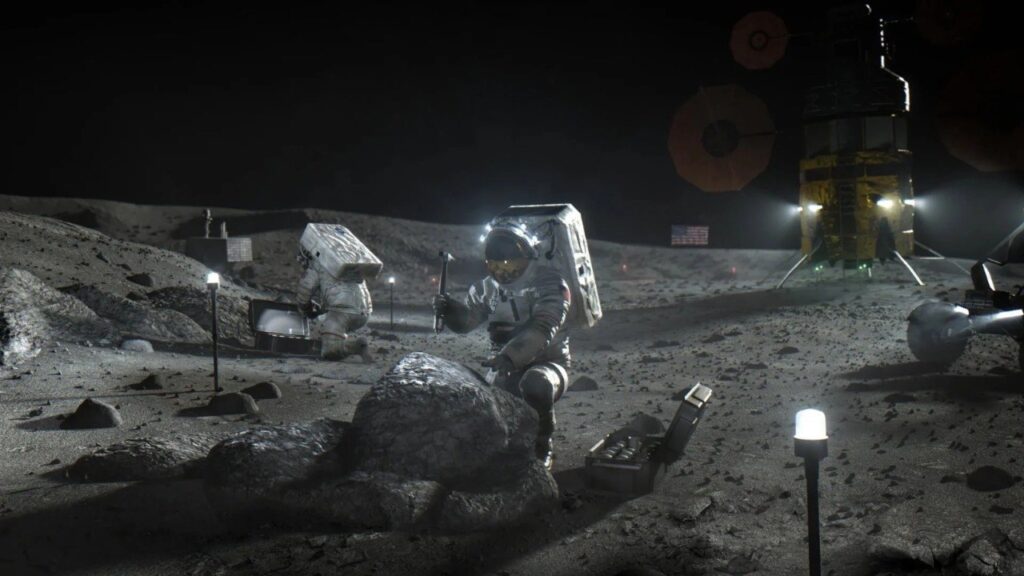
Artist’s impression of Artemis astronauts performing extra-vehicular activity (EVA) on the lunar surface.
Credit: NASA
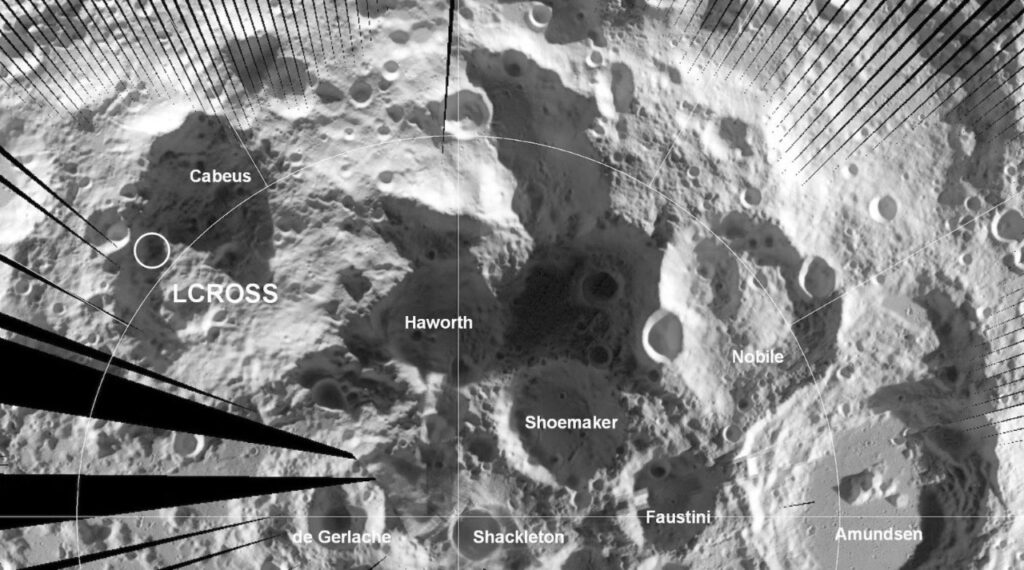
Craters near the moon’s South Pole as seen by NASA’s Lunar Reconnaissance Orbiter. New research suggests that Haworth Crater might be an especially good
spot to look for ice.
Credit: NASA
NASA/GSFC/Arizona State University